
A. What are the main taxes applicable in Indonesia?
Indonesia's tax system comprises both direct and indirect taxes, including:
- Corporate Income Tax (CIT)
- Personal Income Tax (PIT)
- Value Added Tax (VAT)
- Withholding Taxes (WHT)
- Land and Building Tax (PBB)
- Stamp Duty
- Customs and Excise Duties
- Global Minimum Tax (Pillar Two Top-Up Tax for qualifying multinationals)
B. What taxes apply when setting up a LLC type entity in Indonesia?
In general, a newly set up LLC type company [PT PMA] will commonly deal with:
- Corporate income tax,
- VAT once PKP-registered,
- Payroll tax withholding,
- BPJS [social security] contributions,
- Dividend withholding tax, when profits are repatriated overseas
C. What taxes apply when setting up a Representative Office in Indonesia?
For a RO the practical Indonesian tax burden is usually limited to:
- Employee income tax withholding,
- BPJS contributions,
- VAT incurred on local expenses,
- Minor withholding tax obligations on certain payments,
- Administrative tax filings.
- A representative office is typically not subject to regular corporate income tax on business profits, because it is not supposed to earn revenue in Indonesia.
D. Tax Registration - How long does it take for a foreign company to obtain a local tax id in Indonesia?
Once a foreign company has established its Indonesian presence (such as a PT PMA, Representative Office, or Permanent Establishment) and submitted a complete registration package, the issuance of a Corporate NPWP is generally a relatively quick administrative process. In practice, many registrations can be completed within a few business days, although the overall timeframe depends on document completeness, tax office verification requirements, and the company's legal establishment status.
E. What is the current Indonesia corporate income tax rate?
The standard Corporate Income Tax (CIT) rate is 22% of taxable profit for resident companies and permanent establishments. Certain publicly listed companies may qualify for a reduced effective rate of 19% if prescribed public ownership thresholds are met.
F. When are corporate tax returns due in Indonesia?
in Indonesia, the Annual Corporate Income Tax Return (SPT Tahunan PPh Badan) is generally due no later than 4 months after the end of the company's fiscal year. For companies using the calendar year (ending 31 December), the filing deadline is 30 April of the following year
G. What penalties apply for late tax Filing?
Indonesia imposes administrative fines for filing tax returns after the deadline. These fines vary depending on the type of return (monthly VAT return, monthly withholding tax return, or annual corporate income tax return). A PT PMA is required to submit periodic and annual tax returns even if little or no tax is due
H. What penalties apply for late tax Payment?
If tax is paid after the due date, the Directorate General of Taxes can impose interest-based penalties in addition to requiring payment of the underlying tax. The interest calculation is linked to rates determined by the Ministry of Finance and can vary over time.
This applies to:
- Corporate income tax (PPh Badan)
- Payroll taxes (PPh 21)
- VAT (PPN)
- Withholding taxes (PPh 23/26)
I. Does Indonesia tax foreign companies?
Yes. Foreign companies may be subject to Indonesian taxation if they:
- Earn Indonesian-sourced income;
- Operate through a local subsidiary;
- Establish or deemed to have a Permanent Establishment (PE) in Indonesia; and operate via
- Digital transactions.
Tax treatment depends on domestic law and applicable Double Tax Treaties (DTTs).
J. What is the Indonesia VAT rate and how does VAT apply to foreign businesses?
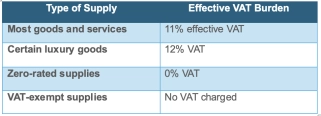
Indonesia imposes Value Added Tax (VAT) (Pajak Pertambahan Nilai or PPN) on most supplies of goods and services including digital transactions as well as imports.
Since 1 January 2025, Indonesia operates a dual-rate system whereby:
K. Can foreign companies recover Indonesian VAT?
The answer depends on if and how the foreign company operates in Indonesia.
In general, Indonesia does not operate a broad VAT refund mechanism for non-resident businesses similar to those available in many European Union jurisdictions. As a result, a foreign company that is not registered for Indonesian VAT purposes will typically not be able to recover Indonesian VAT incurred on local purchases, accommodation, business travel expenses or other local costs.
However, recovery may be possible where the foreign business operates through an Indonesian presence that is registered for tax purposes, such as:
- An Indonesian subsidiary (PT PMA);
- A Permanent Establishment (PE);
- Another Indonesian entity registered as a taxable entrepreneur (Pengusaha Kena Pajak or PKP).
In these situations, input VAT incurred on qualifying business expenses may generally be credited against output VAT collected on taxable supplies on a monthly basis, subject to the applicable compliance requirements and documentation rules.
Foreign investors should also note that Indonesia applies specific VAT rules to imported services, digital services and cross-border transactions. Consequently, the VAT treatment of a transaction should be reviewed carefully before concluding that VAT will be recoverable.
From a practical perspective, businesses considering investments, projects or long-term operations in Indonesia should evaluate their VAT position at an early stage of the planning process. Failure to structure activities appropriately can result in Indonesian VAT becoming a permanent cost rather than a recoverable tax.
L. Are imported services subject to Indonesian VAT?
Yes. Indonesia generally imposes VAT on certain services and intangible goods acquired from overseas suppliers and utilized within Indonesia. Common examples include:
- Management and consulting services
- Technical and engineering services
- Software licenses and SaaS subscriptions
- Cloud computing services
- Digital services
- Royalty and intellectual property arrangements
In many cases, the Indonesian recipient of the service is responsible for self-assessing and remitting the VAT under a reverse-charge mechanism. The applicable VAT treatment will depend on the nature of the service, the parties involved and how the service is used in Indonesia.
Where the Indonesian recipient is a VAT-registered business, the VAT paid on imported services may, subject to the relevant requirements, be recoverable as input VAT. However, businesses should carefully review the applicable rules, as imported services remain an area of significant tax authority focus and non-compliance can lead to assessments, penalties and interest.
M. What are the Indonesia withholding tax rates for dividends, interest and royalties?
Indonesia imposes withholding tax on dividends, interest, royalties, services and other specified payments at 20% in general or a reduced rate/exempted under the respective tax treaties.
Treaty benefits may help to reduce or exempt the withholding taxes upon the satisfaction of beneficial ownership test and certain administrative requirements. Beneficial ownership specifically matters including the use of special purpose companies as treaty benefits may be denied if the recipient is not the beneficial owner.
Withholding tax can become a permanent cost, where it cannot be credited, recovered or reduced.
2. Tax Treaties
A. Does Indonesia have tax treaties?
Yes. Indonesia has an extensive network of Double Tax Agreements with more than 70 jurisdictions, including:
- Singapore
- Hong Kong
- Malaysia
- China
- Japan
- South Korea
- Australia
- United Kingdom
- Netherlands
- Germany
- France
- United States
These treaties generally help reduce withholding tax rates and prevent double taxation.
3. Indonesia Tax Holidays and Incentives
A. Does Indonesia offer tax holidays for foreign investors?
Yes. Indonesia offers tax holiday facilities for qualifying investments in designated "Pioneer Industries," including sectors such as: (PMK 69/2024)
- Upstream base metals include steel and non-steel metals
- Oil and gas refining and processing
- Organic and inorganic chemicals
- Pharmaceuticals
- Irradiation, electromedical and electrotherapy equipment
- Electronics and telematics equipment
- Machinery
- Robotic components for machinery
- Renewable energy
- Motor vehicles and key components
- Ships, railways, aircraft and aerospace
- Pulp with agricultural, plantation and forestry base
- Economic infrastructure
- Digital economy includes data processing, hosting and related activities
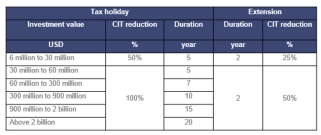
Depending on investment value and industry classification, corporate income tax exemptions may be granted for periods ranging from 5 to 20 years.
B. What is the difference between a Tax Holiday and Tax Allowance?
Tax Holiday
Provides 50% to 100% exemption from Corporate Income Tax for periods ranging from 5 to 20 years.
Criteria to benefit:
- The business activity falls under the pioneer industries outlined by the Indonesian government.
- Pioneer industries are defined as those with wide integration that bring high value added and externality, introduce new technology as well as possess strategic value for national economy.
- A legal entity in Indonesia.
- It is a new investment which has not been issued any decisions regarding tax facilities.
- The investment values at least Rp 100 billion.
- Satisfies the debt-to-equity ratio. Currently, the ratio is determined at 4:1.
- A commitment to realize the investment at the latest 1 (one) year upon the obtaining of tax facility.
Tax Allowance
Tax Allowances generally apply to a broader range of industries than Tax Holidays.
Provides benefits such as:
- 30% reduction of taxable income from the investment value in the form of tangible fixed assets including land that is used in the main business activity, of which are expensed within 6 (six) years, each at 5% per annum.
- Accelerated depreciation and amortization expenses of tangible and intangible assets.
- Reduced withholding tax rate of dividend i.e. 10% or tax treaty rate, whichever is lower.
- A maximum of 5 (five) years extension of fiscal loss carried forward.
Criteria to benefit:
- Taxpayers with new investment or an extension of the existing business activity in particular business fields, and/or those engaged in particular business fields located in certain areas as outlined by the DGT.
- High value of investment or dedicated to export.
- High employment.
- High local content.
C. Can foreign-owned companies benefit from Indonesian tax incentives?
Yes. Foreign-invested companies (PT PMA) can generally access tax incentives provided they satisfy the investment and sector-specific requirements established by the Indonesian Investment Coordinating Board (BKPM) and Ministry of Finance.
D. Can a company enjoy multiple tax incentives simultaneously?
In principle, tax incentives are provided to investment by industry, activity and location. Entity may optimize the tax incentives taking into account alternatives provided by the government.
Businesses should carefully assess how different incentive regimes interact before making investment decisions. For multinational groups subject to OECD Pillar Two, it is also important to evaluate whether certain tax incentives could result in a future top-up tax liability, potentially reducing the overall economic benefit of the incentive package
E. What tax incentives are available for EV battery manufacturers in Indonesia?
Currently the tax incentives for EV and nickel base battery manufacturers are provided through Special Economic Zone which provides deduction of CIT, VAT not collected, reduced sales tax on luxury goods, reduction of local tax and retribution by 50% to 100%, customs and excise incentives.
The Indonesian Minister of Finance is considering to extent the provision of VAT borne by government for the delivery of certain nickel base battery powered EV including Luxury Sales Tax and import duty incentives.
Given Indonesia's extensive nickel reserves and its ambition to become a global EV battery manufacturing hub, investors in battery production, EV component manufacturing, and downstream processing operations may benefit from particularly attractive incentive packages.
SEZ Palu and SEZ Setangga are regions in Indonesia dedicated to nickel processing and related high value-added products down streaming such as pure nickel, nickel sulfate and cobalt sulfate.
F. What incentives are available for data centers & digital infrastructure investors?
Indonesia continues to experience strong growth in cloud computing, artificial intelligence, e-commerce and digital services, making data centers and digital infrastructure a key area of investment.
Digital economy: includes data processing, hosting and related activities are defined as pioneer industry that is eligible for tax holiday. SEZ D-hub (Banten), SEZ Nongsa (Batam) and SEZ Singhasari (Malang) are regions in Indonesia dedicated to digital economy.
Special Economic Zone: provides deduction of CIT, VAT not collected, reduced sales tax on luxury goods, reduction of local tax and retribution by 50% to 100%, customs and excise incentives.
As demand for data localization and cloud services continues to increase, many international technology companies are exploring Indonesia as a destination for regional digital infrastructure investments.
G. Are incentives available in Indonesia's Special Economic Zones (KEK)?
Indonesia's Special Economic Zones (Kawasan Ekonomi Khusus or KEK) have been established to encourage investment in strategic industries and geographic regions. Currently there are 25 SEZs and the number still continue to grow. SEZs are mainly divided by activities comprising industrial, manufacturing, digital, tourism, logistics, medical and education, of which 7 SEZs are located within Java and remaining are located outside Java.
SEZ provides number of fiscal and non-fiscal incentives depending on the zones. In general, fiscal incentives comprise the following:
- Deduction of CIT
- VAT not collected
- Exempted or lower sales tax on luxury goods
- Reduction of local tax and retribution
- Special facilities for tourism
- Customs and excise incentives.
Whilst non-fiscal incentives comprise the following:
- Ease of permit and license
- Controlled goods regulation not applied
- No negative list
- Indonesia National Standard not mandatory
- Environmental assessment license by developer
- Building permit by developer
- No export obligation
- Property ownership for foreigners
- Special tripartite forum
- Immigration
- Land title for 80 years.
The incentives available can differ significantly between zones, so a detailed review should be undertaken before selecting a project location.
H. Can existing investors apply for tax incentives when expanding operations?
Tax incentives are not always limited to first-time investors. Existing businesses undertaking significant expansion projects, introducing new production lines, increasing production capacity, or making strategic investments may be eligible for additional incentives.
Eligibility will typically depend on factors such as:
- Industry sector;
- Investment value;
- Job creation;
- Location of the project; and
- Compliance with applicable investment regulations.
Investors should assess incentive opportunities before committing capital expenditure, as approval is often required before implementation
I. What customs and import duty incentives are available?
Indonesia offers a variety of customs and trade-related incentives aimed at reducing the cost of imported capital goods, machinery, raw materials and production inputs. Import duties are not collected in a bonded zone, a free trade zone, or a SEZ.
For manufacturing, logistics and export-oriented businesses, customs incentives can often generate savings that are as significant as income tax incentives and therefore should be considered as part of the overall investment analysis.
J. What incentives are available for research and development activities?
A super tax deduction in Indonesia is a government fiscal incentive giving businesses a gross income reduction up to 200% for vocational training and up to 300% for research and development activities. It aims to boost workforce skills, innovation and national economic growth.
Vocational program incentive offers 100% base cost plus up to 100% additional deduction for costs related to internships, job training and learning programs tied to partnered schools or training centers.
R&D incentive offers 100% base cost plus up to 200% additional deduction for certified R&D activities carried out within Indonesia.
K. How should tax incentives be evaluated under OECD Pillar Two?
For multinational groups with annual consolidated revenues exceeding EUR 750 million p.a, tax incentives should no longer be assessed solely based on local tax savings.
Under Indonesia's implementation of OECD Pillar Two, certain incentives that reduce a company's effective tax rate below 15% may trigger a Top-Up Tax through mechanisms such as the Qualified Domestic Minimum Top-Up Tax (QDMTT), Income Inclusion Rule (IIR) or Undertaxed Profits Rule (UTPR).
As a result, tax incentive modelling should now consider:
- Local tax savings;
- Pillar Two implications;
- Global effective tax rate impacts;
- Reporting obligations; and
- Overall group tax position.
A comprehensive review is often required to determine whether a proposed incentive will deliver the intended commercial benefit for an in-scope multinational group.
4. Transfer Pricing
A. What are the transfer pricing documentation requirements in Indonesia?
The latest transfer pricing regulation is the Minister of Finance Regulation No. 172 Year 2023 concerning implementing guidelines for the application of the Arm’s Length Principle (ALP) on Related Party Transactions. Indonesia is not yet member of OECD however we are member of G20 which local transfer pricing regulations may refer to OECD TP Guidelines.
Indonesia adopts ex-ante basis in justifying the arm’s length of intra-group pricing.
Compliance requirements - three-tiered TPD in Bahasa prepared within 4 months after year ends + annual TP declaration forms attached in CITR filing.
Deadline in submission – 1 month after requested. Fail to comply may lead to unfavorable TP adjustments (see TP audit slide).
Threshold of TPD:
- Prior year’s gross revenue exceeds IDR 50 billion (or USD 3.350 million); or
- Prior year’s related party transactions exceed:
- DR 20 billion (or USD 1.350 million) for transfer of tangible goods
- IDR 5 billion (or USD 350 thousand) for each of these transactions: provision of services, payment of interest, utilization of intangible goods, or other related party transactions, or
- Transaction(s) with related party(ies) in other jurisdictions which have a lower income tax rate than that of Indonesia.
B. Which transfer pricing methods are accepted in Indonesia?
Indonesia generally recognizes OECD transfer pricing methodologies, including:
- Comparable Uncontrolled Price (CUP)
- Resale Price Method (RPM)
- Cost Plus Method (CPM)
- Transactional Net Margin Method (TNMM)
- Profit Split Method (PSM)
The most appropriate method should be selected based on facts and circumstances.
C. Is transfer pricing documentation mandatory in Indonesia?
Yes. Qualifying taxpayers are required to prepare:
Local File
Supporting Indonesian entity transactions.
Master File
Providing group-wide transfer pricing information.
Country-by-Country Report (CbCR)
For qualifying multinational groups.
Failure to maintain documentation may increase audit risk and penalties.
D. What are the most common transfer pricing issues challenged by the Indonesian Tax Authority?
Common audit issues include:
- Ex-ante basis – timing of TPD preparation is highly emphasized by the ITA. Fail to satisfy the timeline results in ITA has discretion to disregard the TPD prepared - result in number of TP cases lose in tax dispute.
- Ex-ante versus ex-post - financial outcome must be aligned; manage impact of changes; true up and true down are not specifically regulated.
- Secondary adjustment as dividend – potential double taxation.
- Perpetual losses – by the HPP Law recently launched: poor financial performance despite 5 years operation may lead to tax adjustment using the respective industry benchmarking result as the basis of adjustment.
- Local economic ownership of intangible – co-development of IP. Significant local marketing and selling expenses have been the focus of the ITA as non-deductible expenses.
- Finding appropriate comparable companies – ITA tend to reject operating loss companies, use of segmented financial data, sixth method.
- Use of median as basis of adjustment.
E. Does Indonesia permit Advance Pricing Agreements (APAs)?
Yes. Indonesia offers:
- Unilateral APAs
- Bilateral APAs
- Multilateral APAs
An APA can provide certainty regarding future transfer pricing treatment and help reduce audit exposure.
5. Global Minimum Tax
A. Has Indonesia implemented OECD Pillar Two Global Minimum Tax?
BEPS 2.0 Pillar Two GloBE rules have now been officially enacted in Indonesia by the issuance of the Minister of Finance Regulation (MoFR) No. 136 Year 2024 concerning Implementation of Global Minimum Tax.
The regulation, which is mainly in line with the OECD GloBE Rules, will apply to in-scope multinational entities (MNE) group for financial year beginning on or after 1 January 2025 with Undertaxed Payment Rule (UTPR) will apply from 1 January 2026.
B. Which companies are in scope for Pillar Two in Indonesia?
MoFR 136/2024 applies to constituent entities (CEs) of MNE group with consolidated revenue of Ultimate Parent Entity (UPE) of at least EUR 750 million p.a. for at least two of the four preceding fiscal years.
Nonetheless, the regulation does not apply to the following CEs:
- Government bodies
- International organizations
- Non-profit organizations
- Pension funds
- Investment funds acting as UPE
- Real estate investment vehicle acting as UPE
C. Which Pillar Two mechanisms has Indonesia implemented?
Indonesia has introduced:
- Qualified Domestic Minimum Top-Up Tax (QDMTT)
- Income Inclusion Rule (IIR)
- Undertaxed Profits Rule (UTPR)
These mechanisms are designed to ensure a minimum effective tax rate of 15% for in-scope multinational groups.
It is therefore recommended that Multinational groups should:
- Conduct Pillar Two impact assessments
- Model Effective Tax Rates (ETR)
- Review of tax incentives
- Assess compliance obligations
- Analyze data requirements
- Evaluate reporting readiness
6. Tax Audits
A. How are taxpayers selected for Audit in Indonesia?
The Directorate General of Taxes (DGT) uses a combination of:
- Risk-based assessment
- Data analytics
- Industry benchmarking
- Related-party transaction reviews
- Tax refund claims
- Compliance history
to select taxpayers for audit.
B. What triggers a tax audit in Indonesia?
Common triggers include:
- Claim of tax refund
- Perpetual losses – 3 years out of 5 years operation
- Significant amount of related party transactions
- Business restructuring
- Poor financial performance – gap against the peers under similar industry
- Reinvoicing transaction
- Counter party has lower tax rate and/or tax loss position
C. How long does a Tax Audit last?
The duration of a tax audit in Indonesia depends on the scope and complexity of the issues under review.
- 5 (five) months for comprehensive tax audit;
- 3 (three) months for focused tax audit; and
- 1 (one) month for specific tax audit,
Starting from the time the Tax Audit Notification Letter is delivered to the Taxpayer.
The above phase can be extended for a period of maximum 4 (four) months if the tax audit is related to:
- Taxpayer within one group; and/or
- Taxpayer indicated performing transfer pricing transactions and/or other special transactions indicated with financial transaction engineering.
Tax auditors are required to start conducting a temporary findings discussion with taxpayers no later than 1 month before the end of the tax audit period (in the case of comprehensive or focused tax audit).
A response letter to Tax Audit Finding must be submitted by Taxpayer at maximum of 5 (five) working days since the Tax Audit Finding is received by the Taxpayer
From a practical perspective, companies can often help expedite the audit process by maintaining complete documentation, responding promptly to information requests, and establishing a clear audit management process involving both local and regional finance and tax teams.
D. What documents should companies maintain for a Tax Audit?
Companies should retain:
- Bookkeeping
- Audit report
- Transfer pricing documentation
- Tax returns
- Agreements including intra-group contracts
- Invoices and other supporting documents
Good documentation significantly improves audit defense.
E. Other Frequently Asked Questions about Tax Audits
Q: Which taxes are most frequently audited in Indonesia?
A: Tax audits may cover all taxes including Corporate Income Tax, VAT, self-assessed VAT, withholding tax, and payroll tax.
Q: Can tax auditors request information related to overseas affiliates?
A: Yes. During tax audits, the Indonesian tax authorities frequently request information related to overseas affiliates, particularly where related-party transactions are involved. This may include transfer pricing documentation, intercompany agreements, invoices, service descriptions, benchmarking studies and group organizational charts.
Q: What happens if documentation cannot be provided [in a timely manner] during an audit process?
A: Adjustments and also penalties may arise.
Q: What penalties may arise from audit adjustments?
A: Secondary adjustment – (1) constructive dividend implies WHT, (2) Certain types of transaction may imply VAT adjustment.
Q: Can taxpayers voluntarily correct tax errors?
A: Secondary adjustment is not imposed in conditions:
- Discrepancy is repatriated to the taxpayer in cash, or cash equivalents, before the issuance of the tax assessment letter; and/or
- The taxpayer agrees to the primary transfer pricing adjustment made by DGT.
Q: What should a company do before filing a VAT refund claim?
A: Review the supporting documentation and reconciliations.
Q: How can a MNC’s overseas headquarters support Indonesian tax audits?
A: By providing supporting documentation requests and transfer pricing reviews.
7. Tax Controversy & Disputes
A. What should a taxpayer do if they disagree with a tax assessment?
Several dispute mechanisms are available:
- Tax audit
- Tax objection
- Tax appeal
- Tax judicial review
B. Can taxpayers settle disputes before litigation?
Early engagement with tax authorities during audit and objection stages can frequently narrow areas of disagreement and reduce litigation risk.
C. What are the most common tax disputes in Indonesia?
Common dispute areas include:
- Transfer pricing adjustments
- VAT treatment
- Deductibility of expenses
- Permanent establishment issues
- Withholding taxes
- Tax incentive qualifications
- Beneficial ownership disputes
D. What is Mutual Agreement Procedure (MAP)?
MAP is a treaty-based mechanism allowing competent authorities from two treaty countries to resolve double taxation disputes.
MAP is frequently used where transfer pricing adjustments create taxation in multiple jurisdictions.
8. Permanent Establishments [PE’s]
A. What is a Permanent Establishment?
A Permanent Establishment (PE) in Indonesia is a taxable presence created when a foreign company has a fixed place of business, provides services in Indonesia for a sufficient period, or operates through a dependent agent.
Nonetheless, permanent establishment does not include activities whose nature are preparatory or auxiliary. Preparatory activities are defined as preliminary activities carried out prior to the commencement of the essential and significant activities. Auxiliary activities are defined as those that support the essential and significant activities.
Preparatory and auxiliary activities do not include the following:
- comprise the main business activity of non-Indonesian tax resident;
- forms an integral part of the main business activity of non-Indonesian tax resident;
- generate direct income for non-Indonesian tax resident; or
- utilise significant amounts of assets or resources.
A Service Permanent Establishment (Service PE) may arise when employees or other personnel of a foreign enterprise perform services in Indonesia for a sufficient period of time. The applicable threshold depends on Indonesian domestic tax rules and the relevant Double Tax Treaty (DTT), if one applies.
Service PE exposure commonly arises where foreign businesses provide consulting, engineering, technical, project management, IT implementation, training, or other professional services in Indonesia without establishing a local legal entity.
Many foreign companies assume that because services are invoiced offshore, no Indonesian tax obligations arise. However, if personnel are physically present in Indonesia and meet relevant time thresholds, the Indonesian tax authorities may assert that a Service PE exists.
Once a Service PE is established, the foreign company may become subject to Indonesian corporate income tax, filing obligations, transfer pricing requirements, and potentially VAT obligations on profits attributable to the Indonesian activities.
B. What PE thresholds apply under Indonesia's tax treaties?
There is no single PE threshold applicable to all foreign businesses.
The determination of a Permanent Establishment depends on the existence of an applicable Double Tax Treaty and/or Indonesian domestic tax law.
Different treaties may contain different thresholds for:
- Service activities;
- Construction projects;
- Installation projects;
- Supervisory activities; and
- Agency arrangements.
For example, the threshold for a construction project may differ from the threshold applicable to consulting services. Businesses should therefore review the relevant treaty provisions before commencing operations in Indonesia.
Careful monitoring of employee travel days, project duration and local activities is often essential to managing PE exposure.
C. Can a dependent agent create a Permanent Establishment?
Yes. A Permanent Establishment may arise if a person or entity in Indonesia acts on behalf of a foreign enterprise and has authority to negotiate or conclude contracts in the name of that enterprise.
This is commonly referred to as a "Dependent Agent PE."
Potential risk areas include:
- Local sales representatives;
- Business development personnel;
- Commission agents;
- Procurement representatives;
- Marketing personnel; and
- Representatives who habitually negotiate key commercial terms.
Many multinational groups assume that because contracts are formally signed outside Indonesia, PE exposure is small or even eliminated. However, tax authorities may examine who actually negotiated the local contracts and where key commercial decisions were made.
Dependent Agent PE issues have become increasingly important as tax authorities globally focus on economic substance and operational reality rather than purely on the legal company construct.
D. What tax implications arise if a Permanent Establishment exists?
The tax implications of a Permanent Establishment are similar to that of a limited liability company except that PE recognizes branch profit tax instead of dividend.
Once a foreign enterprise is considered to have a PE in Indonesia, additional indirect tax obligations may arise, including VAT and WHT.
E. How are profits attributed to a Permanent Establishment?
Where a Permanent Establishment exists, Indonesia generally seeks to tax the profits attributable to the activities performed within Indonesia.
Profit attribution is typically based on an analysis of:
- Functions performed;
- Assets utilized; and
- Risks assumed.
This approach is broadly aligned with international transfer pricing principles.
The Indonesian tax authority may review:
- Employees’ activities;
- Decision-making authority;
- Revenue generation activities;
- Cost allocations; and
- Intercompany arrangements.
Determining the appropriate profit attribution can be complex, particularly for multinational groups operating integrated regional business models. PE profit attribution remains a common source of tax audits and tax disputes.
F. What is Branch Profit Tax?
In addition to Corporate Income Tax, Indonesia impose Branch Profit Tax (BPT) on profits earned through a Permanent Establishment.
Branch Profit Tax is intended to mirror the withholding tax that may apply when profits are distributed by an Indonesian subsidiary to a foreign shareholder.
Under domestic tax law, the Branch Profit Tax rate is generally 20%, although the rate may be reduced under an applicable Double Tax Treaty.
For multinational groups evaluating Indonesian market entry, Branch Profit Tax is an important consideration when deciding whether to operate through:
- A Permanent Establishment (branch structure); or
- An Indonesian subsidiary company (PT PMA).
A detailed comparison of both structures should be undertaken before commencing operations, as the overall tax outcome may differ significantly depending on the specific business model and treaty position.
G. Why is Permanent Establishment risk important for multinational groups?
Permanent Establishment issues are among the most significant international tax risks facing multinational companies operating in Indonesia.
An unexpected PE determination can create exposure to:
- Corporate Income Tax;
- Branch Profit Tax;
- VAT obligations;
- Withholding tax obligations;
- Transfer pricing documentation requirements;
- Historical tax assessments;
- Administrative penalties; and
- Interest charges.
For this reason, companies having fixed place of business in Indonesia, deploying personnel, conducting projects, appointing local representatives, or servicing Indonesian customers should regularly assess their PE position and ensure that operational practices remain consistent with their intended tax structure.
9. CoreTax & Digital Tax Administration
A. What is the CoreTax system in Indonesia?
CoreTax is Indonesia's new integrated tax administration system introduced by the Directorate General of Taxes (DGT) to modernize tax compliance, reporting and taxpayer services.
The system is intended to provide a single digital platform for tax registration, filing, payment, invoicing, withholding tax reporting and taxpayer account management.
For businesses, CoreTax represents a significant step towards greater digitalization and data-driven tax administration.
B. Why was Indonesia’s CoreTax system introduced?
CoreTax forms part of Indonesia's broader tax administration modernization program.
The objectives include:
- Improving tax compliance;
- Increasing data accuracy and transparency;
- Enhancing taxpayer services;
- Reducing manual processes;
- Improving audit risk assessment capabilities; and
- Strengthening tax collection and administration.
The system enables the tax authority to access and analyze tax information more efficiently than under previous systems.
C. Which taxpayers are required to use CoreTax?
CoreTax is intended to apply to all Indonesian registered taxpayers, including:
- Indonesian companies;
- Foreign investment companies (PT PMA);
- Permanent Establishments (PEs);
- Individual taxpayers;
- VAT-registered businesses (PKP); and
- Withholding tax agents.
The precise scope of obligations may continue to evolve as the system develops.
D. What tax functions are managed through CoreTax?
CoreTax supports a broad range of tax administration activities, including:
- Taxpayer registration;
- Tax return filing;
- Tax payments;
- VAT compliance;
- Withholding tax reporting;
- Electronic tax invoices;
- Tax account monitoring; and
- Tax correspondence.
- Tax disputes
Businesses should review how their existing finance and tax processes interact with the new platform.
E. How does CoreTax affect multinational companies?
For multinational groups, CoreTax increases the importance of:
- Accurate tax reporting;
- Consistency of tax data;
- ERP system integration;
- Transaction-level documentation;
- Transfer pricing support; and
- Reconciliation of tax and accounting records.
As the tax authority's ability to analyze data increases, inconsistencies between tax filings, financial statements and related-party disclosures may become more visible.
F. Can CoreTax increase a Tax Audit risk?
Not necessarily. However, CoreTax provides the tax authority with greater access to the taxpayers data and enhanced analytical capabilities.
As a result, taxpayers may experience more targeted and risk-based audit activity, particularly where:
- Large losses are reported;
- VAT refund claims are submitted;
- Significant related-party transactions exist;
- Withholding tax compliance appears inconsistent; or
- Tax filings differ from industry benchmarks.
Maintaining accurate and consistent tax records in CoreTax is mandatory in Indonesia.
G. What should companies do to prepare for CoreTax?
Businesses should consider:
- Reviewing tax data quality;
- Reconciling tax and accounting records;
- Assessing ERP system readiness;
- Reviewing tax governance procedures;
- Testing compliance processes;
- Updating internal controls; and
- Training finance and tax personnel.
Early preparation can help reduce compliance risks and minimize operational disruptions.
H. Why is CoreTax important for CFOs and Tax Directors?
CoreTax represents more than a technology change; it reflects a shift toward more integrated and data-driven tax administration.
CFOs and Tax Directors should ensure that:
- Tax data is accurate and consistent;
- Documentation supports reported positions;
- Transfer pricing policies are properly implemented;
- Tax risks are identified proactively; and
- Compliance processes remain fit for purpose.
A well-prepared organization is generally better positioned to manage audits, tax disputes and regulatory changes in the evolving Indonesian tax environment.
10. Other Frequently Asked Questions by Foreign Investors
A. Is Indonesia considered a tax-friendly investment destination?
Indonesia offers a competitive tax environment, extensive tax incentives, a large domestic market, and a growing treaty network. The introduction of Pillar Two has shifted the focus from purely tax-driven investment decisions toward broader commercial and operational advantages. Indonesia’s tax landscape can however pose challenges to both newcomers and those who have been on the ground already. It is therefor recommended to prepare well in advance, seek external guidance and assistance.
B. What are the biggest tax risks for multinational companies operating in Indonesia?
The most common tax risks include:
- Transfer pricing adjustments
- Withholding tax compliance
- Indirect tax errors
- Permanent establishment exposure
- Payroll tax compliance
- Tax incentive qualification reviews
- Pillar Two reporting obligations
C. When should a Multinational company seek professional tax advice?
Businesses should seek tax advice when:
- Entering Indonesia
- Establishing a PT PMA
- Restructuring operations
- Engaging in related-party transactions
- Applying for tax incentives
- Facing tax audits
- Pursuing a tax dispute or MAP procedure
- Assessing Pillar Two implications
D. Can intra-group management fees be deducted for Indonesian tax purposes?
Yes, intra-group management fees are deductible for Indonesian tax purposes, provided it satisfies the three tests outlined by the regulations i.e. the existence of the services, benefits assessed and arm’s length charge.
The Indonesian tax authorities frequently scrutinize management fees paid to overseas affiliates, particularly where the services are not clearly documented or where the Indonesian company cannot demonstrate an economic benefit from the services charged.
To support deductibility, businesses should maintain service agreements, invoices, descriptions of services performed, evidence of service delivery, allocation methodologies and transfer pricing documentation.