
Global learning and growth through hosting a U.S. manager
This time, we spoke with Julia, an Audit Manager at Forvis Mazars Houston, who spent three months working in Japan through COMPASS, Forvis Mazars’ global mobility program.
Through the program, Julia adapted to Japanese culture, the local office environment, audit practices, and communication styles. At the same time, the Japanese team that welcomed her gained new perspectives on knowledge sharing, expressing ideas more openly, and collaborating with colleagues from different cultural backgrounds.
In this article, we explore how the three-month exchange between Julia and the host team created value for individuals, teams, and the broader global network.
About the Interviewees
Julia | Audit Manager, Forvis Mazars US (Houston Office)
Leads audit engagements from planning through completion, primarily serving clients in the healthcare sector.
R.M. | Staff, Forvis Mazars Japan Audit LLC
Engaged in referral audits as well as audits of Japanese companies, public-interest entities, and U.S.-listed companies.
T.K. | Director, Forvis Mazars Japan Audit LLC
Responsible for PCAOB audits and referral engagements from overseas member firms.
Reflecting on Three Months in Japan
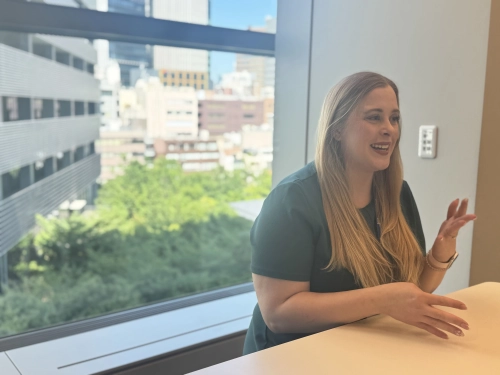
“I wanted to experience firsthand how auditing is conducted in a different environment.”
Julia
I applied for COMPASS because I wanted to experience firsthand how other member firms approach audit engagements, client service, and team management. While many aspects of auditing are universal, communication styles, approaches to problem solving, and ways of collaborating often differ across cultures. I wanted to step outside my usual environment and learn from colleagues whose experiences and perspectives were different from my own.
I had never visited Japan before, and I was particularly drawn to the opportunity to experience a culture and business environment so different from the United States. Beyond work, I was excited to immerse myself in daily life in Japan, learn from local colleagues, and develop a deeper understanding of Japanese working culture and society.
Before coming to Japan, Julia associated the country with diligence, attention to detail, high standards of quality, and workplaces rooted in mutual respect and consideration. During her stay, she found those impressions confirmed while also discovering a level of warmth and openness that exceeded her expectations.
Julia
Working in a new country meant adapting to a new office, unfamiliar systems, and different business processes. However, everyone in Japan was incredibly supportive and helped me settle in quickly. What stood out most was the genuine interest people showed in both me and my experiences in the U.S. Rather than feeling like a short-term visitor, I felt truly welcomed as part of the team.
My primary responsibilities included supporting audit engagements, working on audits of Japanese companies with international operations, contributing to proposals for Japanese companies considering U.S. listings, and assisting in the evaluation of technical position papers. I also had the opportunity to gain exposure to industries outside healthcare, which is my primary focus in the U.S. In particular, participating in an audit of an energy commodities trading company broadened my perspective as an auditor.
Understanding Differences and Discovering Common Ground
Julia
One aspect that left a strong impression on me was the emphasis on building consensus before making decisions. There was a sincere effort to understand different perspectives, and discussions were conducted thoughtfully and carefully.
Adapting to a new system and environment reinforced my appreciation for the flexibility and adaptability of the people around me.
At the same time, I found that our core professional values were remarkably similar. Whether in Japan or the United States, people are deeply committed to delivering high-quality service, maintaining professional standards, and supporting one another in addressing complex challenges. While our cultures and processes may differ, our objectives are aligned. That shared foundation made it easy to collaborate and learn from one another.
New Perspectives Gained Through Working Together
“Our expectations went beyond the work itself.”
R.M
I had always been interested in Forvis Mazars’ global mobility programs. I was curious about the work being done in the United States, the atmosphere of its offices, and what motivated someone to choose Japan as a destination. Beyond the cultural exchange, I wanted to learn as much as possible from Julia, who was successfully leading teams as a manager in the U.S.
T.K.
When considering hosting an international secondee, language capability can influence the scope of work and level of client interaction available. In this case, participation in Japanese-language engagements could be somewhat limited.
For that reason, we felt it was important not only for Julia to gain professional experience but also to understand what it is like to work in Japan, including the challenges of operating in an environment where language can be a barrier. We hoped she would leave with a positive impression of the Japanese office and its people. As we accumulate more experience hosting colleagues from overseas, we can also strengthen our understanding of what it takes to support Japanese employees going abroad, helping the entire program evolve.
Taking Initiative Rather Than Waiting for Opportunities
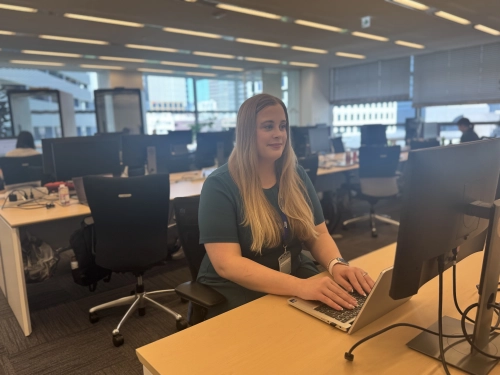
One characteristic consistently highlighted by the Japanese team was Julia’s positivity, openness, and willingness to share her knowledge and experience. Nowhere was this more evident than in her contributions related to PCAOB audits.
R.M.
Julia understood the areas where Japanese team members often feel uncertain about PCAOB audits. She proactively suggested creating learning opportunities and repeatedly emphasized that she was happy to help in any way she could. She ultimately planned and delivered a training session for relevant team members. What impressed me most was the thoughtful way she considered the participants’ perspectives throughout the preparation process.
T.K.
Within the Japanese team, practical PCAOB audit experience is still relatively limited. Recognizing this, Julia independently organized training sessions where she shared fundamental audit concepts, approaches to execution, and perspectives on audit evidence. Participants consistently described the sessions as extremely valuable.
What stood out was that she looked beyond her own assignments and genuinely considered how she could contribute to the growth of others and to the team as a whole.
When Knowledge Sharing Expanded into Networking
During the preparation of an English-language proposal related to PCAOB audits, Julia contributed not only her technical expertise and language skills but also her network of partners and specialists in the United States. The connections created between the Japanese team and U.S. colleagues enabled the proposal to incorporate American perspectives and practical insights. This represented value far beyond simple operational support.
What We Learned from Each Other
Julia
I learned a great deal from my Japanese colleagues about communication, collaboration, and attention to detail. I was particularly impressed by the effort people made to ensure that all stakeholders were well-informed and fully understood the discussions taking place.
Everyone generously invested time in answering questions, sharing knowledge, and helping me adapt to new situations. I came to appreciate how disciplined preparation and attention to detail contribute not only to high-quality client service but also to a collaborative and supportive team culture.
The experience reinforced the importance of approaching unfamiliar situations with curiosity rather than assumptions. Different approaches can lead to equally successful outcomes. That realization reminded me to remain flexible, open-minded, and willing to learn from people whose experiences and perspectives differ from my own.
Learning to Express Our Own Thoughts
R.M.
In Japan, there is often a strong emphasis on understanding another person’s feelings without explicit communication. However, I learned that clearly expressing what you want and what you think is equally important.
In the past, I often tried to infer intentions from people’s reactions or expressions, and I sometimes hesitated to assert my own views.
Julia frequently asked questions such as, “What do you think?” and “What would you like to do?” Through those interactions, I realized the importance of putting my thoughts into words. Now, even in group chats, I try to contribute proactively whenever I have useful information to share rather than waiting for others to respond first.
Making “Working Abroad” Feel Closer Through Everyday Interactions
T.K.
For many members of the Japanese team, opportunities to work with colleagues from the U.S. on a daily basis are limited. By engaging openly with everyone, Julia helped make international collaboration feel more accessible and provided insight into American working styles and communication practices. I believe her presence also inspired people who may consider a short-term overseas assignment in the future.
At the same time, I encouraged Julia to interact not only with colleagues who were comfortable speaking English but with as many people as possible. In practice, she actively joined lunches, connected with other departments, spent time working in the office, and took the initiative to start conversations with a wide range of colleagues. Even without perfect Japanese, she was always willing to try. That positive attitude left a lasting impression on many team members.
Strengthening Global Connections for the Future
T.K.
Achieving “One Team” in the truest sense requires more than simply promoting a slogan. Julia willingly shared her network and created connections between the Japanese and U.S. teams. In many ways, her actions embodied the concept of One Team.
By first building strong relationships and collaborative foundations within individual offices and teams, we can gradually create a truly global One Team.
Julia
There is tremendous value in learning from colleagues in other member firms. Although cultures and communication styles may differ, our commitment to client service, teamwork, and excellence is shared.
The most valuable outcome of this experience was not only the technical knowledge I gained, but also the relationships and friendships I developed with my colleagues in Japan.
Relationships That Continue Beyond Three Months
Julia
Going forward, I hope to serve as a bridge between our teams in Japan and the United States. I want to stay connected with the colleagues I worked with here and actively collaborate on cross-border projects when opportunities arise.
I also hope to help create new connections by introducing colleagues who could benefit from working together. And someday, I would be delighted to welcome members of the Japanese team to the United States.
R.M.
Building a relationship with someone as knowledgeable about PCAOB audits as Julia has been tremendously valuable for our team. Beyond e-learning materials and formal guidance, there is real value in having someone with practical experience whom we can consult about client situations and specific cases.
Going forward, it would be beneficial to have opportunities for ongoing knowledge sharing and discussions with overseas offices in areas where they possess significant expertise.
T.K.
We should continue actively welcoming colleagues from overseas. At the same time, maximizing the benefits of these programs requires a willingness to learn languages, engage with local clients, and participate directly in day-to-day work.
Building on the mutual understanding established through this experience, I hope future programs will enable participants from both sides to become even more deeply involved in practical engagements.
What Changed Through the Exchange?
For Julia, these three months strengthened her adaptability, broadened her perspective, and reinforced the importance of building meaningful relationships within a global network.
For the Japanese team, the experience provided not only practical PCAOB audit knowledge but also valuable lessons in communicating ideas clearly, proactively sharing knowledge, and reducing the psychological distance often associated with English communication and international careers.
The impact of a global mobility program extends far beyond the period of the assignment itself. It creates lasting changes in the perspectives and actions of both participants and host teams. Long after the assignment ends, the relationships remain: trusted advisors, collaborative partners, and connections that encourage the next challenge.
That is the true value of global mobility and the spirit of One Team at Forvis Mazars.
For Those Interested in a Global Career
Julia has a simple message: “If you have the opportunity, take it.”
You do not need to have everything perfectly prepared before stepping into the unknown. Some of the most valuable learning comes from embracing new experiences and challenges.
At Forvis Mazars, we promote global collaboration through international mobility programs, creating meaningful opportunities for both personal and business growth.
Connect with the world. Expand your potential.
Build your own global career journey with Forvis Mazars. We look forward to hearing from you.