
Helping You Prepare for What’s Next - Forvis Mazars participated in 8th CIIE
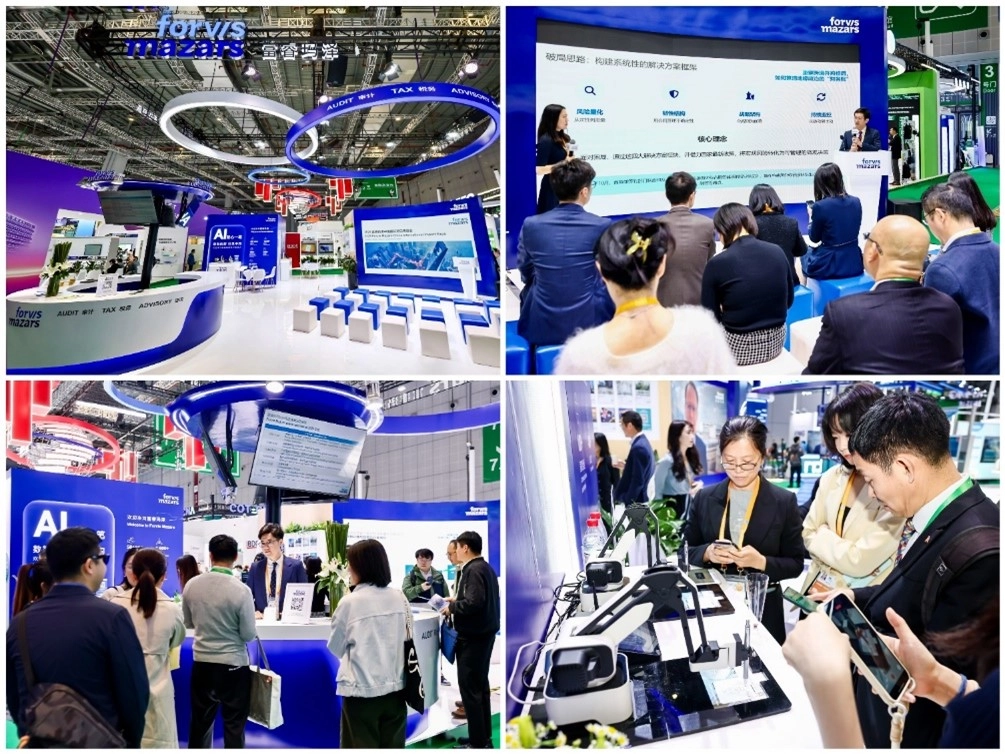
Forvis Mazars 2025 CIIE Booth
CIIE as a Bridge, Deepening Government-Business Synergy
On the morning of November 6, a delegation from the Beijing Trade Mission visited the Forvis Mazars booth. The delegation highly commended the firm’s deep-rooted commitment to the Chinese market and its practical contributions to empowering the real economy, and encouraged the firm to continue leveraging its professional strengths and deepen government-business collaboration. Dr. Julie Laulusa, Managing Partner of Forvis Mazars in China, personally welcomed and accompanied the delegation during the tour. She expressed hope that this interaction would serve as a bond to further enhance mutual trust, expand cooperation, and align professional services more closely with the development priorities of China’s capital.
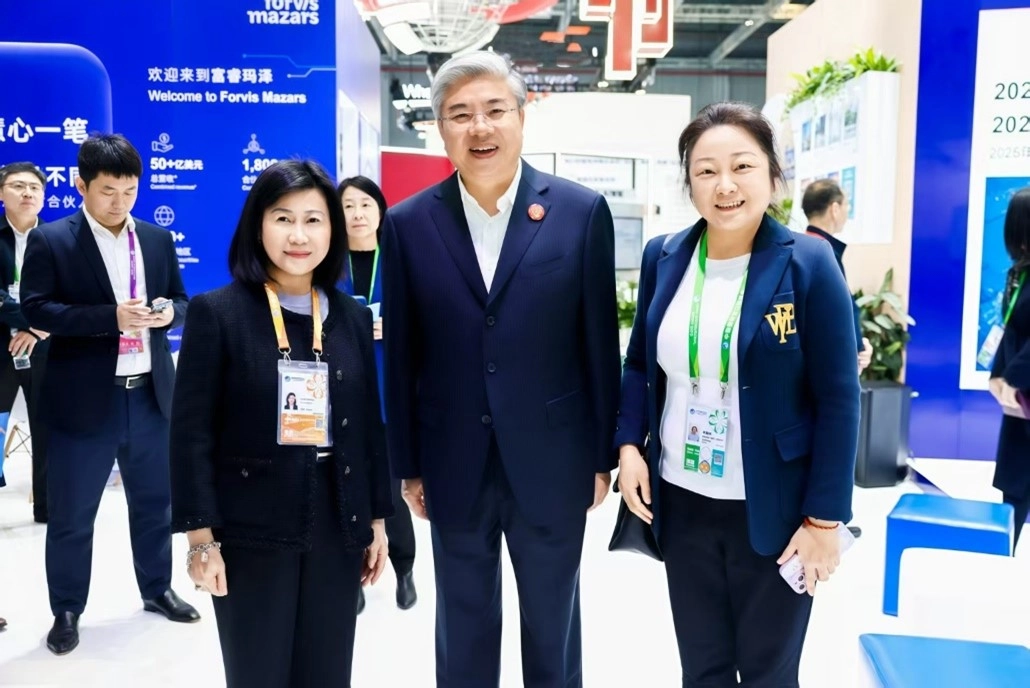
Tang Wenhong, Member of the Party Leadership Group and Vice Mayor of the Beijing Municipal Government (center); Dr. Julie Laulusa, Managing Partner of Forvis Mazars in China (left)
On the afternoon of November 7, leaders including Yang Chao, Member of Standing Committee of CPC Pudong New Area Committee, and Executive Vice Mayor of Pudong New Area; Yuan Yefeng, Director of China (Shanghai) Pilot Free Trade Zone Lujiazui Administration Bureau; and Chen Bin, Deputy General Manager of Shanghai Waigaoqiao Group Co., Ltd., visited the Forvis Mazars booth. Dr. Julie Laulusa warmly introduced the booth’s features, related supporting activities, and the Group’s core advantages and practical achievements in cross-border investment and its international network.
Pudong Executive Vice Mayor Yang Chao praised Forvis Mazars for its outstanding contributions to the regional economic development as a crucial “bridge” connecting international resources. He also encouraged the firm to further leverage its strengths through the CIIE platform and deepen its involvement in Pudong’s development. Director Yuan Yefeng and Deputy General Manager Chen Bin discussed collaboration potential with Dr. Julie Laulusa on topics such as cross-border services, exchanges between Chinese and foreign institutions, and the landing of international clients. The visits by multiple government and enterprise leaders underscore Pudong’s emphasis on “bridge-type” enterprises and reflect high recognition of Forvis Mazars’ professional capabilities. Leveraging this opportunity, Forvis Mazars is committed to further integrating into Pudong’s development and working with all stakeholders to promote win-win cooperation.
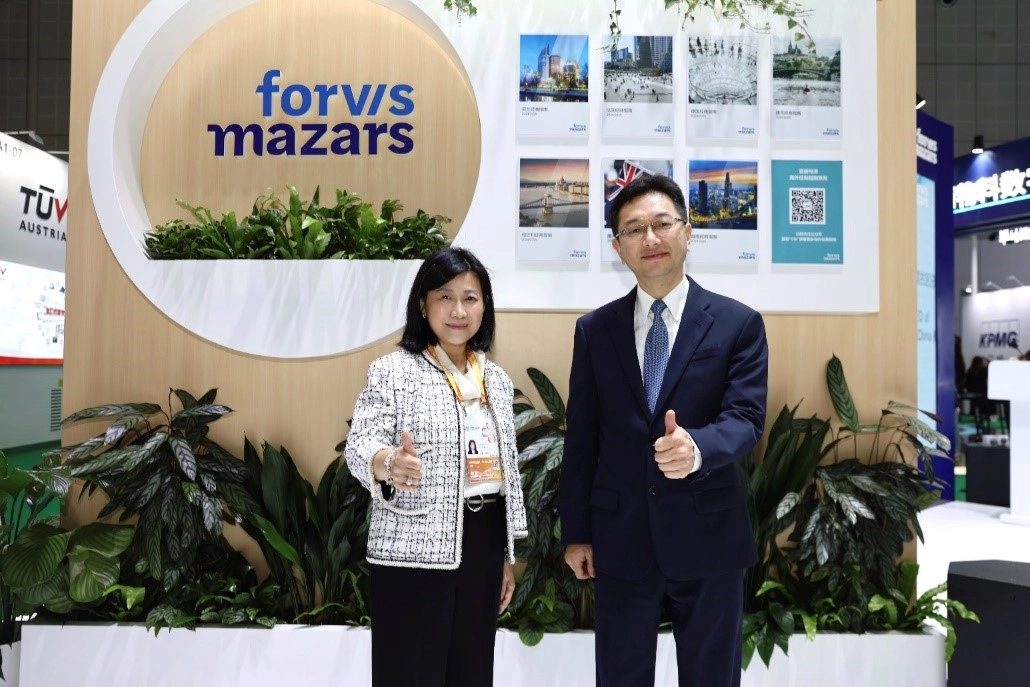
Yang Chao, Member of Standing Committee of CPC Pudong New Area Committee, and Executive Vice Mayor of Pudong New Area (right); Dr. Julie Laulusa, Managing Partner of Forvis Mazars in China (left)
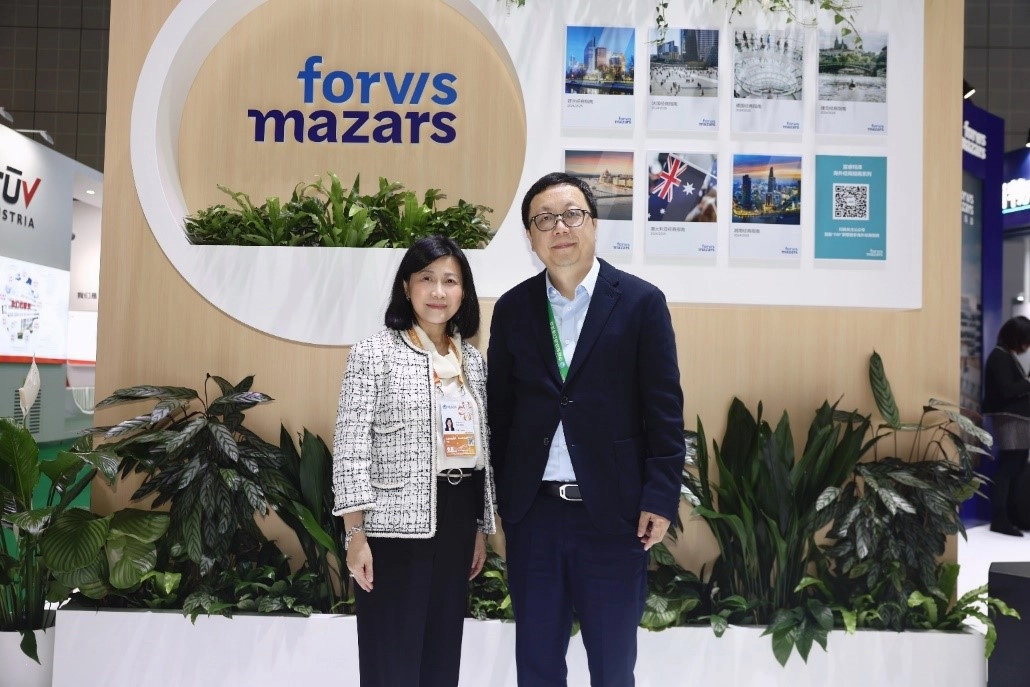
Yuan Yefeng, Director of China (Shanghai) Pilot Free Trade Zone Lujiazui Administration Bureau (right); Dr. Julie Laulusa, Managing Partner of Forvis Mazars in China (left)

Chen Bin, Deputy General Manager of Shanghai Waigaoqiao Group Co., Ltd. (right); Dr. Julie Laulusa, Managing Partner of Forvis Mazars in China (left)
“The success of the 8th CIIE once again demonstrates the immense power of open cooperation. From global companies deepening localization strategies in China to Chinese brands actively expanding overseas markets and showcasing global ambitions, these stories of ‘mutual efforts towards each other’ embody the deep integration of China with the global market,” said Dr. Julie Laulusa. “As a trusted, long-term strategic partner to our global clients, Forvis Mazars is committed to serving as a bridge. By combining our global network with local wisdom, professional services in audit, tax and advisory, and forward-looking insights, we empower businesses to navigate complexity, seize opportunities, and pioneer a future of sustainable growth.”

Dr. Julie Laulusa, Managing Partner of Forvis Mazars in China
Decoding China’s New Market Landscape: Multinationals Shared “Localization Roadmap”
During the exhibition, the Forvis Mazars booth served as a dynamic platform for idea exchange and opportunity matching, attracting numerous domestic and international enterprise representatives and industry professionals. It hosted 20 in-depth dialogues and professional sharing sessions on hot topics including compliance under the new regulations, market and consumption upgrading trends, M&A, sustainability, and valuation. These discussions not only catered the Chinese market’s growth demands for high-quality development and innovative integration but also resonated with the common expectations of multinational companies seeking to establish a stable foothold in China and share in its growth opportunities.
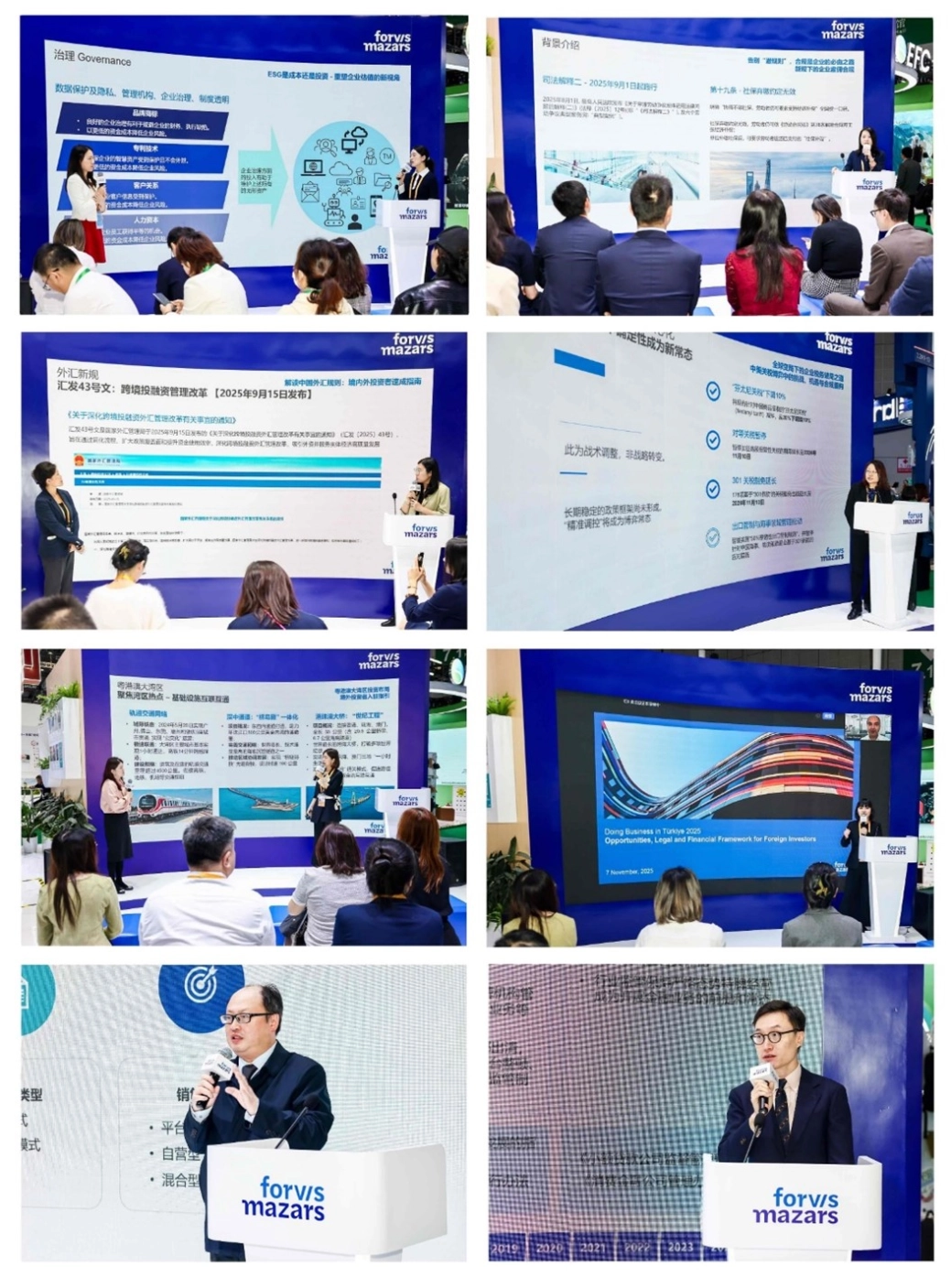
Thematic presentations at Forvis Mazars booth
As China’s economy enters the “New Normal” phase, its growth momentum is stabilizing, while its transformation—driven by innovation, digitalization, and new technologies—is accelerating. In this vibrant and fast-evolving market, the key to winning lies in how companies maintain their core strengths while flexibly adapting to local dynamics. At the “Winning in China’s evolving market: Strategic insights for global enterprises” thematic forum held on November 7, Isabelle Hannedouche, Managing Director of Sodexo Greater China; Jerome Vanachter, President of Lesaffre Greater China; and Matthew Ye, President and CEO of Michelin Greater China & Mongolia, gathered to share their industry insights and corporate strategies in this context.
Recap video - Winning in China’s evolving market

The forum “Winning in China’s evolving market: Strategic insights for global enterprises”
“We are not looking at the service for the service, but we are looking at all the things which are around that. And I think this is what Sodexo is really trying to do—to make sure that we can turn the facilities of our clients into a destination of choice and be able to provide some services that will make the difference. For example, we organize many meaningful experiential activities for school children to nurture their health awareness; we also provide corporate employees with the right food services at the right time, meeting their personal expectations.” revealed Isabelle Hannedouche, Managing Director of Sodexo Greater China, sharing the key to Sodexo’s standout success with the audience. “Another important element for us is the combination between innovation and sustainability. I think this is something that we need to make sure that we look at sustainability, but we also look at it in a way that can help us or help our clients to be more efficient, more competitive, and decrease their spending and on reducing their cost.”
When asked how an international brand can maintain its DNA while adapting to the local market, Jerome Vanachter, President of Lesaffre Greater China, responded, “Lesaffre’s DNA is really the ability of providing and supplying to our clients, the most advanced yeast or ingredients to support the development of clients. In China, our differentiation lies in our agile response to the rapidly changing food consumption market—we need to capture and comprehend tomorrow’s trends and remain prepared for them at all times. Lesaffre has transformed from a supplier of ingredients to a supplier of total service, which is also what our customers expect today. In the next week, we will open our first industrial baking center in Shanghai, empowering industrial clients through the introduction of innovative technologies and other means, thereby supporting them in achieving higher-quality development.”
Facing the rapidly changing market, Matthew Ye, President and CEO of Michelin Greater China & Mongolia, remarked, “Bringing a map is less powerful than bringing a compass. A compass is showing you the direction. The map might be changing a lot of the details for tomorrow. For Michelin, the ‘’compass’ is our vision: All Sustainable. In China, several years ago, we created a corporate social responsibility program called ‘S.E.E.D’, which means ‘Sowing Safety, Environment and Equality to drive sustainable Development’. We believe that if a company wants to create long-term value for local consumers, it needs product power and brand power, but more importantly, it must not forget about people aspect and planet aspect.”
Riding the Wave: Global Brand Leaders Discuss Opportunities and Challenges in China’s New Consumption Era
China’s consumer market is undergoing a profound transformation. According to multiple editions of Forvis Mazars’ consumers surveys featuring four generations, Chinese consumers are shifting their focus from material symbols toward spiritual fulfillment, cultural connotation, and meaningful experiences—demonstrating a more mature and rational consumption outlook. Sebastien Bodennec, Managing Director of Babolat China Mainland, Hong Kong & Macau; Christophe Lauras, Chief Operating Officer of Accor Greater China; and Nicolas Morineaux, CEO of Galeries Lafayette China, were invited to the “Advancing competitiveness: How global brands can capture China’s new consumption momentum” thematic forum on the afternoon of November 7. They engaged in an in-depth discussion on how global brands can build differentiated advantages and capture new opportunities in China’s consumer market.
Recap video - Advancing competitiveness
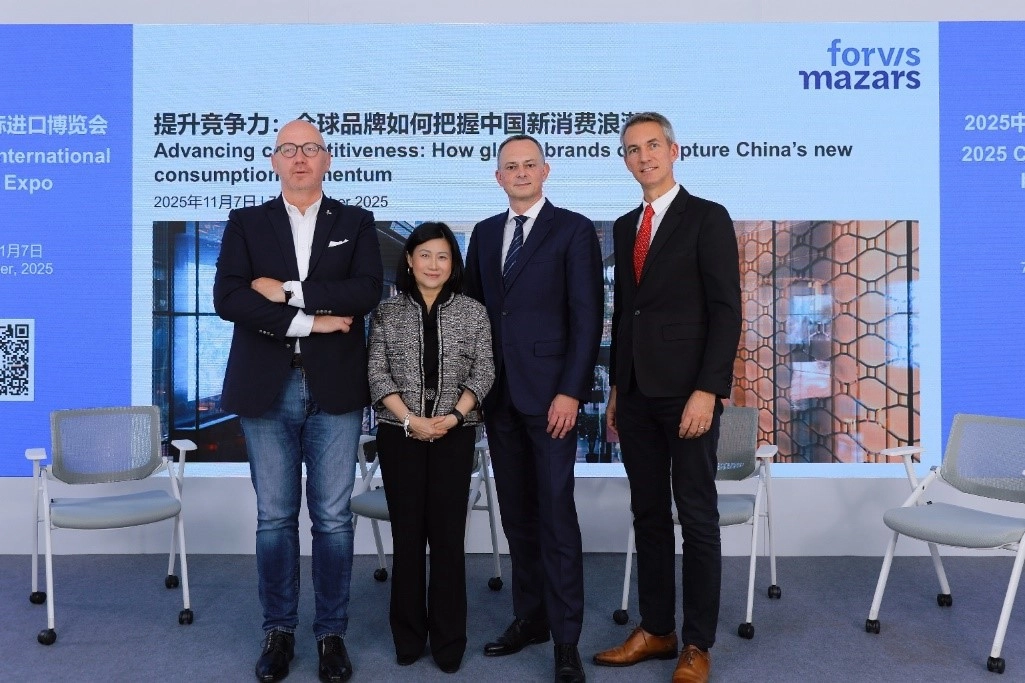
The forum “Advancing competitiveness: How global brands can capture China’s new consumption momentum”
Sebastien Bodennec, Managing Director of Babolat China Mainland, Hong Kong & Macau, pointed out that amid the pandemic and changes in the economic environment, Chinese consumers’ decision-making patterns have rapidly shifted from impulsive brand-driven purchases to a more mature stage of rational buying. He explained, “A notable shift in the Chinese market over the past three years is that ‘value for money’ has become a key consideration. Especially in the sports sector, Chinese consumers are no longer making purchases primarily for ‘showing off’. Instead, they are placing greater emphasis on whether the products truly meet their actual sports needs. Before making a purchase, they thoroughly research products, compare various options, and ultimately make rational choices. This consumption trend is closely aligned with Babolat’s brand objectives. We are committed to continuous innovation, providing better equipment for sports enthusiasts in China and around the world, helping them enjoy sports, enhance their performance, and embrace a healthier lifestyle. China is full of resources and innovation capabilities. We believe a lot in the economic development of the next years.”
“In the ‘Joy Economy’, consumers are increasingly pursuing comprehensive, all-round experiences and are more willing to allocate their budgets to activities that explore local culture, craftsmanship, gastronomy, and other areas that bring surprise and personal growth. Meanwhile, marketing approaches are shifting from traditional KOL promotions to more impactful ‘user generated content’, relying more on authentic sharing and reviews from customers and other travelers.” Christophe Lauras, Chief Operating Officer of Accor Greater China, shared insights on how the hotel industry is responding to these consumption changes. “Accor is committed to merging and converging global brand DNA with local culture. Taking the MGallery brand in China as an example, we have developed their own specific hotel linked to the local culture. At Ming Hotel Nanjing MGallery Collection, we drew inspiration from history. The cocktail’s story is intertwined with the Ming Dynasty, reflecting Nanjing’s rich past while resonating with its vibrant present.”
When discussing how to balance global consistency with local adaptability, Nicolas Morineaux, CEO of Galeries Lafayette China, stated, “As a brick-and-mortar solution, we have to find a solution to differentiate ourselves, find solution to be relevant to the Chinese clients, but also abroad. Specifically, we first need to actively embrace technology and retain the clients by embracing the way of doing business in China; secondly, we must continuously give surprises for clients, which requires us to constantly hunt for brands and hunting for brands is deeply rooted within our DNA. Now, it’s a bit of a time of ‘normalization’. It’s not anymore ‘east meet west’, but ‘east and west together’. It is the time to facilitate the access to all the markets to the Chinese brands. This is the opportunity I see in our era.”
From “Manufacturing” to “Branding”: China’s Fashion Industry Steps into the Next Phase
Currently, China’s fashion industry is undergoing a critical transition from “Made in China” to “Global Brands”. This marks a historic leap from being a world-renowned “global factory” to establishing globally influential brands. Chinese brands are comprehensively advancing from “product globalization” to “brand globalization”, showcasing the unique charm of Chinese design and culture.
This year marks the fifth year that Forvis Mazars has conducted in-depth discussions on the topic of “Chinese Brands” at the CIIE. As a long-term observer and facilitator, Forvis Mazars continuously tracks the upgrade path of Chinese brands from manufacturing to creation, constantly gaining insights and mapping their development trajectory and future blueprint. On November 8, three founders and leaders of internationally-oriented local brands—Chen Long, Manager of CHEN.1988 Women’s Wear Brand; Liu Chaoying, Founder and Creative Director of Shenzhen Zhousheng Fashion Industrial Co., Ltd.; and Zhang Lujian, Founder of RIZHUO Brand—participated in the “From made in China to fashion icon: China’s next global branding leap” thematic forum. The discussion was moderated by Wang Jun, Executive Chairman of China Fashion Forum and Chairman of Beijing SIGEN International Culture Development Co., Ltd.
Recap video - From made in China to fashion icon
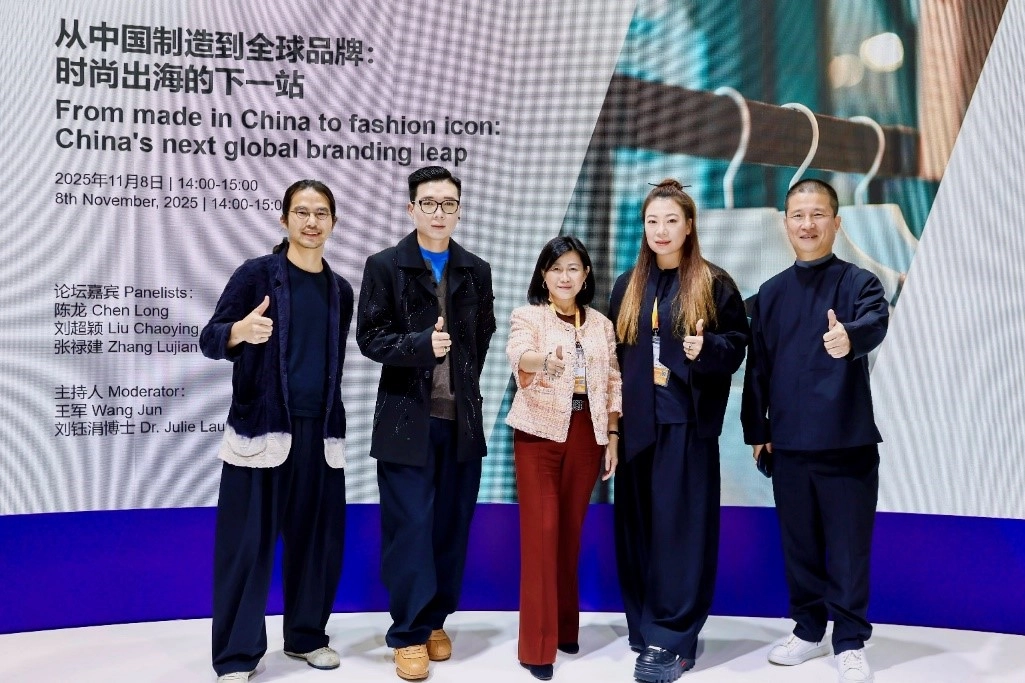
The forum “From made in China to fashion icon: China’s next global branding leap”
Facing the different ecosystems of domestic and international markets, Chen Long, Manager of CHEN.1988 Women’s Wear Brand, emphasized the importance of maintaining brand independence and staying true to the original vision of design. He stated, “In September this year, we debuted at the 2025 Italy-China Fashion Summit in Milan. During that time, I deeply felt that genuine design can be seen by the world, which was a great confidence booster. A brand should not alter its design language merely to cater to the market or deliberately emphasize ‘Chinese elements’. Instead, it should stay true to itself, expressing its most proficient areas through color, fabric, cutting, and structure. This is not only my persistence as a designer but also stems from my mission as an educator. I hope to leverage this boutique brand to feed back into the classroom, making teaching and the profession more vibrant and the industry ecosystem healthier, thereby nurturing more new forces for China’s fashion soil. We will also advance our overseas plans next year, hoping to show the world more of our outstanding works.”
“China possesses over 85% of the world's high-quality cashmere resources. This premium natural animal fiber holds extremely high geographical endowment and strong competitiveness in the global market, serving as our natural advantage for going global.” analyzed Liu Chaoying, Founder and Creative Director of Shenzhen Zhousheng Fashion Industrial Co., Ltd., providing concrete strategic thinking for brand globalization from the perspective of industrial chain advantages and global consumption trends. She elaborated, “Currently, global consumers have become more rational, focusing on lifestyle and quality. This is a golden period for Chinese designer brands to go global, but we also face challenges like cultural resonance and sustainable concepts. Brands should not completely abandon their Eastern narrative merely to cater to overseas markets, nor should they excessively incorporate Chinese elements to the point of being reduced to mere symbols. Based on observations accumulated in recent years, we find that human spiritual needs are fundamentally universal. Shifting the perspective from micro to macro, a brand's journey to the world can proceed naturally.”
When discussing how brands can transcend mere product exportation to become an expression of cultural value, Zhang Lujian, Founder of RIZHUO Brand, expounded, “Since our establishment, we have been contemplating how to build an international brand with a ‘Chinese expression’. Since our first attempt to go global via New York Fashion Week in 2019, it has become increasingly clear to us that brand globalization is not just about exporting products but also about conveying values. Whether it's the product, material, or the temperament of the clothing, only by establishing an ‘expression’ that represents oneself can a brand take the first real step toward going global. RIZHUO is a clothing brand built on the foundation of ‘Chinese Chivalrous Culture’, dedicated to infusing Eastern daily poetry into contemporary life. We have also established the ‘Ah Jian Clothing Mobile Company’ and launched the ‘Groundbreaking Plan’, bringing aesthetic education to rural areas, allowing it to flourish even in remote soil.”