
Sustainability Information Standards (NIS) in Mexico: Is your entity ready to report in 2026?
27 October 2025
On 1 January 2025, the Sustainability Information Standards (NIS), issued by the Mexican Council for Financial and Sustainability Reporting Standards (CINIF), came into force. These standards, aimed at private entities, respond to growing demands for transparency from clients, investors, and financial institutions regarding environmental, social, and governance (ESG) performance.
The first report, covering the 2025 financial year, must be disclosed alongside the 2026 financial statements.
We are now in the final quarter of 2025. This is a critical time to ensure your organisation is gathering the necessary information. If you have not yet begun, now is the time to act.
Why is this urgent for your business?
Beyond regulatory compliance, adopting the NIS is a strategic decision with direct implications for your operations and profitability.
- Value chain pressure (commercial risk)
As global regulations (such as IFRS S1 and S2 or the ESRS in Europe) become more consolidated, large corporations are required to report on their value chain. This means your major clients may request this information to comply with their own disclosures. Failure to provide it could jeopardise your position as a supplier.
- Access to finance and risk management
Financial institutions in Mexico are already applying ESG criteria to assess risk. Providing sustainability information in accordance with the NIS may result in more favourable credit conditions. Conversely, the absence of such information may hinder access to new financing, as lenders may perceive unmanaged risks.
- Anticipating regulation and gaining competitive advantage
Regulation in Mexico is advancing rapidly: environmental taxes in 18 states, circular economy legislation, and a proposed law on greenwashing are clear indicators. Implementing the NIS now not only prepares you for future requirements but also provides a competitive edge by enhancing your reputation and operational efficiency.
What must be disclosed?
Initial implementation focuses on two key areas:
- Entity profile and context
General information regarding your sector, geographic location, principal activity, and a detailed breakdown of your workforce (number, category, gender, age, etc.), compared with the previous year.
- 30 Basic Sustainability Indicators (IBSOs)
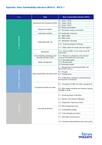
NIS B-1 requires the disclosure of thirty (30) key indicators: 16 environmental, 6 social, and 8 governance-related. These include complex metrics such as GHG emissions (Scopes 1, 2, and 3), water consumption, waste management, pay gap, and integrity policies. (See Annex for details).
Unsure where to start?
Gathering this information—particularly the 16 environmental indicators—can be a significant challenge. We invite you to use our free NIS readiness assessment tool:
Please note that this is only the first stage. CINIF is already planning a second phase with more complex standards (risk, strategy, governance). Starting now is the most effective approach:
What Is the role of your financial auditor?
It is important to understand that sustainability information is not covered by your standard financial audit (as they are prepared under different frameworks: NIS vs. NIF).
Your financial auditor will treat this information as “Other Information”: they are required to read it and identify any material inconsistencies with the financial statements, but will not express an assurance opinion on it.
If your clients or banks require assurance (independent validation) of this information, a separate report is necessary. We can provide this assurance service under international standards such as ISSA 5000, ISAE 3000, or the Mexican Attestation Standard 7010.
How Forvis Mazars can support you
We understand this is a new challenge. Our multidisciplinary team of sustainability experts can support you throughout the process:
- Initial diagnosis and gap analysis
- Advisory on data collection and calculation of the 30 IBSOs
- Preparation of sustainability disclosures
- Assurance (limited or reasonable review) of the final report, if required.
Contact your Forvis Mazars partner to schedule a conversation and design a tailored work plan.
We invite you to download the appendix: Basic Sustainability Indicators (BSIs) – SIS B-1.
Want to know more?

Carlos Fidel Carmona Estañon Audit Partner - Ciudad de México (Mexico City)