
Forvis Mazars Concludes Successful Ninth CIIE, Marking Seven Consecutive Years
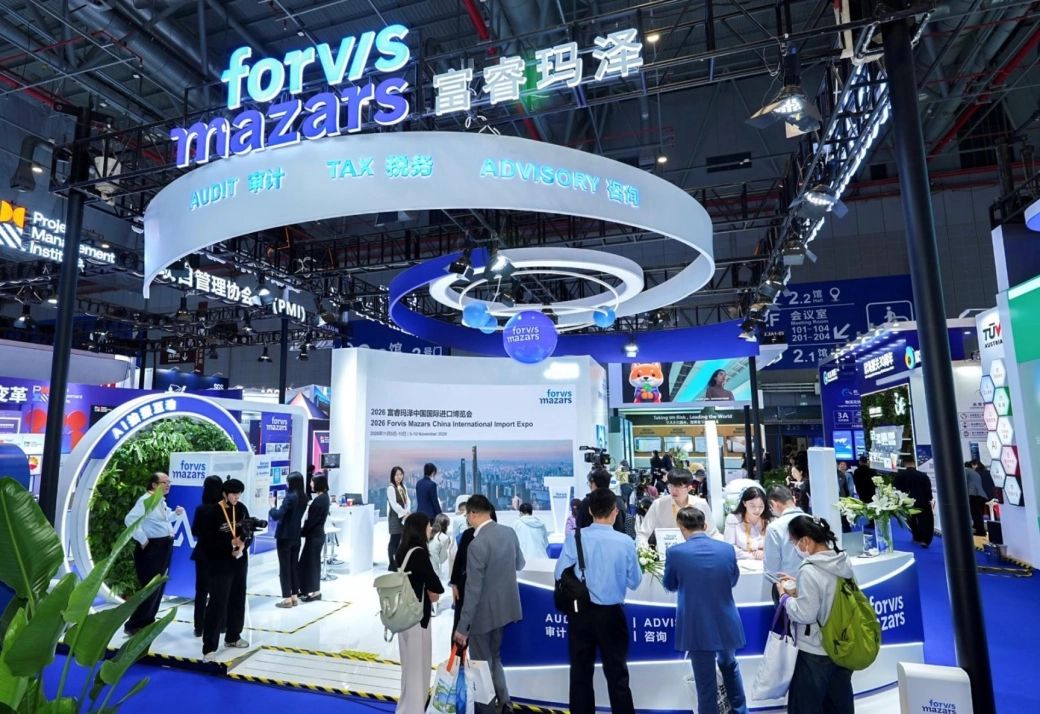
Forvis Mazars 2026 CIIE Booth
Experts from Forvis Mazars, closely aligning with industry trends and core concerns, delivered multiple keynote presentations to both on-site and online audiences on topics such as "Sustainability and ESG Regulation," "Intelligent Financial Modeling," and "Chinese Enterprises Going Global." These presentations offered practical perspectives and actionable insights for real-world business challenges, helping enterprises better connect with China and link to the world.
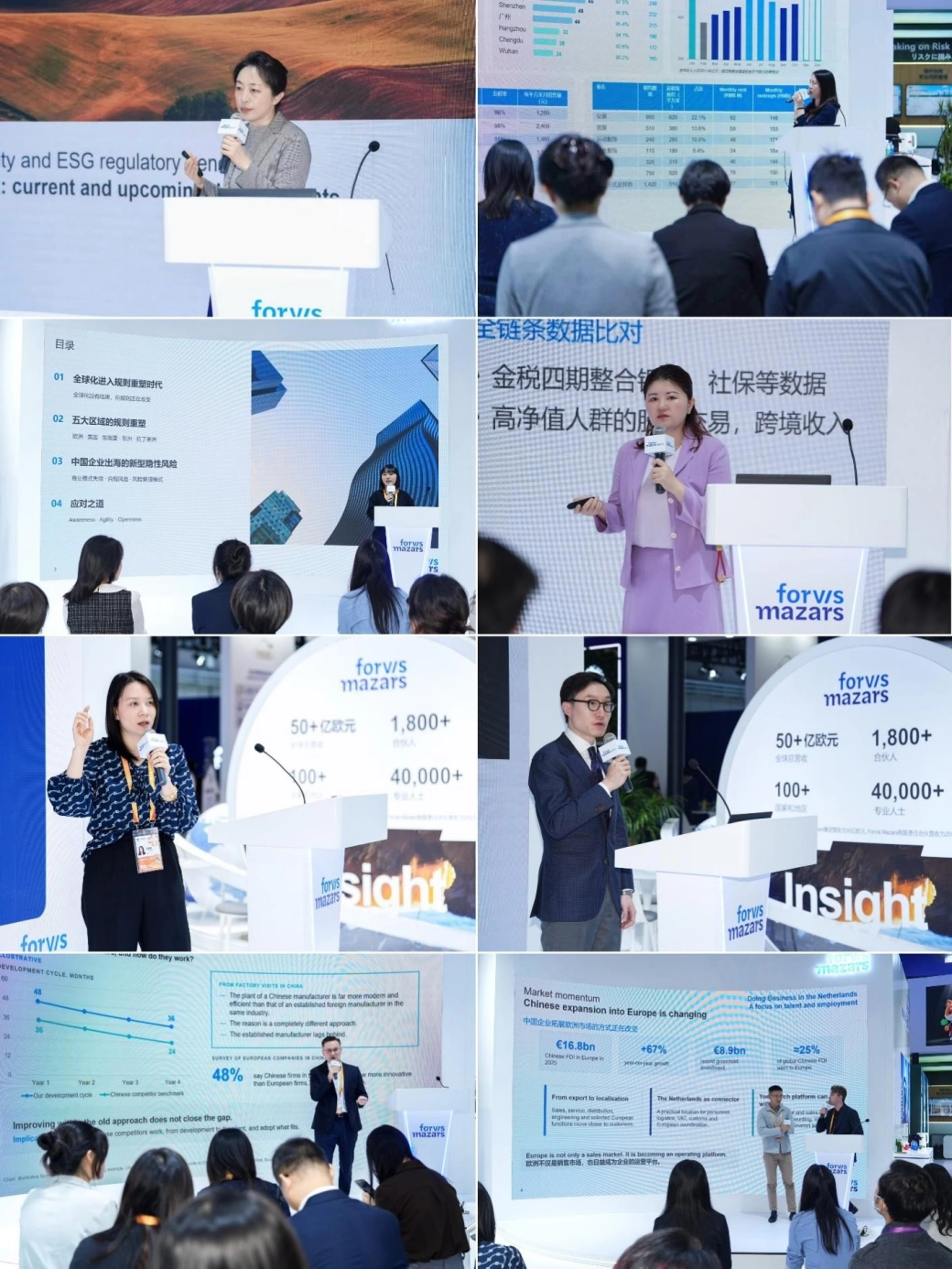
Forvis Mazars Team Delivers Thematic Presentations
CIIE as a Bridge: Government and Enterprises Discuss Opening-Up and Cooperation
On the afternoon of November 9, Zhou Haidong, Deputy Director of the Lujiazui Administration Bureau of the China (Shanghai) Pilot Free Trade Zone Management Committee, visited the Forvis Mazars booth with his delegation, accompanied by Wu Jianfeng, Director of the Commerce and Professional Services Development Division of the Lujiazui Administration Bureau. Dr. Julie Laulusa, Managing Partner of Forvis Mazars in China, warmly received them and introduced Forvis Mazars’ exhibition content, forum themes and activities at this year's CIIE.
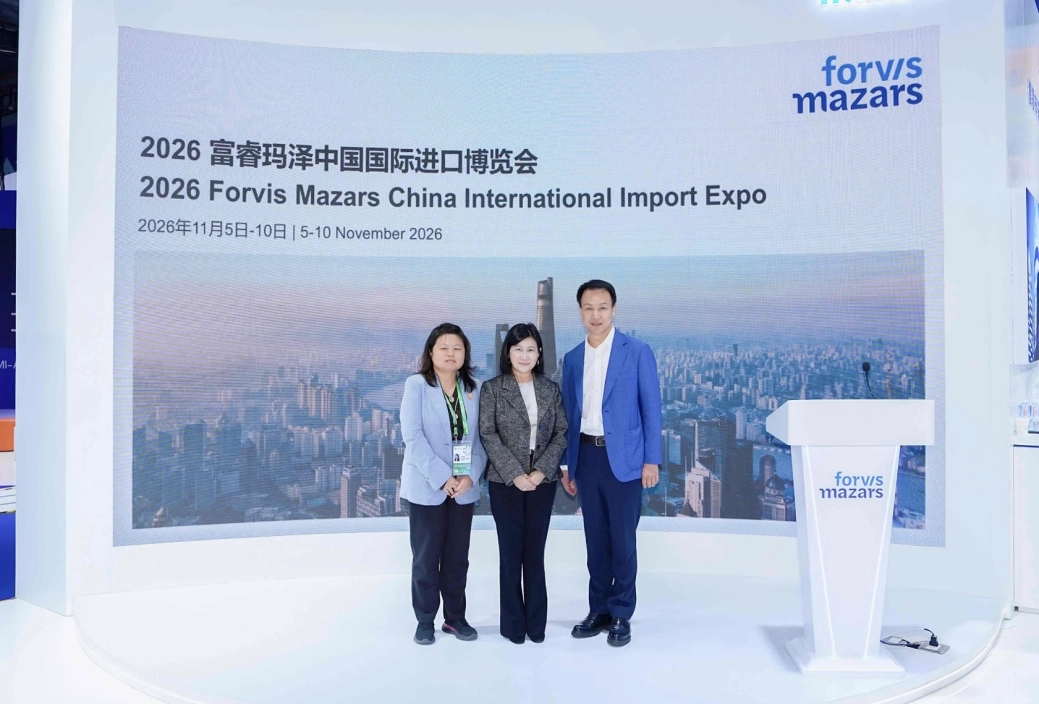
(From left: Ms. Wu Jianfeng, Director of the Commerce and Professional Services Development Division of the Lujiazui Administration Bureau; Dr. Julie Laulusa, Managing Partner of Forvis Mazars in China; Mr. Zhou Haidong, Deputy Director of the Lujiazui Administration Bureau of the China (Shanghai) Pilot Free Trade Zone Management Committee)
Deputy Director Zhou Haidong affirmed Forvis Mazars' positive contribution to Pudong New Area's economic development and hoped the firm will continue leveraging its strengths to promote China-foreign exchanges and cooperation and inject more vitality into the regional economy. Dr. Julie Laulusa thanked the Pudong New Area government and the Lujiazui Administration Bureau for their long-term support, stating that Forvis Mazars will remain rooted in Pudong, serve Shanghai and reach across the country, fully leverage its global network and local professional advantages, actively participate in regional economic development and international exchanges, and contribute to Pudong's high-level opening-up and economic growth.
Value-Added Services Driving Growth: Brands in the Experience Economy
During the CIIE, Forvis Mazars officially released the research report "Premium Consumption Upgrade in China: Behavioural Shifts and Value-Added Service Demand Mapping." Based on 4,604 valid samples across generations, genders and city tiers, the report analyzes the latest trends in China's premium consumer market. Three-quarters of Chinese premium consumers see value-added services as a core factor in consumption decisions, and nearly 90% recognize their positive role in enhancing brand loyalty—a finding that reflects the ongoing changes in this market.
On November 6, building on the report's core insights, Forvis Mazars held a thematic forum, "The Experience Economy: The Next Frontier of Consumer Competition," featuring Maggie Chan, Managing Director of Edrington China; Patrice Nordey, Founder and CEO of TRAJECTRY; and Qin Shen, President of Michael Kors Asia Pacific. Drawing on practices from premium spirits, innovation consulting and fashion brands, they explored brand growth pathways in the experience economy.
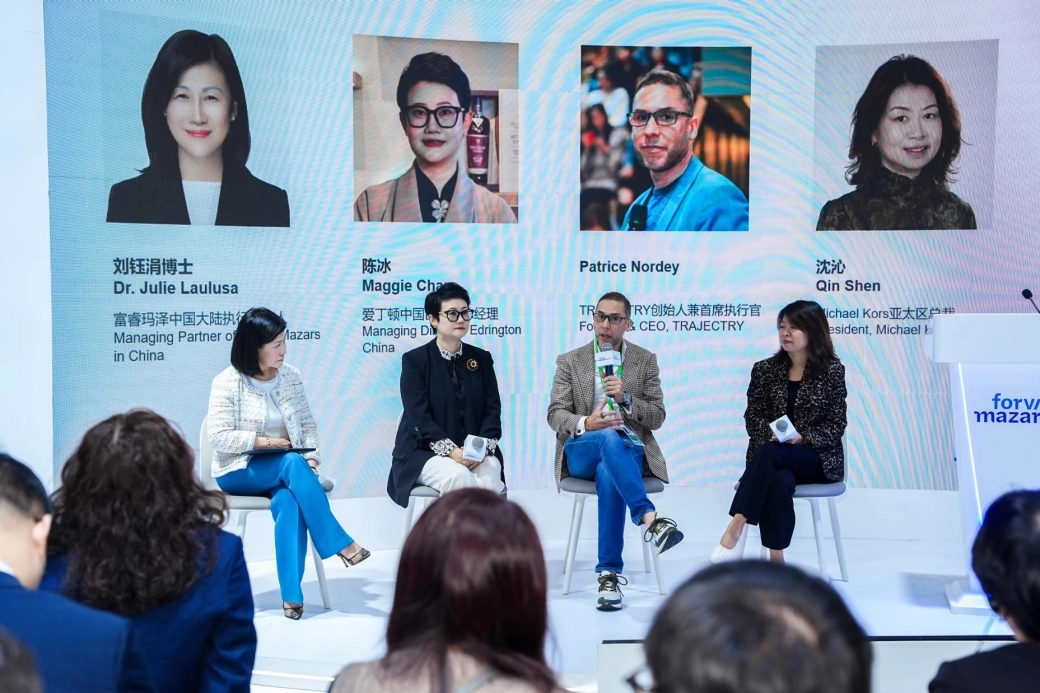
Panelists for the forum titled "The experience economy: The next frontier of consumer competition"
Maggie Chan, Managing Director of Edrington China, explained how premium brands can turn quality, cultural heritage and immersive experiences into lasting competitiveness. In her view, quality determines whether a brand can establish itself, while the professional capabilities built over its history, its consistent values and the cultural identity it creates with consumers determine whether it continues to be appreciated and chosen. The Macallan, with a 202-year history, expresses its pursuit of excellence through "Mastery Beyond Reason": from oak selection, cooperage and sherry-seasoning to the vertical integration of long maturation, all condensed into the natural color and distinctive flavor in the glass. Its history is thus not merely length of time, but a genuine foundation for differentiation and sustained appeal. Chen added that a classic brand's vitality lies in building new connections with contemporary consumers while safeguarding its foundations. Through brand stores in Shenzhen, Beijing, Chengdu and other cities, as well as tasting sessions and master distiller sharing events, Edrington is turning retail spaces into venues for product exploration, professional exchange and cultural experience, helping consumers move from learning about the brand to experiencing its value firsthand.
Patrice Nordey, Founder and CEO of TRAJECTRY, pointed out that advances in digital technology and AI are enabling brands to gain deep and scalable insight into individual consumers' real needs and emotions, providing technological support for personalised experiences tailored to each individual. "Today we can already use AI to conduct large-scale consumer interviews, identify consumers’ emotional characteristics, and further uncover their underlying purchase motivations, and achieve massive sample coverage." However, he emphasised that technology remains a tool in service of people: "The faster AI develops, the more people seek authenticity and genuine emotional connection. What truly resonates with consumers is often not dazzling technology, but simple, real interactions imbued with human warmth." In Nordey's view, the ultimate goal of digitalisation is to strengthen genuine connections between brands and people, not to replace authentic emotional interaction.
Qin Shen, President of Michael Kors Asia Pacific, shared her views on changing luxury and experience consumption based on frontline fashion observations: "After the pandemic, people no longer simply pursue status symbols of luxury, but are more willing to reward themselves, find small joys in everyday life and take care of their emotions." She sees the experience upgrade as a systemic transformation across the entire consumption chain: frontline sales staff are building personal IPs on social platforms, while offline stores are becoming social settings—the Michael Kors Beijing flagship store, for example, has created JET SET LOUNGE (MK Travel Bar), the world's first to incorporate dining, linking the brand with consumers' lifestyles and building warmer emotional connections. On the rise of Chinese local brands, Shen emphasized: "Brands have no nationality; creativity matters most. International brands need to combine global experience with local agility to achieve healthy competition and synergy."
AI Reshaping Talent Value: Exploring the Next Generation's Growth Path
On the same day, focusing on talent value reconstruction and organizational transformation amid the AI wave, Forvis Mazars held a thematic roundtable titled "Next-generation talent in the AI era". It featured an in-depth dialogue with Sophie Coulon, Partner and Managing Director of VO2 Asia Pacific, and Norman Zhou, Senior Client Partner of Korn Ferry, who explored talent strategies and younger generations' growth paths from technology and enterprise perspectives. Before the forum, Dr. Julie Laulusa, Managing Partner of Forvis Mazars in China, screened a short film produced with AI. Drawing on workplace scenarios, it analyzed industry-wide changes—the dissolution of knowledge scarcity, the restructuring of middle management, and the disappearance of the career ladder's base—pointing to the core value of talent in the AI era: the ability to ask questions, judgment, and a sense of responsibility.
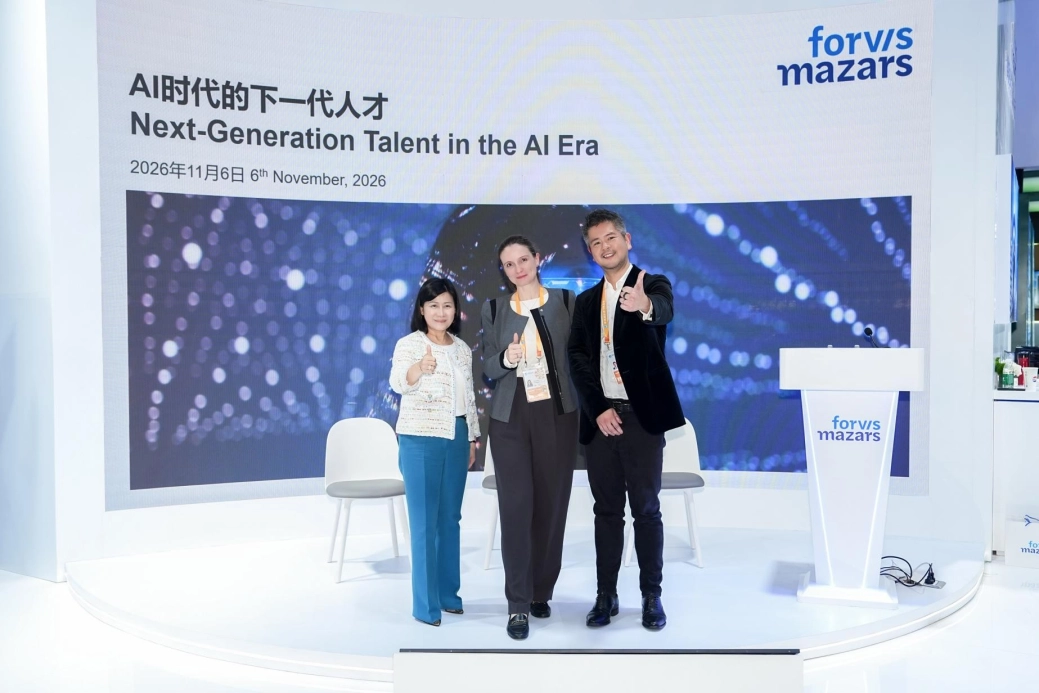
Panelists for the forum titled "Next-generation talent in the AI era"
Sophie Coulon, Partner and Managing Director of VO2 Asia Pacific, drew on her frontline practice in supporting enterprises through AI transformation to share the systematic implementation path and the core directions of organizational change. She stated that such transformation is by no means something that can be completed simply by purchasing tools; rather, it is a complete systematic undertaking. First, it is necessary to achieve strategic alignment of the leadership and clarify the responsibility boundaries of each role in this shift. Second, it is necessary to select genuinely valuable business scenarios for pilots, balancing short-term input-output and long-term layout. Ultimately, the core is to drive all employees to truly accept and use AI, so that the value of technology is realized on the ground.
"When ordinary employees are able to build personal agents, the permission boundaries of tools, the reliability of output results, and the ultimate accountability mechanism all need to be redesigned." At the organizational level, Sophie Coulon believes that AI will further drive a comprehensive reconstruction of the enterprise's authority-responsibility system: "We should focus on cultivating composite talents with both 'technology and business' capabilities, give employees sufficient space to fully apply their abilities, and use AI to free up human labor to do more creative and higher-value work." When discussing the scarcest talent traits in the future, she emphasized empathy, judgment, and trust-building ability: "The parts involving people's emotions and relationships will always require human involvement. When clients ultimately choose to cooperate, what they trust is always a specific individual."
Norman Zhou, Senior Client Partner of Korn Ferry, specifically broke down the logic of talent value migration in the AI era. "A complete piece of work is often divided into three stages: defining the problem and objectives, the execution and analysis in the middle, and the final decision-making and accountability," He said. "What AI is best at—and what is easiest for it to replace—is precisely the standardized execution process in the middle. But the value at both ends of the process, namely what problem this work is actually meant to solve and who is ultimately responsible for the final result, can only ever be created by people."
Regarding talent strategies for enterprise AI transformation, he further proposed a new "4B" framework that adds Bot, an intelligent tool, to the traditional "3B"—Build, Buy and Borrow: Enterprises should fully tap veteran employees' knowledge and make frontline key staff the core driving force for AI implementation, while selectively bringing in scarce interdisciplinary capabilities and drawing on external consultants to build reusable methodologies. Addressing young people's anxiety about "jobs being replaced," he offered three pieces of advice: "First, stay curious—use AI to quickly get started in an industry that interests you; second, cultivate business thinking—focus on what problems you can solve for clients rather than passively executing tasks; third, stay responsible—learn to draw inferences and apply them in your work."
Rooted in Heritage: Chinese Fashion Brands Build a New Aesthetic
As Chinese apparel reaches the world with cross-border e-commerce exports of 762 billion yuan, a question arises: beyond scale, how can Chinese brands be remembered globally? This year marks Forvis Mazars' sixth year of in-depth discussions on Chinese brands at the CIIE. As an observer and promoter, the firm has closely followed Chinese brands' shift from "manufacturing" to "creation," offering forward-looking insights. On November 8, four Chinese brand founders and leaders—Hongyuan Jin, Co-founder of Pianduan; Lang Qing, Brand Director of CAIRA; Stella Yang, Founder of UNICA; and Liyan Zhou, Founder of HEYEN—were guests at the roundtable "From history, culture to philosophy: How Chinese brands build their own aesthetic language," sharing their views with host Jun Wang, Producer of FASHION THINK and Chairman of Beijing SIGEN International Culture Development Co., Ltd.
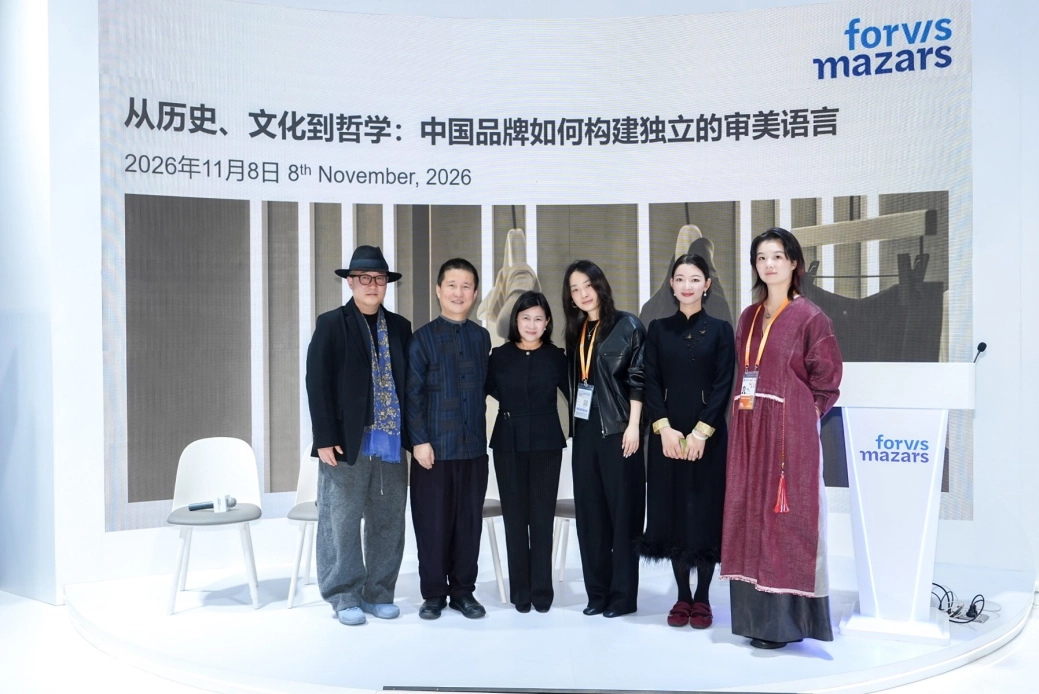
Panelists for the forum titled "From history, culture to philosophy: How Chinese brands build their own aesthetic language"
Having been established in the market for nearly 20 years, Hongyuan Jin, Co-founder of Pianduan, shared the logic of long-term brand operation amid aesthetic iteration at the roundtable. He stated that Pianduan has always upheld "comfort is fashion" as its core philosophy. "Comfort" does not merely remain at the level of fabric and physical sensation, but also encompasses a comprehensive pleasant experience across multiple dimensions such as brand visuals and exhibition spaces. In response to "how to balance personal aesthetics with consumer needs," Jin shared the brand’s "doing and not doing" philosophy: "Not doing means sticking firmly to our brand DNA and stylistic boundaries, rather than blindly chasing trends; doing means staying open, understanding consumers' real needs, listening to them through stores and online interactions, naturally blending Chinese design aesthetics into our products, and finding a precise balance between brand adherence and market demand." He admitted that, as a commercial brand spanning 19 years, Pianduan has always sought answers in "taking and giving" and "a sense of proportion." Going forward, it will continue to explore the integration of "design and business with attitude," leverage new technologies such as AI to upgrade content and efficiency, and share over a decade of practical experience with more young brands—jointly advancing China's fashion industry.
Lang Qing, Brand Director of CAIRA, shared a unique aesthetic path rooted in local culture. "Every seasonal collection of CAIRA is a diary of our lives," she said. With the brand rooted in Fuzhou, she draws inspiration from the city and its surroundings—the banyan scenery, the lines of ancient architecture, and Fujian folk culture—and reflects on how regionality shapes creation rather than merely representing local culture. In recent years, she has launched collections deeply tied to urban culture, including "Farewell to Old Things," "BUXIU" and "Lines Drifting Among the People." She believes that building a unique aesthetic language requires creating one's own real world rather than chasing market hot spots. "The core of a brand is sincerity and the unity of knowing and doing. Stories cannot be fabricated; design must align with real-life feelings—from the starting point of thought to silhouette, fabric and craftsmanship, and on to online visuals and offline displays, one main thread must run through." She added that she will continue to invite consumers into the brand's story, letting clothing connect people with local culture and naturally grow brand recognition through sincere expression.
"Consumers today are more willing to buy a lifestyle and yearn for a concrete vision of a better life." Facing an ever-changing market, Stella Yang, Founder of UNICA, observed a shift from "chasing symbols" to "yearning for life." She therefore emphasizes the core value of individual experience in aesthetic construction. She divides daily life into different domains and designs clothing for different states: "I have always believed that my aesthetics are the consumer's aesthetics—I am an ordinary consumer too, and the clothes I want to wear in different scenarios reflect users' real needs." Yang believes that everyone's unique understanding of life can become the core of a brand. "Building a brand is essentially expressing oneself. I have always hoped the brand could become a carrier of my life story, preserving my aesthetics and thinking—that is the original intention behind founding it."
Liyan Zhou, Founder of HEYEN, drew on her cross-disciplinary background to explain how Chinese-style aesthetics has evolved from an accumulation of elements to cultural refinement. "The most obvious change in Chinese-style consumption in recent years is that people have shifted from paying for traditional elements and fabrics to paying for design and aesthetics," she said. Previously, consumers would pay for Chinese-style clothing as long as it featured traditional elements such as frog buttons or Song brocade; now they both recognize cultural value and return to the clothing itself, valuing design, wearability and aesthetic expression. Chinese-style aesthetics is thus upgrading from "realistic depiction" to "impressionistic expression." She believes that cultural going-global needs no deliberate preaching: if the design is aesthetic and recognizable enough, people will naturally want to explore the stories and cultural connotations behind it. On the brand's long-term development, Zhou emphasized: "The hardest thing in the world to fake is time. Building a brand requires settling down, befriending time, and persisting in what one loves and does well—and a unique brand value will naturally accumulate."
Building on Goodwill: Jointly Exploring the Long-Term Path of Corporate Social Responsibility
On the CIIE stage, transactions and cooperation remain the core agenda, but beyond commercial value, deeper connections with society are increasingly on entrepreneurs' minds. On November 9, five founding members of the Shanghai Blue Ribbon Welfare Foundation attended the roundtable "Making a Difference: Business and Society Shaping a Better Future Together"—Bai Junping, Chairman of the Board of the Foundation and Chairman of Shanghai Development Real Estate; Weng Xiaoyu, Chair of the Supervisory Board and General Manager of Shanghai Duoji Adhesive Products; Lin Zaida, Secretary-General and General Manager of Shanghai Huilin Food Company; and Deputy Secretaries-General Xu Yaqin and Zhang Hui. They shared their public welfare practices and reflections on how enterprises can respond to social expectations through action and move from a single act of kindness to lasting strength.
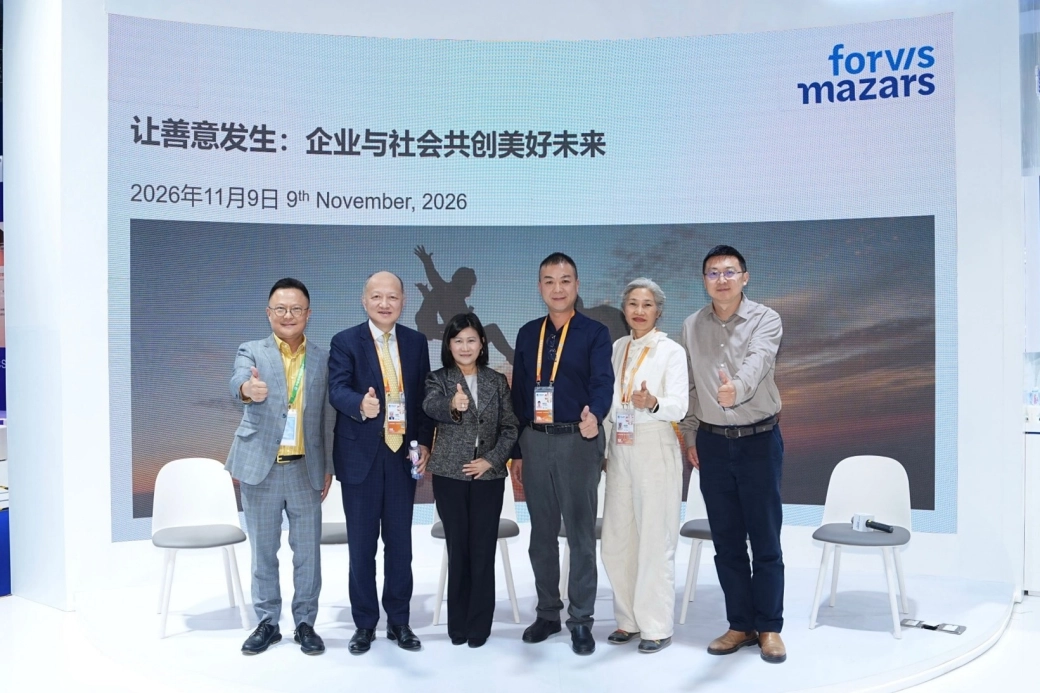
Panelists for the forum titled "Making a difference: Business and society shaping a better future together"
Bai Junping, Chairman of the Board, shared the foundation's origins and philosophy: "Blue Ribbon was founded in 2016, but our public welfare journey dates back to 2014, when the founders and co-founders, including the five of us, were deeply moved by school visits and jointly vowed to promote young people's mental health." He stressed that public welfare is never the grand narrative of a few but the gathering of many faint lights. If everyone releases goodwill in daily life, society will naturally grow warmer.
Weng Xiaoyu, Chair of the Supervisory Board, drew on his own experience to explain how entrepreneurs from different backgrounds build consensus on public welfare. Quoting ancient wisdom, he said: "Mencius spoke of a heart of compassion, and Wang Yangming of extending innate knowledge. Aspiring to goodness is human nature and the common ground that brings people from different industries together for public welfare. Blue Ribbon does not create goodwill but passes it on—awakening the 'innate knowledge' in everyone's heart and turning it into action."
"The best public welfare often happens where an enterprise's strengths meet society's greatest needs," said Secretary-General Lin Zaida, offering direction for enterprises interested in public welfare. He noted that there is no uniform model: companies can choose approaches suited to their core capabilities, such as setting up a foundation, partnering with one to establish a special fund, providing professional services, or offering resources. On long-term impact, he stressed three principles: authenticity, being needed, and openness and transparency.
Deputy Secretary-General Xu Yaqin shared her simple original intention from a personal perspective. "When I saw the photo of Princess Diana in a white shirt holding African children, I wanted to become such a warm, clean and pure person." She noted that Blue Ribbon's model has long moved from material donations to more interactive, experiential and empowering activities—children's classics-reading classes, support for artistic creation by children with autism, public welfare libraries in Tibetan areas, and exchanges between urban and rural children.
Deputy Secretary-General Zhang Hui highlighted enterprises' unique advantages in public welfare from a business operations perspective. He believes companies naturally possess organizational systems, team collaboration and process management—capabilities that can be transferred to public welfare projects: "A systematic approach ensures delivery quality, so goodwill moves from a good starting point to the ideal outcome. At the same time, public welfare practice enhances empathy and feeds back into corporate culture, creating a virtuous cycle."
“The 9th CIIE has concluded successfully. Coinciding with the opening year of the 15th Five-Year Plan, this year’s CIIE carries extraordinary significance,” said Dr. Julie Laulusa, “As an international professional services firm long rooted in China, we are encouraged by China’s continued commitment to high-level opening-up. Seven years into our CIIE journey, Forvis Mazars remains true to its original aspiration: leveraging our global network and local expertise to help enterprises anchor certainty in China and build lasting confidence for their global layout amid a complex environment. Looking ahead, we will continue to address the issues of our time with professional insights and support enterprises in opening new ground amid change and pursuing long-term growth through deep cultivation.”

Dr. Julie Laulusa, Managing Partner of Forvis Mazars in China