SFRS(I) 18 / FRS 118 Newsletter Vol.1
The mandatory effective date is just months away - entities need to understand what is changing and begin preparation early.
This is the first in our newsletter series about SFRS(I) 18 / FRS 118. Volume 1 provides an overview of the new standard and its key requirements.
What is SFRS(I) 18 / FRS 118?
SFRS(I) 18 / FRS 118 is a new Singapore financial reporting standard that fundamentally changes how entities present and disclose information in their financial statements. While the scope of changes is focused primarily on financial performance reporting, the International Accounting Standards Board (IASB) considered them significantly enough to issue an entirely new standard IFRS 18, rather than amend the existing IAS 1.
There are no differences between SFRS(I) 18 and its international equivalent, IFRS 18, nor between SFRS(I) 18 and FRS 18. The standard applies equally to all entities reporting under Singapore financial reporting standards.
What are the key changes introduced by SFRS(I) 18?
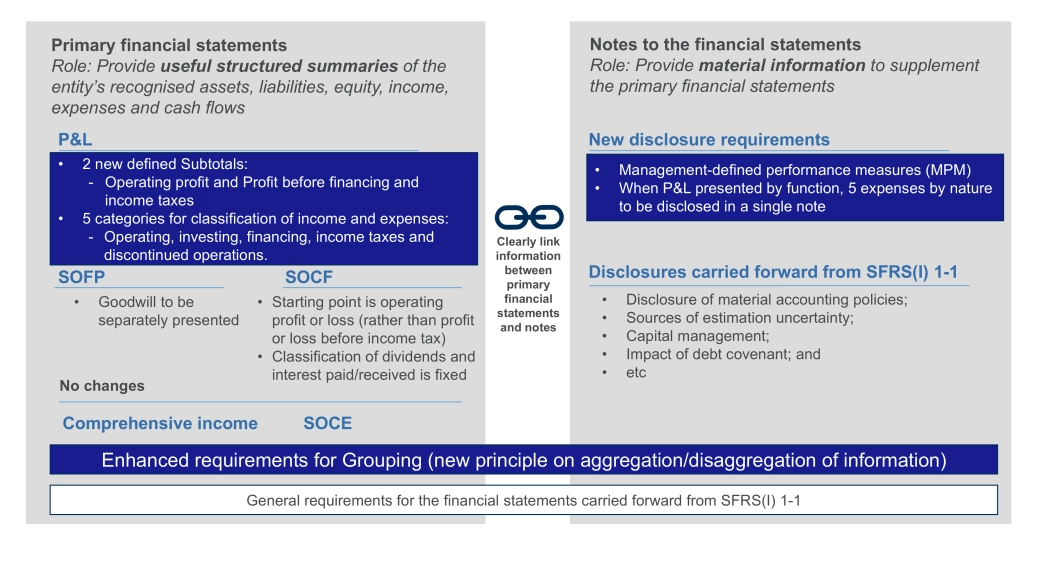
Summary of major changes introduced by SFRS(I) 18 to primary financial statements and notes.
1. A restructured statement of profit or loss
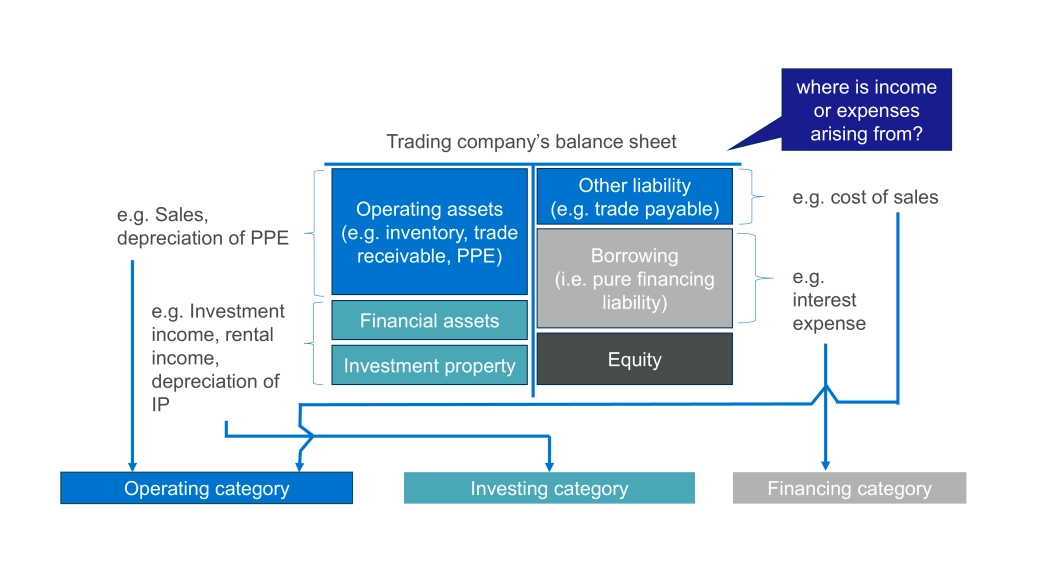
Classification of income and expenses into operating, investing and financing categories under SFRS(I) 18 for a normal trading company.
Under SFRS(I) 18, all income and expenses must be classified into one of five defined categories:
- Operating – the default category, capturing income and expenses from an entity’s main business activities
- Investing – income and expenses associated with non-operating assets such as financial assets and investment property
- Financing – income and expenses arising mainly from pure financing liabilities such as borrowings and issued bonds
- Income taxes
- Discontinued operations
Two new subtotals are also required to be presented in the statement of profit or loss: operating profit or loss and profit or loss before financing and income taxes. These standardised subtotals are designed to improve comparability of financial performance reporting across entities.
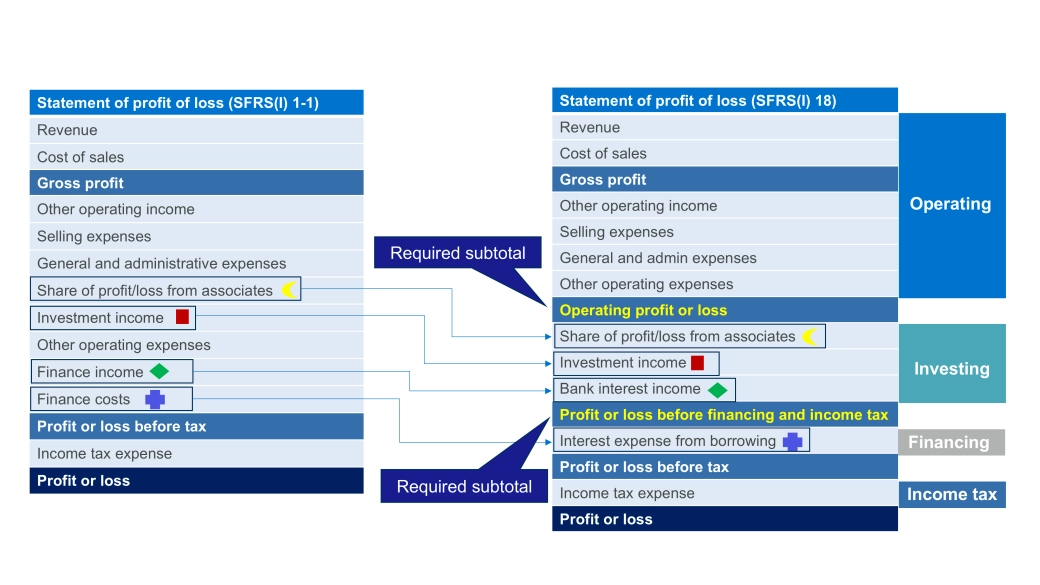
Side-by side comparison of statement of profit or loss under SFRS(I) 1-1 and SFRS(I) 18 showing new required subtotals
2. New disclosure requirements
- Management-Defined Performance Measures (MPMs) – For entities that communicate an entity-specific subtotal of income and expenses in public communications outside the financial statements (also known as alternative performance measures), these will now need to be disclosed as Management-Defined Performance Measures (MPMs) in a single audited note, which includes the following required disclosures:
- Why the MPMs is useful information about financial performance
- How the MPMs is calculated
- A reconciliation to the nearest comparable subtotal required under SFRS(I) 18, including the tax effect and non-controlling effect of each reconciling item
- Nature-of-Expense disclosures – The total amount and the amount included in each functional line item for the following expense categories must now be disclosed separately by entities that present operating expenses by function in the profit or loss statement: depreciation, amortisation, employee benefits expenses, impairment losses and reversals, and inventory write-downs and reversals.
3. Greater clarity on aggregation and disaggregation principles
SFRS(I) 18 provides more precise guidelines regarding the grouping and presentation of information by entities, including what should be included in the primary financial statements and the notes. When deciding whether to aggregate or disaggregate items with similar and dissimilar characteristics, as well as when to disclose material disaggregated information, entities must exercise more judgement.
Other changes to note
- Statement of cash flows: Under the indirect method, entities must now start from operating profit or loss rather than profit before income tax. The accounting policy choice for classifying interest and dividends paid or received is removed – classification is now aligned with the statement of profit or loss.
- Statement of financial position: Goodwill must now be presented as a separate line item, separately from other intangible assets.
What is the effective date and transition requirements for SFRS (I) 18?
The effective date for annual and interim reporting periods that begin on or after 1 January 2027, with early adoption permitted. The standard is to be applied retrospectively, restating FY 2026 comparative figures and a line-by-line reconciliation between restated amounts and amounts previously reported under SFRS(I) 1-1 must be provided.
Listed entities that publish interim financial statements will have to apply SFRS(I) 18 in their condensed interim financial statements prior to their annual financial statements.
How Forvis Mazars can help
Our audit and assurance team in Singapore has deep expertise in Singapore financial reporting standards. If you have questions about how SFRS(I) 18 will affect your entity’s financial statements or need support with adoption planning, please get in touch.
For more detailed guidance and classification diagrams, download our complete Vol1. Newsletter.