

Asking ‘why’ in a world of complex tax rules: Cristian Botezatu on creating value beyond the letter of the law
17 December 2025
Tax is evolving faster than ever, shaped by globalisation, increased scrutiny and growing complexity across borders. In this changing landscape, understanding not only the rules but also their purpose has become essential.
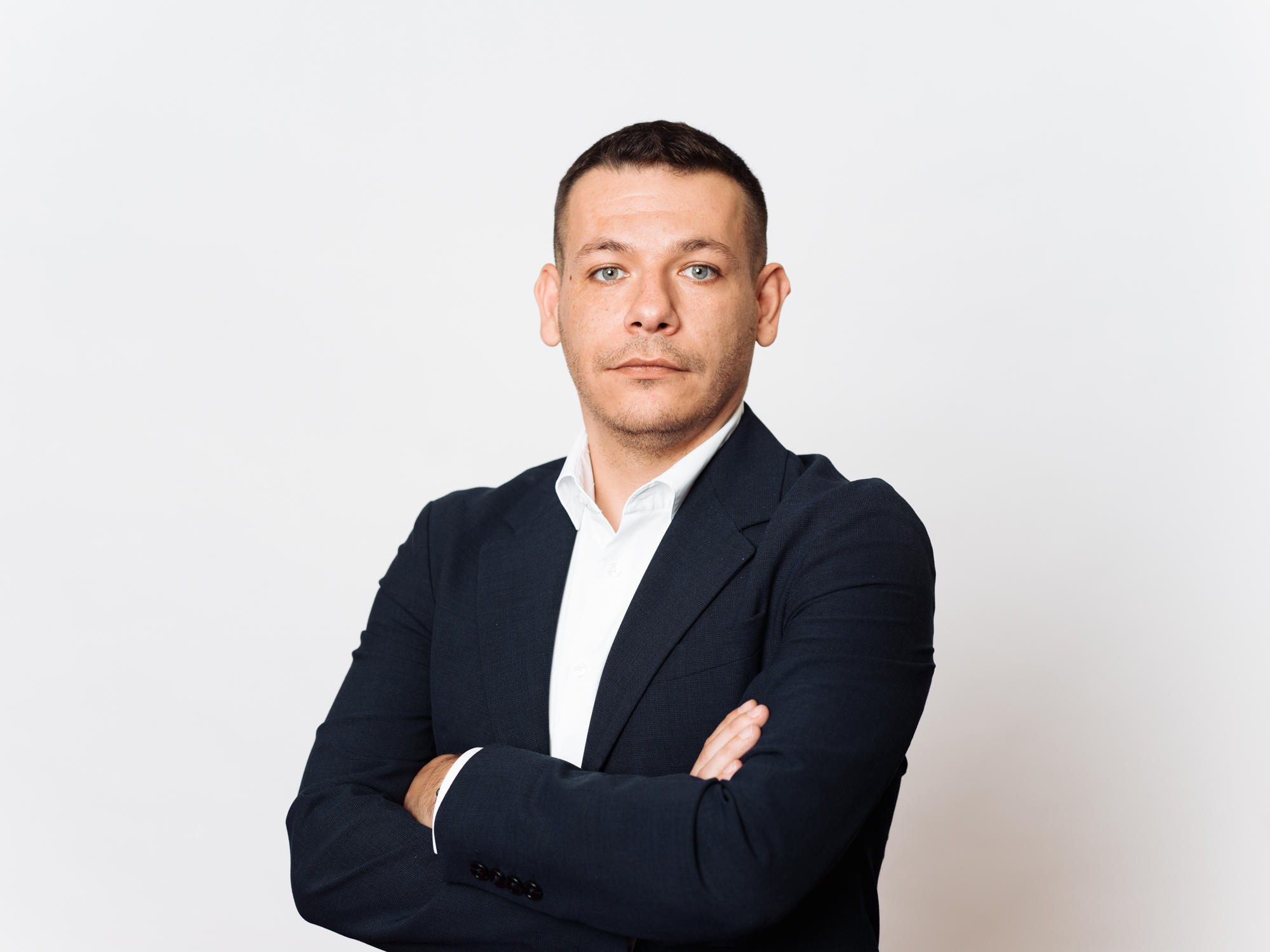
As part of our 30 Stories for 30 Years campaign, which highlights the journeys of colleagues who embody our commitment to excellence, curiosity and continuous development, we are pleased to share an interview with Cristian Botezatu, Senior Manager in our Tax team. Cristian reflects on completing an LLM in Tax Law at King’s College London while holding a senior leadership role within the firm and on how this experience has influenced his approach to taxation, learning and leadership. 1. What motivated you to take on an LLM in Tax Law at King’s College London now, and what does this achievement mean to you personally? Romania’s rapid development in recent years has brought increasingly complex cross-border matters to the forefront - topics that were far less common a decade ago. Against this backdrop, I felt the need to expand the way I approach tax from a more conceptual perspective, focusing not only on understanding the “how” behind legislation, but also the “why”. |
 |
When considering this “why”, we often see in practice that both taxpayers and authorities tend to interpret legislation at face value, without considering its underlying purpose. This frequently fuels debate, to say the least, as the same provision may be read in entirely different ways. What is often missing is a solid foundation - a shared understanding of where key concepts originate, how they were conceived, how they evolved over time and how courts ultimately shaped them through purposive interpretation.
Looking back over the past two years, I felt confident that the programme would provide an ideal learning environment. King’s College London delivered a strong theoretical foundation, while Forvis Mazars complemented it with practical elements during the residential sessions. And I am not referring only to the soft-skills training - which was excellent - but also to the exchanges with colleagues from other Forvis Mazars offices around the world. These discussions offered valuable insights into how similar issues are approached in other jurisdictions, often quite differently from what we see in textbooks or in local practice.
On a personal level, completing the programme represents a significant milestone. Pursuing the LLM felt like a natural step, aligned with the way the tax profession is evolving. I ultimately came to realise that looking back at the historical development of tax concepts is, somewhat ironically, one of the best ways to stay grounded in a debate that never stands still. In this sense, the saying that the past is the key to understanding the present holds particularly true in taxation.
2. How has the LLM shaped your perspective on taxation and the way you create value for clients and colleagues?
I will return to the concept of the “why” I mentioned earlier. Purposive interpretation is essential in taxation, yet in practice there is often a tendency to read legislation in a strictly literal manner. One reference from the LLM materials stood out to me in particular - unexpectedly, a line from Humpty Dumpty in Lewis Carroll’s work: “When I use a word, it means just what I choose it to mean, neither more nor less.”
I must admit that I never imagined a children’s book would be used to illustrate something as serious - and at times absurd - as the way tax legislation can be interpreted. Yet the comparison fits surprisingly well. Taxpayers, advisers and tax authorities can each interpret the same provision differently, often because they are disconnected from the purpose behind the rule or pursue their own interests - something that is hardly surprising in the context of taxation.
The LLM encouraged me to look beyond surface-level, subjective interpretations and focus instead on the intention and broader context in which legislation operates. For clients, this approach helps frame advice within a clearer narrative that connects technical rules to their underlying purpose, making complex issues more accessible and ultimately supporting better decision-making. For colleagues, it fosters a mindset that moves beyond memorising provisions toward truly understanding them, enriching the quality of our internal technical discussions.
3. Was there a particular moment, idea, or challenge during your studies that significantly shifted your perspective or deepened your passion for the field?
A recurring theme during the LLM that genuinely reshaped my perspective was the inherent tension between taxpayers and tax authorities - a dynamic we all encounter in practice, but rarely stop to question. The programme encouraged me to step back and look beyond day-to-day disputes to understand why this tension exists in the first place.
On one hand, taxpayers seek predictability and the legitimate right to structure their affairs efficiently. On the other, tax authorities are responsible for safeguarding public revenues. What struck me during my studies was the realisation that these opposing positions are not necessarily adversarial or indicative of wrongdoing; rather, they reflect the distinct and legitimate roles each plays within a functioning tax system.
This perspective helped me see tax legislation not as a set of rigid rules to be applied mechanically, but as a framework designed to balance fairness, legal certainty and revenue needs. That shift - from viewing tax as a confrontation to understanding it as a structured equilibrium - deepened both my interest in the field and the way I approach complex tax questions in practice.
4. Balancing an intensive master’s program with a senior leadership role isn’t easy. What helped you stay committed, and what did you learn about yourself along the way?
It was certainly a demanding period. The firm’s support and flexibility helped significantly, but most of the commitment ultimately came from personal time.
One of the most important lessons I learned is that time, although linear, is far more flexible than we tend to believe. With careful planning and clear priorities, it is possible to accomplish much more in a limited period than one might expect, while also developing a strong sense of discipline. Deadline pressure is undoubtedly present, but you quickly learn to cope with it and realise that, in substance, it is no different from the day-to-day deadlines we face in practice.
Another important takeaway was the awareness that we are often our own biggest obstacle, creating mental barriers around what we believe can or cannot be done. This experience showed me that there is an art to lifting those barriers. While I would not claim to have mastered it - far from it - I can say that the programme changed the way I approach both professional and personal goals.
Looking back, I feel I managed to allocate my time effectively across my professional, academic and personal life, and I never felt that I was missing out on anything. Perhaps there was room to do even more, but that is far easier to say in hindsight than when you are fully immersed in the moment.
5. As someone leading a team, how do you approach mentorship, and how has this academic journey influenced your approach to mentorship and leadership?
I have learned that people grow most when they are guided rather than directed. As a result, I aim to create an environment where learning takes place through conversation, debate and collaboration, rather than through rigid instruction. I see my role as providing perspective, asking the right questions and supporting others as they arrive at their own insights.
I have also come to appreciate that effective time management is largely a matter of conscious choice and clear structure. When this is in place, deadlines become reference points rather than sources of pressure and schedules serve as guides rather than strict constraints. Ultimately, a healthy work-life balance is something we actively design, not something we passively hope to achieve.
6. As you think about the next chapter of your career, how do you hope this milestone will shape your growth - and what message do you hope it sends to young professionals entering the tax world?
Looking ahead, I hope this milestone will allow me to become more deeply involved in international tax matters and to contribute to the further development of this practice locally, while also strengthening collaboration with other Forvis Mazars offices across the network. Over time, I believe this can help lay the foundation for a broader knowledge hub.
For young professionals entering the tax world, my advice closely reflects the firm’s values: stay curious and invest in your own development. The most valuable investment you can make is in yourself - and it is often far more achievable than it may initially seem.
Cristian’s journey is a reminder that in a profession defined by complexity and constant change, progress comes from curiosity, perspective and a willingness to keep learning.
By looking beyond the letter of the law to understand its purpose, balancing theory with practice and investing in both personal development and the growth of others, he exemplifies what it means to create lasting value in tax.
As Forvis Mazars Romania enters its fourth decade, stories like Cristian’s show how investing in knowledge and people today shapes the firm we will be tomorrow.
Contact us

Emilia Popa Head of MarCom & Business Development
