EQUAL-SALARY certification gives your organisation independent proof that women and men receive equal pay for work of equal value, whether you pursue the Equal Pay label alone or the broader Equal Pay and Opportunities certification. As an accredited audit partner of the EQUAL-SALARY Foundation, Forvis Mazars in Switzerland conducts the full certification audit, from the initial salary analysis to the final certification report.
Why your company should pursue EQUAL-SALARY certification
Credibility & transparency: Provides independent assurance that your organisation is committed to pay equity while promoting equal opportunities for all employees.
Employer brand & talent attraction: Strengthens your reputation among candidates, employees and other stakeholders by demonstrating a clear and visible commitment to equal opportunities.
Stronger Diversity & Inclusion strategy: Demonstrates concrete action to advance gender equality, equal opportunities and responsible employment practices, reinforcing your broader Diversity & Inclusion strategy.
Sustainable HR strategy: Strengthens and embeds internal processes, establishing robust and lasting pay equity practices that support a workplace culture built on fairness and equality.
Becoming EQUAL-SALARY certified demonstrates your organisation's commitment to equal pay and equal opportunities for women and men, while providing tangible evidence of its commitment to gender equality. Certification can help attract and retain talent while strengthening your reputation among clients, investors, suppliers and other stakeholders.
By positioning your organisation as a leader in diversity and inclusion, you contribute to a fairer and more sustainable workplace. The certification process goes beyond salary analysis: it requires clear, lasting leadership commitment and effective HR processes.
It also provides valuable insights into areas for improvement, supporting the continued development of your organisation.
Two complementary labels
EQUAL-SALARY certification is available through two distinct labels:
Equal Pay: Confirms that women and men receive equal pay for work of equal value.
Equal Pay and Opportunities: Confirms both equal pay and fair, inclusive career opportunities, regardless of gender.
Companies can choose to pursue the Equal Pay label alone or opt for the broader Equal Pay and Opportunities certification. Both labels provide independent recognition of an organisation's commitment to workplace equality, strengthening its credibility and reputation among employees and external stakeholders.
The certification is awarded by the EQUAL-SALARY Foundation, an independent non-profit organisation established in 2010 to promote and monitor fair pay practices. Developed in collaboration with the University of Geneva and with the support of the Swiss Confederation, the EQUAL-SALARY methodology is based on a rigorous scientific approach.
Certification is available to organisations worldwide, across all industries, with at least 50 employees, including a minimum of 10 women.
Our EQUAL-SALARY approach
The EQUAL-SALARY certification process is based on a recognised scientific methodology and follows the management systems approach of the ISO 9000 standards. The process consists of four stages:
#
Step
Scope
Deliverable
1
Salary analysis
The company securely and anonymously submits its pay data to the EQUAL-SALARY Foundation. The data is analysed using a regression model to measure the unexplained pay gap between women and men. If the gap is less than or equal to 5%, the company may obtain the Equal Pay Label or proceed with the process. Otherwise, a remediation period of 3 to 6 months may be granted.
Statistical report, variable relevance measurement, list of specific cases, Equal Pay certificate.
2
Documentation review & on-site audit
Once the analysis is complete and results are satisfactory, the company proceeds to a qualitative on-site audit. This stage includes a review of the submitted questionnaire and an evaluation of the list of individuals identified in the first step, as well as an assessment of HR policies and processes. The audit also examines management's commitment to pay and opportunity equality. In addition, interviews are conducted to gather employee perspectives on equality practices within the company.
ISAE 3000 (Revised) audit report.
3
Certification
Based on the audit report prepared by Forvis Mazars, the EQUAL-SALARY Foundation grants (if all requirements are met) the Equal Pay and Opportunities Label. This label confirms the company's commitment to fair pay policies and can be used in all official communications for three years. In case of non-compliance, an extension may be granted to implement corrective actions.
Equal Pay and Opportunities certificate.
4
Follow-up audits
During this three-year period, the company must undergo two follow-up audits to verify the corrective measures are implemented after the main audit. After three years, the certification process must be renewed to maintain the certification.
Our EQUAL-SALARY certification services
Our experts have extensive experience in conducting certification audits. Over the years, Forvis Mazars in Switzerland has built a multidisciplinary team specialising in a range of CSR (Corporate Social Responsibility) certification audits.
This expertise has enabled us to become an accredited audit partner of the EQUAL-SALARY Foundation, authorised to conduct audits leading to certification.
As an accredited audit partner of the EQUAL-SALARY Foundation, Forvis Mazars in Switzerland conducts the full certification audit for clients in Switzerland, from the initial salary analysis through to the final certification report.
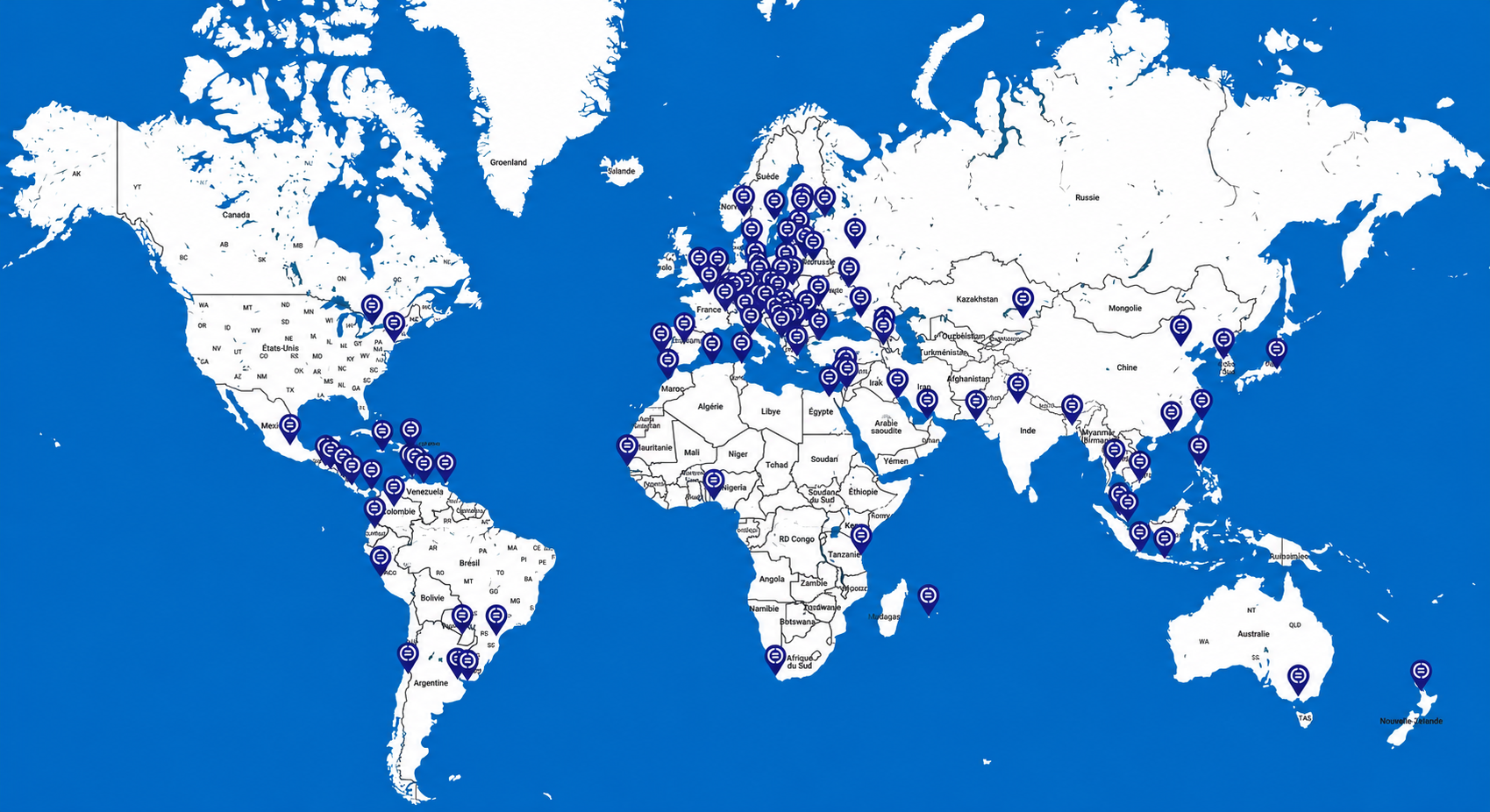
In October 2025, Forvis Mazars in Switzerland acquired PwC's EQUAL-SALARY practice, expanding the firm's independent EQUAL-SALARY audit capacity worldwide. Today, more than 100 entities in 70 countries are going through EQUAL-SALARY certification with Forvis Mazars, supported by a growing community of more than 30 practitioners across the Forvis Mazars network.
100Entities going through EQUAL-SALARY certification
70Countries
30EQUAL-SALARY practitioners in the Forvis Mazars network
Forvis Mazars in Switzerland leading by example
Forvis Mazars in Switzerland is proud to have obtained the EQUAL-SALARY certification for all its employees, a step that reflects the firm's own values around fairness and equal opportunity.
EQUAL-SALARY's methodology was developed with financial support from Switzerland's Federal Office for Gender Equality and has been used as a reference by the Swiss Federal Supreme Court.
It is the first equal-pay certification recognised by the European Commission in its reporting on the gender pay gap, and EQUAL-SALARY is a member of both the Equal Pay International Coalition and the UN Global Compact Network.
With this certification, we join a community of companies committed to pay equity and equal opportunity. You can view a list of already certified organisations on the dedicated page.
Which companies are eligible for EQUAL-SALARY certification?
Companies worldwide, across all industries, with at least 50 employees, including a minimum of 10 women.
What’s the difference between the Equal Pay and Equal Pay and Opportunities labels?
Equal Pay confirms fair pay for work of equal value. Equal Pay and Opportunities additionally confirms fair, inclusive career opportunities regardless of gender.
How long does the certification process take?
It runs through four stages, from salary analysis to final certification, with a remediation period of 3 to 6 months if the initial pay gap exceeds 5%.
How long is the certification valid?
Three years, with two follow-up audits during that period to verify corrective measures.
What happens if our company doesn’t meet the 5% pay gap threshold?
A remediation period of 3 to 6 months may be granted before the company can proceed with certification.