
Why do people commit fraud?
It explains that three main factors are typically present when fraud is committed.
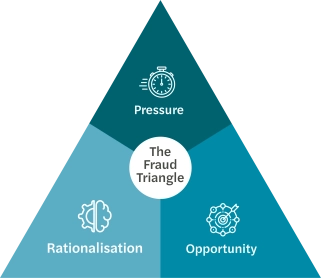
1. Pressure (Incentive / motivation) Pressure is the driving force behind dishonest behaviour, stemming from personal or professional stress factors. These may include financial difficulties; excessive debt; addictions such as gambling or substance use; family problems; unrealistic performance targets or the desire to maintain a lifestyle beyond one’s means.
2. Opportunity Fraud occurs when individuals believe they can act without being detected: nobody wants to get caught. Opportunities arise from weak controls; lack of management oversight; management override; or the placement of too much trust in a single individual. These vulnerabilities create an environment where fraudulent acts can go unnoticed, at least for a period of time.
3. Rationalisation Rationalisation is the mental process by which individuals justify their unethical actions. Common rationalisations include: “I’m just borrowing the money and will repay it later,” “I deserve this for the hours I work”, or “Everyone else is doing it”. This mindset allows individuals to reconcile their behavior with their personal ethics.