



When does the AMLR apply?
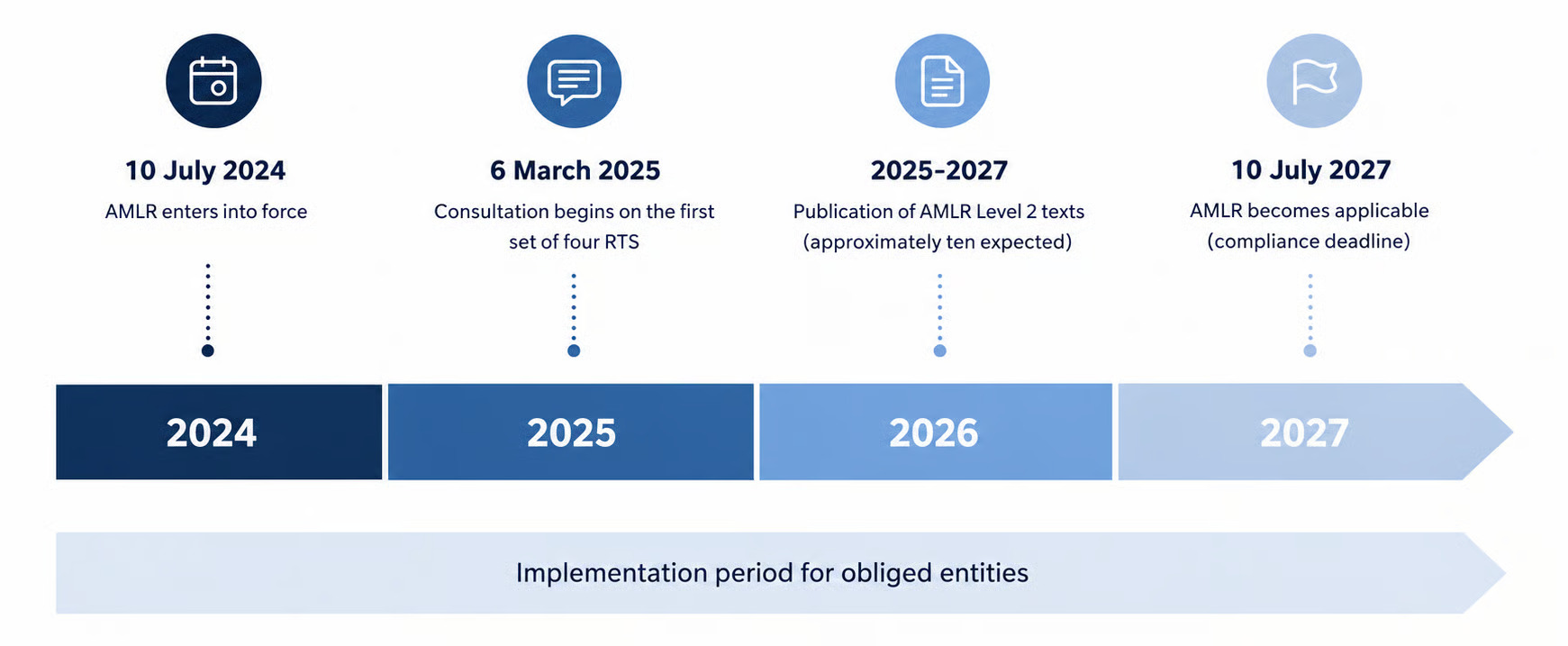
The AMLR applies directly to obliged entities from 10 July 2027. Member States have until the same date to transpose AMLD 6 into national law, and Regulatory Technical Standards (RTS) will specify the detailed requirements.
Does the EU AML package apply to Swiss financial institutions?
Yes, directly for EU branches and subsidiaries, which must apply the AMLR in full. Purely domestic Swiss banks are affected indirectly, as regulatory arbitrage becomes riskier and FINMA may expect alignment where EU rules are stricter.
How often must KYC files be reviewed under the AMLR?
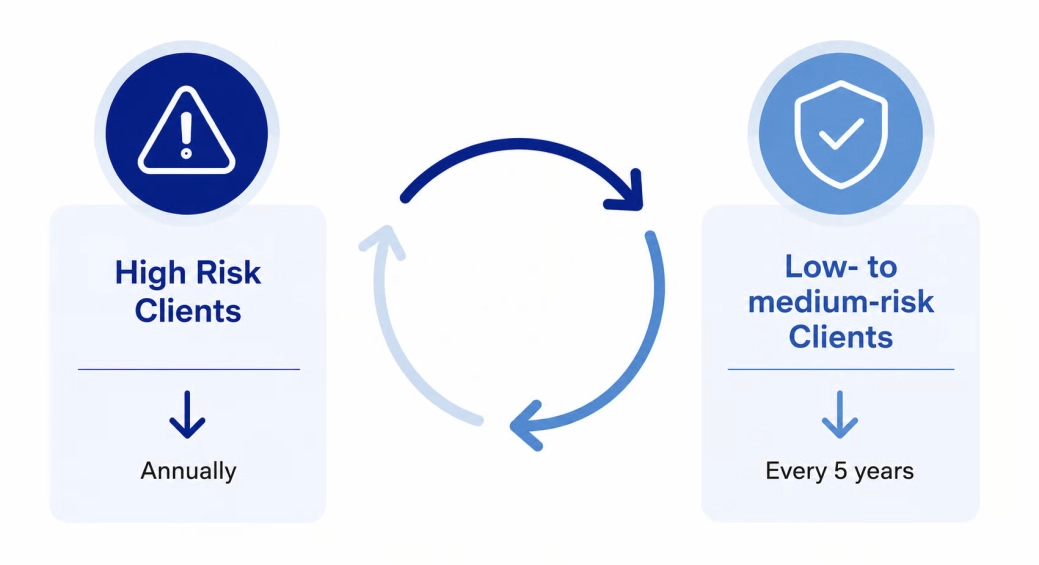
At least annually for high-risk customers and at least every five years for all other customers, under Article 26 of the AMLR. This is one of the main expected impacts of the regulation on KYC teams.
Which entities will AMLA supervise directly?
From 1 January 2028, AMLA will directly supervise at least 40 entities selected based on their risk profiles. Based in Frankfurt, the authority can impose fines and sanctions on obliged entities that fail to comply with the AMLR.
What is the beneficial ownership threshold under the AMLR?
The AMLR lowers the ownership threshold from 25% to 15% for certain categories of legal entities considered higher risk. Member States define these categories, and the European Commission may impose lower thresholds where necessary.
Which AML tasks cannot be outsourced under the AMLR?
Article 18 bars outsourcing the entity-wide risk assessment, approval of internal policies and controls, customer risk profile decisions, decisions to establish business relationships or execute occasional transactions, suspicious transaction reports and approval of detection criteria.
Kontakt

Olivier Maes Executive Director, Compliance & Financial Crime - Zürich

Stefan Müller Partner - Leiter Financial Services - Zürich

Ivan Lamorte Partner - Zürich
Diese Website verwendet Cookies.
Einige dieser Cookies sind notwendig, während andere uns helfen, unseren Traffic zu analysieren, Werbung zu schalten und Ihnen ein individuelles Erlebnis zu bieten.
Weitere Informationen zu den von uns verwendeten Cookies finden Sie in unserer Datenschutzerklärung.
Ohne diese Cookies kann diese Website nicht ordnungsgemäß funktionieren.
Analytische Cookies helfen uns, unsere Website zu verbessern, indem sie Informationen über ihre Nutzung sammeln.
Wir verwenden Marketing-Cookies, um die Relevanz unserer Werbekampagnen zu erhöhen.