Union budget 2026: From reform momentum to policy stability
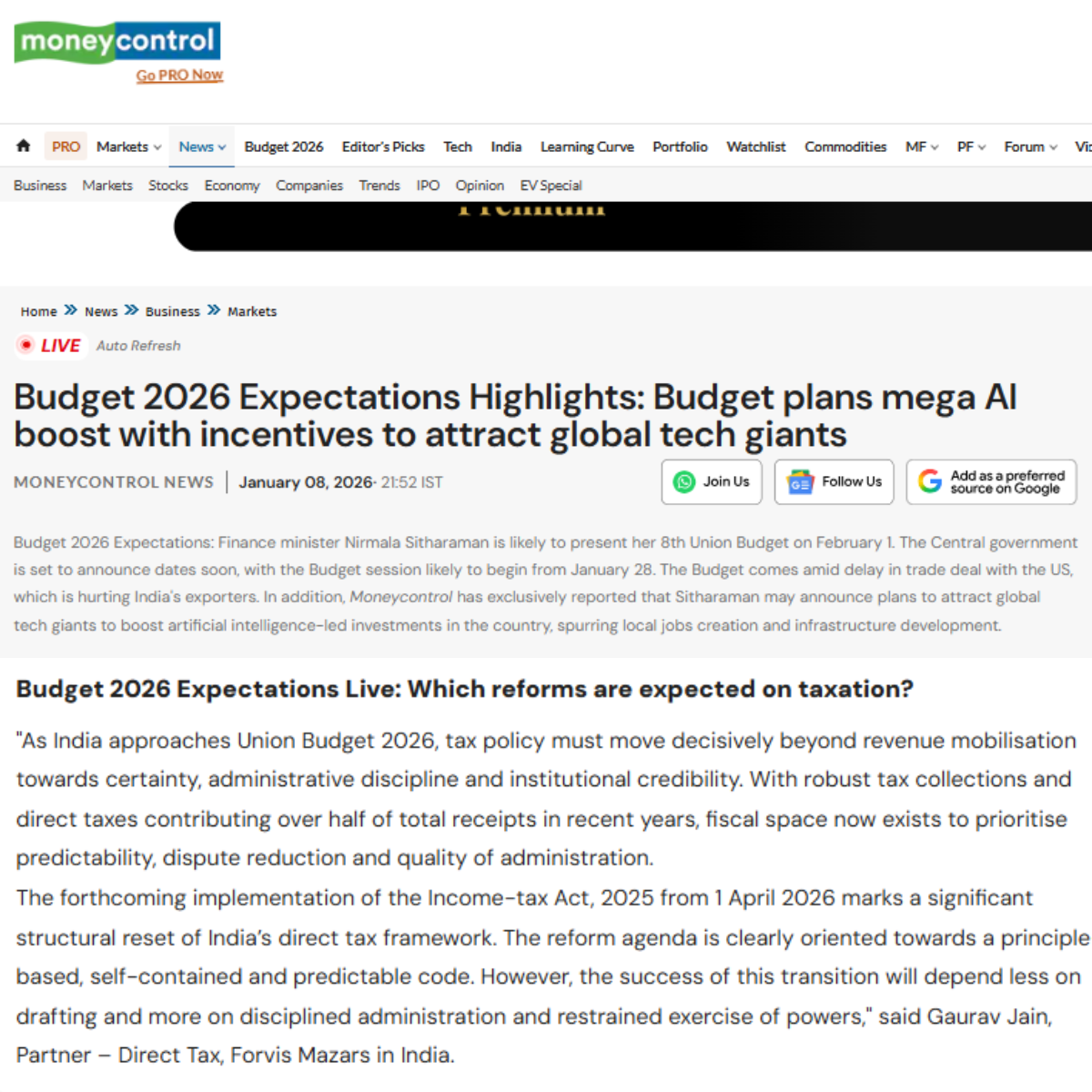
The forthcoming implementation of the Income-tax Act, 2025 from 1 April 2026 marks a significant structural reset of India’s direct tax framework. The reform agenda is clearly oriented towards a principle-based, self-contained and predictable code. However, the success of this transition will depend less on drafting and more on disciplined administration and restrained exercise of powers.
Decriminalisation and Prosecution under Income-tax Law
A key reform priority must be decriminalisation under the income-tax law. Although the Income-tax Act is fundamentally fiscal in nature, several provisions under Chapter XXII— such as failure to furnish returns or statements (section 276CC), failure to deposit TDS(section 276B), wilful attempt to evade tax (section 276C), making false statements or verification (section 277), abetment of false returns (section 278) and offences by companies and persons in charge (section 278B), largely retained under the Income-tax Act, 2025 continue to expose taxpayers to prosecution for defaults that often arise from compliance lapses or interpretational disputes, notwithstanding parallel civil consequences of tax, interest and penalties. While the 2025 Act reflects some rationalisation by emphasising wilful conduct, it does not materially narrow the scope of prosecution or codify clear thresholds.
Compounding under section 279, though intended as a remedial alternative, remains discretionary, time-consuming and financially onerous. Under the current compounding guidelines (17 October 2024), charges can range from 15–30 percent of tax in return-filing defaults, 1.5 percent per month in TDS-related cases, and up to 125 percent of the tax sought to be evaded in cases of alleged wilful evasion, with additional escalation for delays and repeat applications. In practice, this renders compounding punitive rather than facilitative. Restricting prosecution to cases involving clear wilful intent, fraud or substantial evasion, while introducing automatic or time-bound compounding at rationalised rates for technical defaults, would restore proportionality and encourage voluntary compliance without diluting deterrence.
Black Money Act: Recalibrating Criminal Enforcement
The decriminalisation framework under the Black Money (Undisclosed Foreign Income and Assets) Act, 2015 also warrants reconsideration. Sections 49 to 55 mandate prosecution alongside tax at 30 percent and penalty equal to three times the tax, resulting in an effective outgo of 120 percent, with mandatory prosecution triggered concurrently. Given enhanced global information exchange, Budget 2026 offers an opportunity to introduce a structured, time-bound voluntary disclosure mechanism with proportionate civil consequences, excluding cases of wilful evasion or fraud.
Appellate Efficiency and Dispute Resolution
Equally critical is strengthening appellate efficiency. As of 1 April 2025, approximately 5.4–5.5 lakh appeals were pending before the CIT(A)/NFAC, locking up revenue and prolonging uncertainty. Enforceable timelines, adequate capacity and refinement of the faceless appeals mechanism particularly making it optional for complex corporate and transfer pricing disputes are essential to restore credibility to the appellate process.
Delegated Legislation and Consistency of Law
Finally, disciplined use of delegated legislation and consistent application of settled law are imperative. Prior approvals under provisions such as sections 153D, 148A and 151 must operate as substantive safeguards, not procedural formalities. Binding instructions, internal legal vetting and accountability for deviation from settled judicial principles would significantly reduce avoidable litigation.
In sum, Union Budget 2026 must signal a shift from reform momentum to policy stability. A predictable, rules-based and forward-looking tax regime balancing growth with fiscal discipline will be central to reducing litigation, strengthening taxpayer confidence and supporting India’s long-term aspiration of becoming a developed economy.