"The conversations happening in boardrooms have moved on. It is no longer enough to say AI is being explored or piloted. Stakeholders now expect clear evidence of what it is actually delivering."
Dera McLoughlin Partner, Head of Consulting

What was once difficult to quantify is now beginning to take clearer shape. As organisations focus on priority use cases and build on early integration efforts, the first credible wave of ROI evidence is emerging – making it increasingly difficult for leaders to justify continued investment without demonstrating impact.
This signals a decisive turning point. Organisations can no longer depend on speculative spend or fragmented implementation approaches. There was a period when momentum alone – driven by rapid developments and compelling transformation narratives – was enough to unlock funding and support. Now, investors and shareholders are both better equipped and more inclined to draw a far sharper line between AI-driven hype and genuine business value.
In Ireland, this shift is particularly evident, with leaders placing AI at the centre of their strategic agenda and increasingly focusing on tangible returns from their investments, according to our 2026 C-suite Barometer survey.

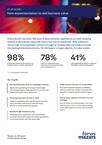
of leaders in Ireland confirmed that AI is having an impact on their organisation AI is having an impact on their organisation |

of Irish C-suite leaders have restructured teams in the last |

Irish organisations name AI as their top technology transformation priority |
"The conversations happening in boardrooms have moved on. It is no longer enough to say AI is being explored or piloted. Stakeholders now expect clear evidence of what it is actually delivering."
Dera McLoughlin Partner, Head of Consulting
AI-driven workforce efficiencies and wider business transformation are already delivering meaningful impact, but for many organisations, the full potential remains untapped, even where implementation has been proactive and successful. Pilots have expanded rapidly, yet relatively few have translated into embedded, day-to-day changes in how people work or into outcomes that materially shift business performance.
To move beyond AI hype and realise real value, organisations and their leaders need to shift from “capability-led” conversations, centred on deployment milestones and outputs, to “performance-led” discussions that focus clearly on the business value being delivered.
Achieving measurable ROI from AI represents a critical step change. Moving from experimentation to disciplined measurement is what enables scale, turning early progress into sustained competitive advantage. For those organisations that fail to make this transition, the implications extend beyond financial performance and market positioning, raising fundamental questions about the case for continued investment.
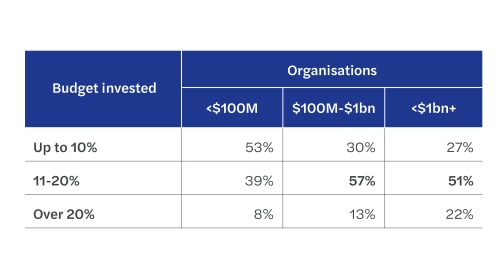
The AI ROI gapEach year, we carry out research to better understand the priorities and challenges shaping our clients’ businesses. Our C-suite barometer brings together the perspectives of thousands of executives from around the world, providing valuable insight into the trends and transformations influencing organisations today. Six months on from our initial 2026 outlook, our latest mid-year findings reinforce leaders’ confidence in the potential of AI and begin to demonstrate early returns on investment. However, these returns need to be viewed in the context of the scale of investment being made. As expected, the share of budget allocated to AI increases in line with organisational revenue. Our research shows that 15% of organisations are investing more than a fifth of their total budget in AI, while 35% are allocating less than 10%. This raises an important question – what level of return should leaders, their organisations and their stakeholders reasonably expect from these investments? |
 |

“AI success is not just a technical challenge. It is an organisational one. The organisations achieving real ROI are those that begin with clear business problems and then build the capabilities needed to scale AI across the enterprise.”
Liam McKenna Partner, Consulting

For many organisations, a lack of ROI from AI investment typically stems from four key areas:
None of this suggests that organisations should pause their AI ambitions. The pace of innovation is not slowing, it is continuing to accelerate. Those that fail to engage with the transformational potential of AI risk falling behind.
However, the emerging ROI picture makes it clear that implementation needs to be approached in a more deliberate and proportionate way. Taking a strategic approach to use case selection and definition, alongside building strong foundations in data and governance, will enable organisations to move at pace while delivering meaningful, measurable value as the technology continues to evolve.
AI represents such a fundamental shift in operating models and priorities, touching multiple areas of the business, that it cannot be treated as a bolt-on technology. This means organisations need strong foundations in data and governance, alongside clear alignment on the business problems the technology is intended to address.
 |
“The most successful organisations tend to be those that either had strong data and governance foundations in place before introducing AI use cases, or those that have used AI as a catalyst for broader digital transformation, putting those foundations in place before attempting to scale AI across the business.” |
In any use case, AI should be viewed as a potential tool – albeit a highly powerful one – for addressing a strategic business problem, rather than an objective in its own right. It is not a silver bullet, and approaching implementation with the sole aim of finding ways to apply AI is unlikely to deliver meaningful value. More often, it leads to disproportionate or ineffective solutions. AI is one tool within a broader technology toolkit, and the real challenge lies in understanding when it is the right choice, and when alternative solutions may better address the issue at hand.
However, identifying a problem that AI can solve is only the starting point. Delivering real value requires clarity of intent, the right level of response and a consistent focus on outcomes that genuinely matter to the business.

This is where the distinction between horizontal and vertical implementations becomes important. The terminology originates from the IT world, referencing the concepts of “scaling out” (adding more lanes to a busy highway) versus “scaling up” (replacing existing vehicles with faster, more efficient ones).
Applied to AI, horizontal use cases typically take the form of general AI assistants designed to improve individual productivity across the workforce. However, these can be challenging to measure effectively. Without clearly defined metrics, productivity gains are often difficult to track, and time saved is not always redirected towards outcomes that can be quantified. An hour saved that does not contribute to a measurable business result does not necessarily deliver real value.
By their nature, horizontal use cases are broad and harder to evaluate, and on their own, they are unlikely to justify investment based on measurable business impact.
Vertical use cases, by contrast, tend to involve more targeted AI implementations that automate manual, data-intensive or repetitive tasks, or support the orchestration of end-to-end business processes. Because they are tied to specific functions and outcomes, they are easier to measure, justify and scale, even where they require a higher initial investment.
The most valuable AI use cases are those that address clearly defined business challenges and are supported by measurable success criteria.
Once a business problem has been defined and a corresponding vertical use case identified, three key questions can help leaders assess how, and whether, AI should be applied to generate real business value:
AI is a powerful solution and should be applied in proportion to the business value of the problem it is solving. Leaders should resist the temptation to use overly complex approaches where simpler options may be just as effective. In many cases, rules-based automation, process redesign or improved reporting tools can deliver the required outcome without the need for AI. At this stage, organisations should also consider factors such as data quality and availability before committing to implementation.
Sustainability considerations should also be addressed early in the scoping process rather than treated as an afterthought. Measuring the environmental footprint of AI can be complex, even where organisations manage their own infrastructure, and the impact can be significant, particularly with more advanced systems. It is therefore important to evaluate sustainability goals and regulatory requirements upfront, as alternative solutions may achieve similar outcomes with a lower environmental and financial cost. In many cases, non-AI approaches can deliver a substantial portion of the value without the same level of impact.
If AI is the right tool, the next consideration is what form it should take. The benefits and challenges differ significantly across chat interfaces, retrieval-augmented generation, agentic systems and multi-agent architectures.
Focusing on AI at the level of individual tasks often limits its overall impact. In many cases, applying AI in one area can enable improvements elsewhere. Thinking in terms of capability ecosystems, rather than isolated tasks, tends to deliver stronger returns. In this way, a single implementation, or a coordinated set of implementations, can address multiple business challenges or tackle different aspects of a broader problem across the organisation.
 | “The organisations generating the most value from AI are not approaching it task by task. They are developing integrated capability ecosystems, where a well-designed implementation can support multiple business outcomes. This requires stepping back from immediate use cases and considering how AI fits within the wider operating model.” |
Established large language models, rather than proprietary builds, remain the most common design choice. They are typically more mature, efficient and regularly updated with enhanced capabilities. However, they also introduce specific risks and requirements, particularly in relation to third-party risk management. Using external models does not reduce the need for strong governance and oversight. If anything, it increases the level of maturity required to manage them effectively.
One of the biggest challenges for organisations in moving from “capability-led” conversations to “performance-led” ones is defining the wrong success metrics. The KPIs for each use case should be directly linked to the strategic problem being addressed and clearly demonstrate tangible business value.
Metrics that reflect quantifiable outcomes, such as reduced turnaround times, improved exception rates or shorter value realisation cycles, are far more meaningful than broad measures like productivity, milestone tracking or general “efficiency” gains.
Even if a use case is not currently delivering against its intended success metrics, it should still be able to function without AI in most cases. If the underlying process is poorly defined or ineffective, introducing AI is unlikely to resolve those issues. Instead, it can amplify existing weaknesses rather than address them.
Organisations are already seeing clear, short-term tax savings through AI-enabled processes and analysis, delivering tangible ROI from targeted implementations. Corporate tax is often particularly well suited to AI adoption due to its relatively strong operational and governance foundations:
As with any AI initiative, the key to success lies in the quality and consistency of underlying data and processes. While decentralised tax functions can still benefit from AI, more centralised operations and data structures tend to provide a clearer path to achieving measurable value.
AI implementations have proven especially effective in data-heavy, repetitive use cases such as:

Artificial intelligence (AI) adoption is accelerating rapidly, driving investment, transforming business operations and attracting increasing regulatory scrutiny across industries and global markets. Our AI Impact Hub brings together the latest insights and expertise on AI’s business impact helping organisations make informed decisions and prepare for what’s next.

The guiding principle here is proportionate or right-sized governance. Safeguards and accountability frameworks should be aligned to the nature, scale and criticality of each specific AI use case, as well as the impact it has on the business.
Effective controls require organisations to assess the level and type of risk each use case presents, and apply governance measures that are appropriate to that risk. A customer-facing decision-making system, for example, will require a significantly more robust control environment than an internal summarisation tool.
“Organisations often create unnecessary complexity when they don’t apply right-sized governance. Treating every use case in the same way, regardless of its risk level or value potential, is what turns governance into a barrier rather than an enabler of value.”
Liam McKenna Partner, Consulting
Alignment with organisational maturity is equally important. Ambitions need to reflect the current state of readiness across data integration, technology architecture and workforce skills, rather than an aspirational future state. If there is a disconnect between ambition and capability, it signals the need for more fundamental transformation before AI can be implemented effectively.
To move from ambition to action, a "workflow contract" should be established for each use case. This contract sets out five key elements:
| Workflow boundary – clearly identifying where the process begins and ends. |
| Outcome metric – defining the specific, measurable result expected. |
| Decision boundary – setting out what the AI can do autonomously and where human oversight is required. |
| Data boundary – specifying which data can be used and what must be excluded. |
| Project owner – assigning clear accountability for adoption and outcomes. |
Data readiness underpins each of these elements. Leaders need to align their ambitions with the current level of maturity across their organisation, rather than an assumed or desired state. Where this alignment is missing, AI implementations are unlikely to succeed. At best, poorly timed or misaligned initiatives will deliver limited value, even if they are technically delivered as planned.
Security and compliance sit alongside governance and require a similar level of discipline. The regulatory landscape for AI in 2026 is more mature than even a year ago, with overlapping regional frameworks placing clearer obligations on organisations deploying certain types of AI.
Compliance is a core consideration for AI implementation, but like other aspects of governance, it should be applied proportionately. It needs to be an extension of overall business strategy and risk management. The same principle applies to cybersecurity, where controls should be risk-based and aligned to the data, processes, people and systems involved.
Both compliance and security should be embedded throughout the AI lifecycle from the outset, beginning at the scoping and design stage rather than being introduced as a final checkpoint. Establishing repeatable governance approaches can support this. Organisations should define consistent responses to common foundational questions across use cases, including standard data classification methods, consistent logging and retention practices to meet audit requirements, and a clearly defined fallback mechanism for when model performance declines or outputs become unreliable.
A clear exit strategy is also essential. Organisations need to determine how they will identify when AI quality has deteriorated, what steps are required to disable or scale back the solution, and how continuity of the underlying process will be maintained. Clear ownership and decision-making authority must be established in advance. These are considerations that should be addressed before deployment, not in response to issues after the fact.

The most strategic organisations, and those seeing the greatest value from AI, are finding ways to realise efficiency gains by better enabling their existing workforce, rather than replacing it with AI tools. However, this distinction does not automatically address employee concerns about job displacement, particularly where this message is not clearly communicated internally.
In reality, employees are unlikely to adopt AI tools fully if they believe those tools will ultimately replace them. Organisations need to provide clear reassurance that AI is intended to enhance workforce efficiency in support of growth objectives, not to reduce headcount. The role of AI in supporting employees, and the opportunities it creates, must be clearly understood across the organisation, especially by those expected to use it.

“A key part of AI change management is setting out a clear vision for how employees can be upskilled, reskilled or redeployed within their current roles. Without that clarity, adoption is likely to remain limited or, in some cases, be actively resisted.”
Stéphanie Dossou Director, AI and Innovation
Successfully moving from pilot to scale, particularly where user adoption is critical, depends on delivering clear and visible outcomes. Results that are reflected in financial reporting or regular operational reviews help build the confidence and support needed to enable broader transformation.
Education plays a vital role throughout this transition. Employees need a clear understanding of the benefits, boundaries and expectations associated with AI. The intersection with cybersecurity is especially important, and employees should be well informed about data privacy risks and appropriate usage, particularly when engaging with AI chat interfaces and external tools.
Users and use case owners should also be aware of the ESG implications of their work. This helps ensure effort remains focused on high-value activities and encourages consideration of lower-impact solutions where these are available.
Finally, organisations should ensure that the process for evaluating and governing new use cases is clearly defined and visible. With repeatable governance approaches in place, both employees and leaders can bring forward new ideas in a structured way, enabling efficient evaluation and prioritisation based on business outcomes rather than pursuing new technologies for their own sake.
Organisational leadership needs to lead by example, both in championing AI and in its day-to-day use. Expectations are set at the top, and leadership shapes how AI is perceived across the business. A leadership team that actively uses AI tools, speaks openly about both their potential and limitations while encouraging thoughtful experimentation will drive a very different level of adoption compared to one that remains disengaged, or pushes responsibility for AI down through the organisation.
So how can leaders across different areas of the business enable the delivery of real, measurable value through AI?
“Organisations that succeed will not be those that move fastest. They will be those that act more coherently, with clearer priorities and stronger execution discipline, enabling them to generate real business value and achieve meaningful scale.”
Dera McLoughlin Partner, Head of Consulting
 Define where value should be createdThe main risk is not doing too little, but doing too much without delivering meaningful impact.
|
 Ensure value is measured and realisedTreating AI in the same way as a traditional IT investment is a common misstep. Value is typically progressive, shaped by adoption, and varies significantly across different use cases.
|
 Make value scalable and sustainable
|
For organisations that have delayed AI adoption or have yet to see meaningful returns from their use cases, the question becomes how to pivot quickly and establish the right foundations without falling further behind. The positive news is that while full transformation takes time, there are practical steps that can be taken to reset direction and refocus existing AI efforts effectively:
| Take stock – build a clear inventory of existing AI use cases and prioritise them based on their potential to address genuine business challenges. |
| Redefine success metrics – use those business priorities to reset performance measures for each use case, shifting the focus from “capability-led” to “performance-led” outcomes. |
| Establish exit strategies – as one of the most straightforward elements of governance to introduce retrospectively, define exit plans for all use cases and act on them where performance no longer meets revised expectations. |
| Strengthen foundations alongside existing work – while early implementations should not dictate long-term governance approaches, the insights gained from both successes and setbacks can inform more strategic, scalable frameworks. |
| Build a prioritised pipeline – reassess both existing and new use cases, structuring them into a clear pipeline based on their ability to solve real business problems. This pipeline should be supported by consistent evaluation criteria, considering factors such as effort, impact, risk, data availability, technical environment and required skills. |
|
|
“It’s important to look beyond the headlines. Focus on your own organisation and build a central strategy grounded in delivering real value, not reacting to the loudest voices. This approach helps create a stronger business case for new use cases and lays the right foundations to support your organisation’s objectives, driving tangible value while building resilience and confidence as AI continues to evolve.” |

Dera McLoughlin, Partner and Head of Consulting, recently sat down with Penny Gray of the Business Post to discuss digital transformation in the public sector.

Partner and Head of Consulting Dera McLoughlin recently spoke at the 2026 Eurofi Financial Forum in Dublin about scaling AI in the EU financial sector.

Alex Burnham, Director and Head of IT Audit and Security consulting was recently featured in an article from the Business Post by Penny Gray.





Artificial intelligence (AI) adoption is accelerating rapidly, driving investment, transforming business operations and attracting increasing regulatory scrutiny across industries and global markets. Our AI Impact Hub brings together the latest insights and expertise on AI’s business impact helping organisations make informed decisions and prepare for what’s next.

Amplify your business with innovative solutions.

With a successful approach to digital transformation and the use of AI, companies have the power to ensure their future viability in terms of performance, resilience and growth.

A vital tool for long-term digital planning

Our expertise and approach to responsible AI will ensure your business or organisation is compliant with the EU AI Act.

Tailored solutions for assurance and value creation in a changing world.

Information is one of the most important assets in any organisation
This website uses cookies.
Some of these cookies are necessary, while others help us analyse our traffic, serve advertising and deliver customised experiences for you.
For more information on the cookies we use, please refer to our Privacy Policy.
This website cannot function properly without these cookies.
Analytical cookies help us enhance our website by collecting information on its usage.
We use marketing cookies to increase the relevancy of our advertising campaigns.