Monthly insolvency statistics – October 2025
Monthly insolvency statistics – October 2025
Corporate Insolvencies
England and Wales
The number of registered company insolvencies in England and Wales in October 2025 was 2,029. This was 2% higher than September 2025 and 17% higher than the same month last year. Monthly company insolvency numbers so far in 2025 have been higher than in 2024 but slightly lower than in 2023, which saw a 30-year high in the annual numbers.
While the insolvency rate has increased since the lows seen in 2020 and 2021, it remains much lower than the peak of 113.1 per 10,000 companies seen during the 2008-09 recession. This is due to there being more than double the number of companies on the effective register.
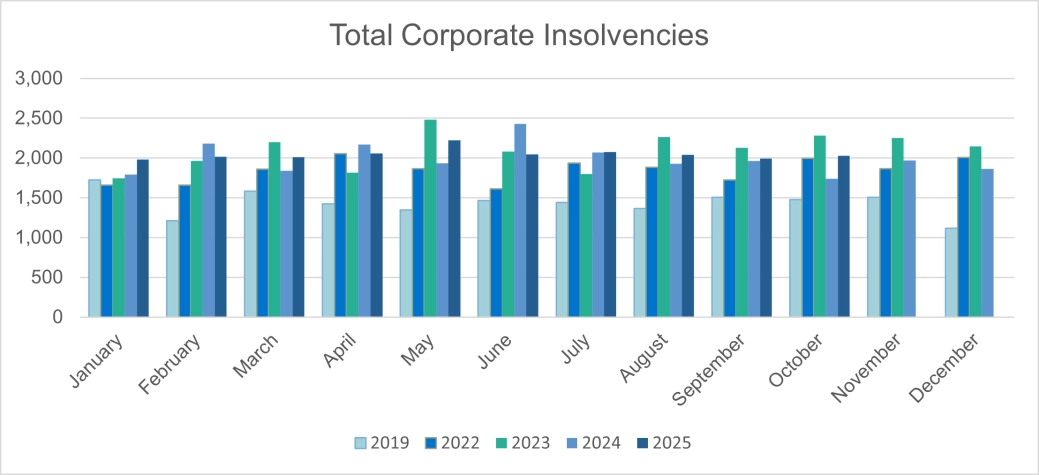
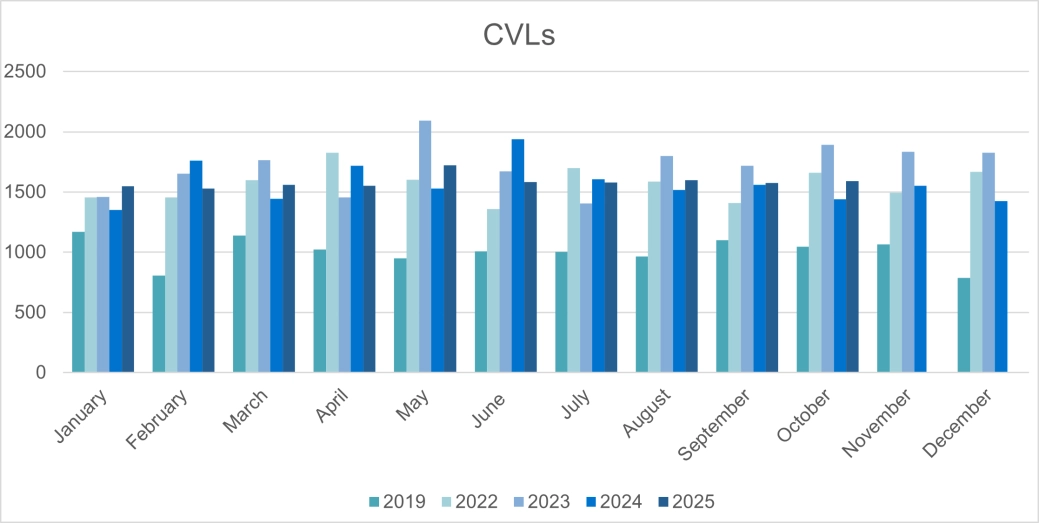
Creditors Voluntary Liquidations (“CVLs”) totalled 1,592, being similar to September 2025 but 11% higher than October 2024. CVLS accounted for 78% of all company insolvencies.
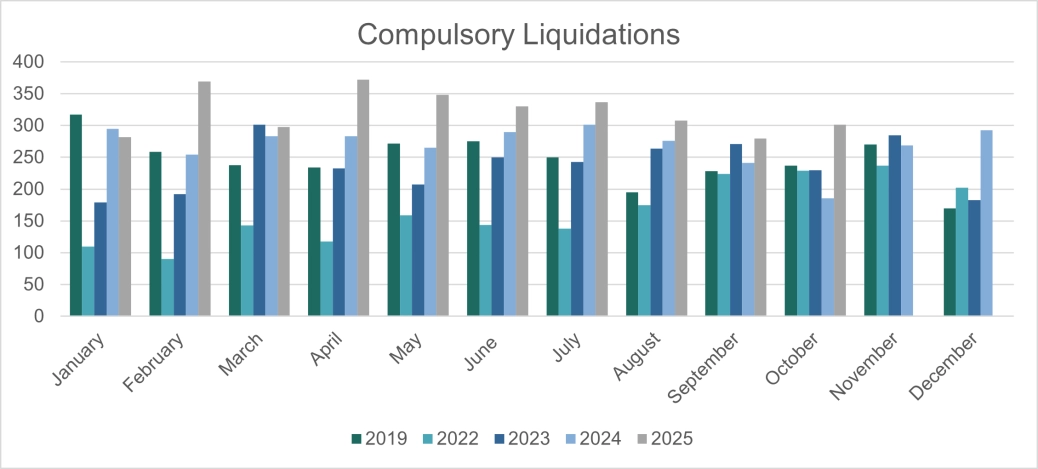
Compulsory Liquidations (“WUCs”) totalled 301, 8% higher than September 2025 and 62% higher than October 2024.
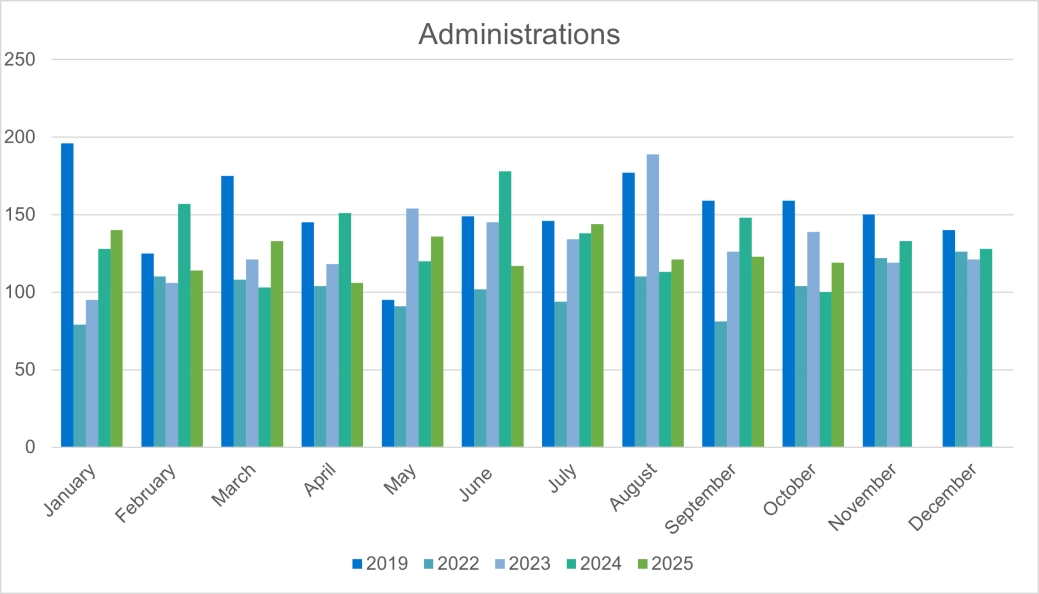
There were 119 Administration appointments which was 3% lower than September 2025 but 19% higher than in October 2024. The average monthly number of Administrations so far in 2025 is lower than the 2024 monthly average.
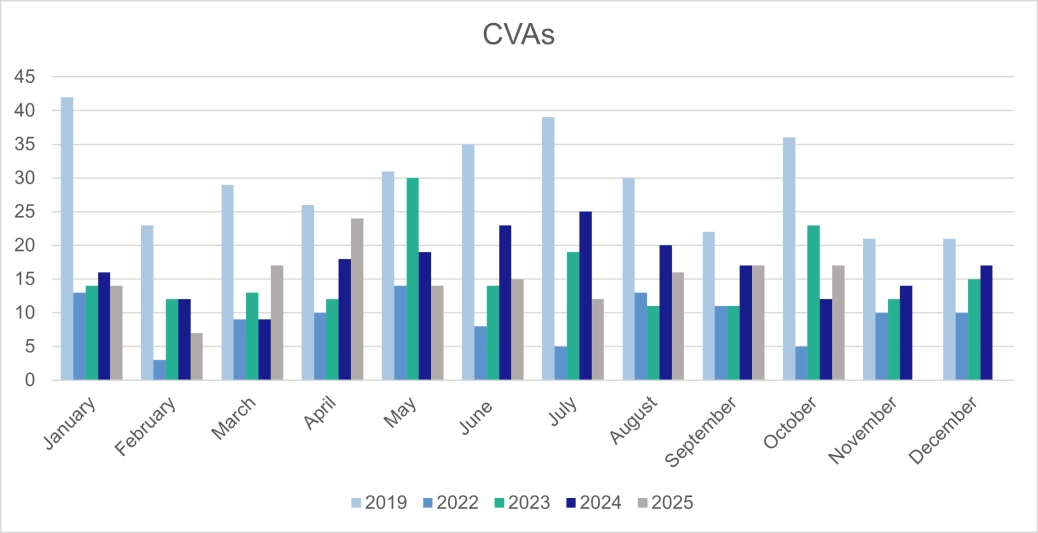
There were 17 Company Voluntary Arrangements (“CVAs”) in October 2025, the same as in September 2025 but 42% higher than in October 2024.
Scotland
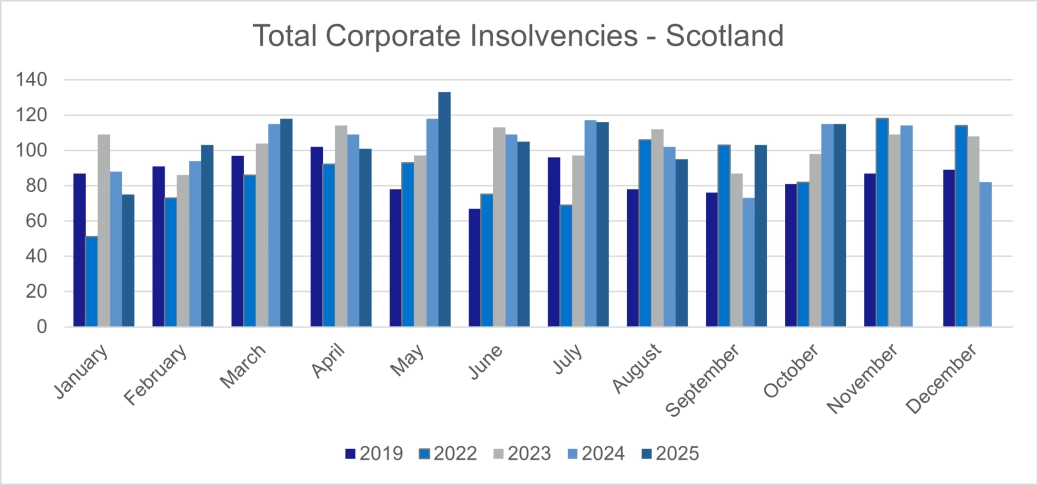
In October 2025, there were 115 company insolvencies registered in Scotland, the same as the number in October 2024. The total number of company insolvencies was comprised of 61 CVLs, 50 compulsory liquidations and four administrations. There were no CVAs or receivership appointments.
Northern Ireland
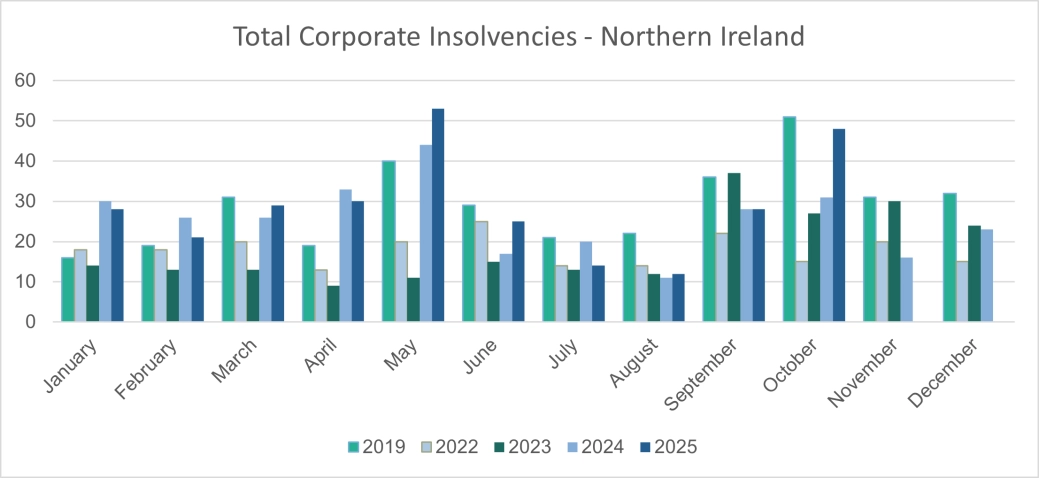
In October 2025, there were 48 company insolvencies registered in Northern Ireland, 55% higher than in October 2024. The total number of company insolvencies was comprised of 35 compulsory liquidations, 12 CVLs and one CVA. There were no administrations or receivership appointments.
Personal Insolvencies
England and Wales
In October 2025, 10,552 people entered insolvency in England and Wales, representing a 4% decrease compared to September 2025 and a 14% increase from October 2024.
There were 3,846 Debt Relief Orders (DROs) in October 2025, lower than the record high seen in August 2025 but still at historically high levels compared to previous years.
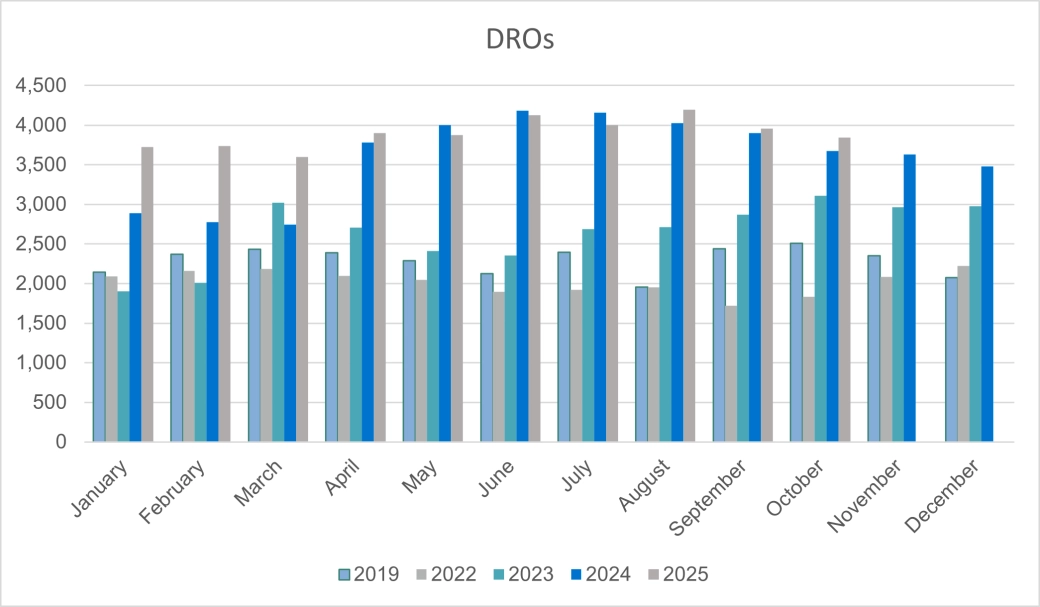
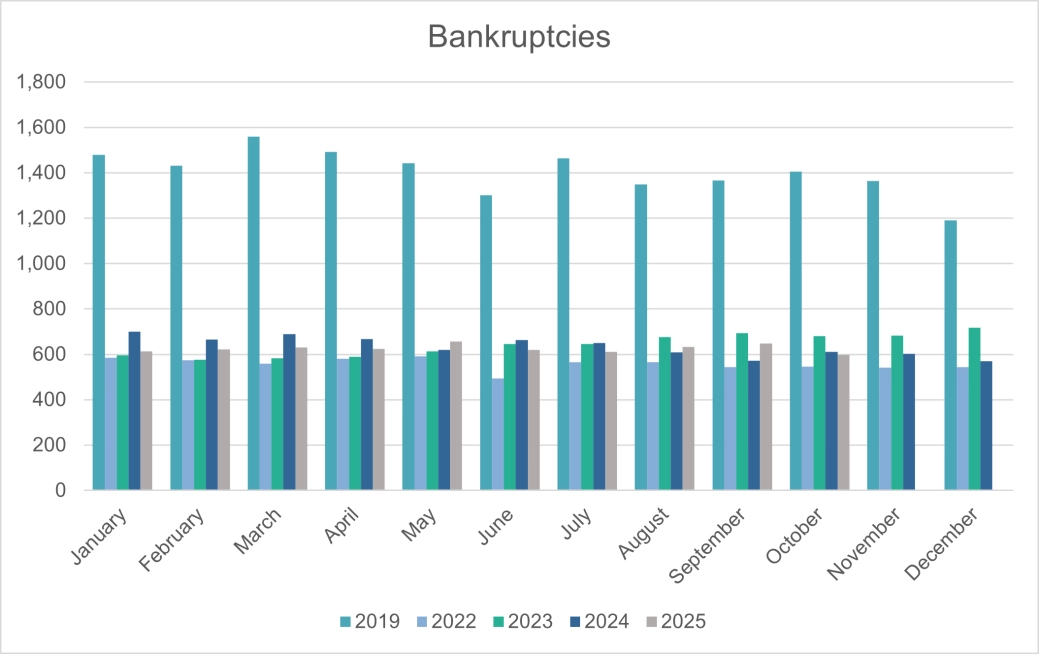
With DRO’s now increasingly being the debt solution of choice for many, bankruptcy numbers have decreased, with the total number of bankruptcies in October (599), being significantly lower than pre-pandemic levels.
In October, there were 97 creditor petitions, 45% lower than October 2024. HMRC are still leading the push on filing petitions. The Insolvency Service introduced a new case management system on 1 November 2025. The numbers shown below are likely to be affected by the phasing out of the old case management system in the last week of October 2025, meaning that some creditor bankruptcies ordered by the courts in October 2025 had not yet been recorded by the Insolvency Service at the date of extraction of this data.
Debtors’ applications are being replaced in the main by DRO applications. However, debtors’ bankruptcy applications were 502 in October, 15% higher than in October 2024.
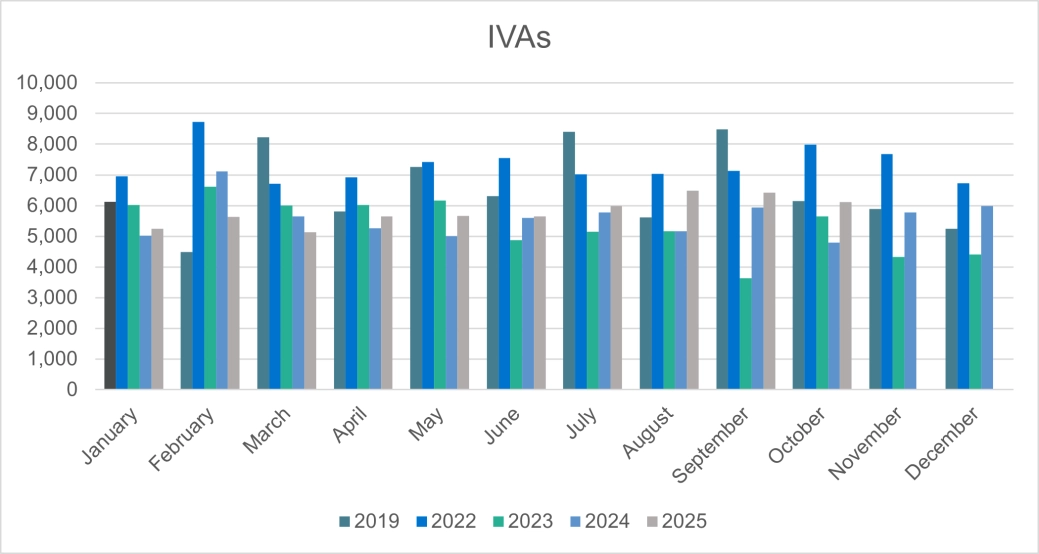
Individual Voluntary Arrangements (IVA) numbers have been consistently lower than during the highs of 2022, however they are steadily increasing, with the first 10 months of 2025 consistently higher than the monthly averages from 2023 and 2024. In October 2025, 6,107 IVAs were registered being 5% lower than in September 2025 and 23% higher than in October 2024.
As mentioned earlier, the Insolvency Service implemented a new case management system on 1 November 2025. Because of this transition, no Individual Voluntary Arrangements (IVAs) were entered on 31 October 2025, meaning the reported IVA total for the month may be lower than usual.
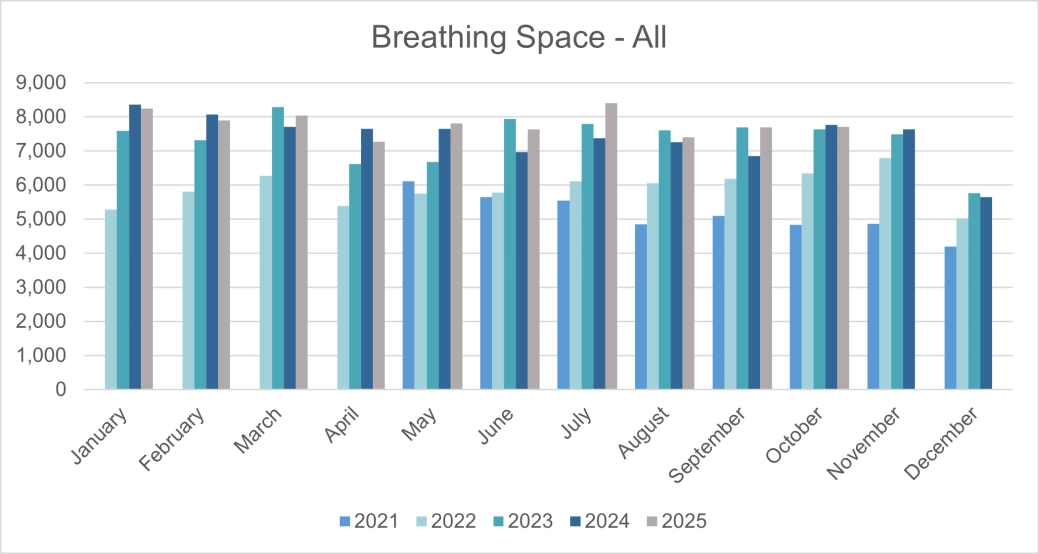
There were 7,701 Breathing Space (BS) registrations in October, 1% lower than in October 2024. Standard BS registrations stood at 7,571 and there were 130 Mental Health BS registrations. The number of BS applications remain high although this procedure is merely a pause in the process and the individuals concerned will still have to deal with their indebtedness.
The numbers suggest that those exiting a BS application are being sign-posted to a DRO as their chosen exit route once the BS period had expired.
Plans to modernise the current Personal Insolvency framework could result in a single gateway to enable people to access independent, regulated debt advice, via a digital platform, or dovetailed with the current BS scheme, which could see the removal of previous barriers into appropriate and regulated insolvency procedures.
Scotland
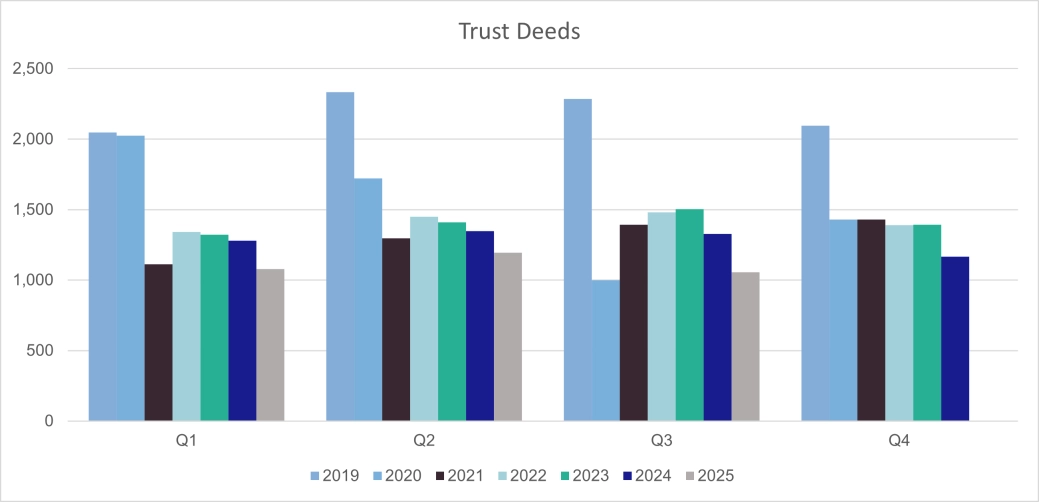
The Accountant in Bankruptcy produces individual insolvency statistics on a quarterly basis. Therefore, the numbers in this section are only updated once every 3 months.
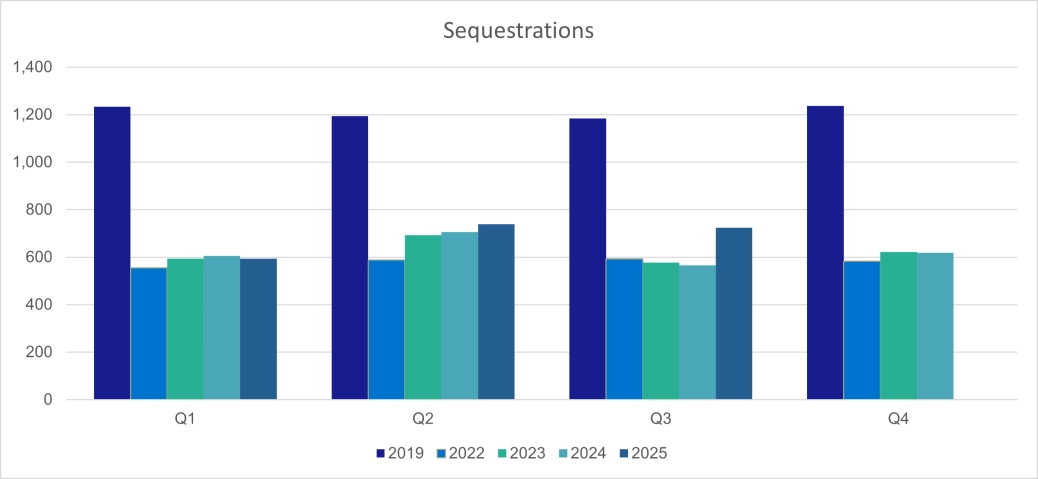
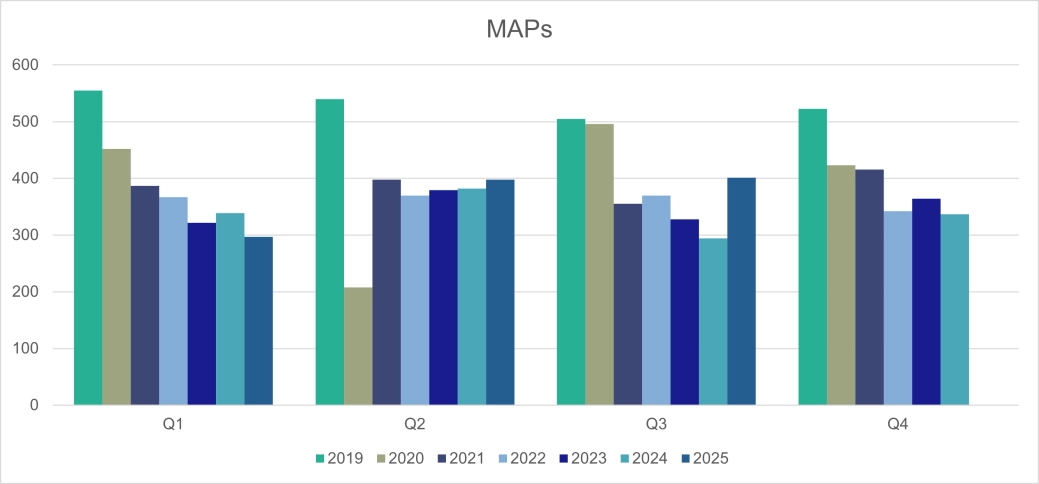
The quarters referred to are calendar year quarters, such that Q1 2025 covers the period 1 January to 31 March 2025. In Q3 2025, there were 1,780 individual insolvencies in Scotland, which was 6% lower than in the same quarter of 2024.
The individual insolvencies were comprised of 1,056 protected trust deeds and 724 bankruptcies (also known as sequestrations), of which 401 went into bankruptcy via the minimal asset process route. The rules regarding bankruptcy differ to those in England and Wales, so numbers of bankruptcies are not directly comparable.
Northern Ireland
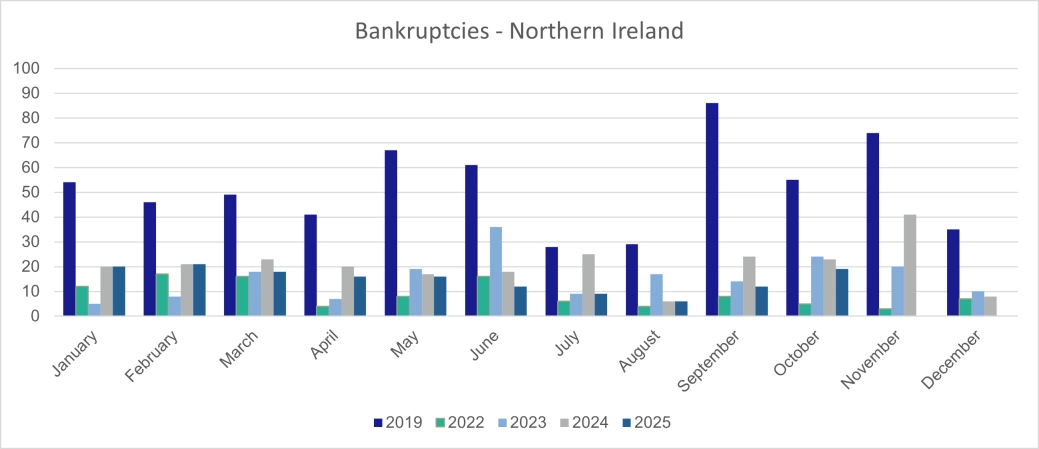
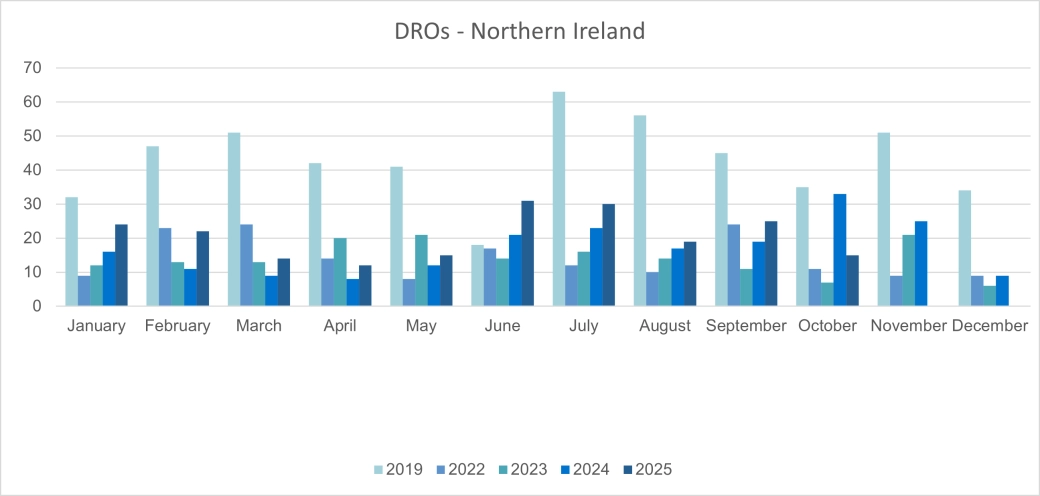
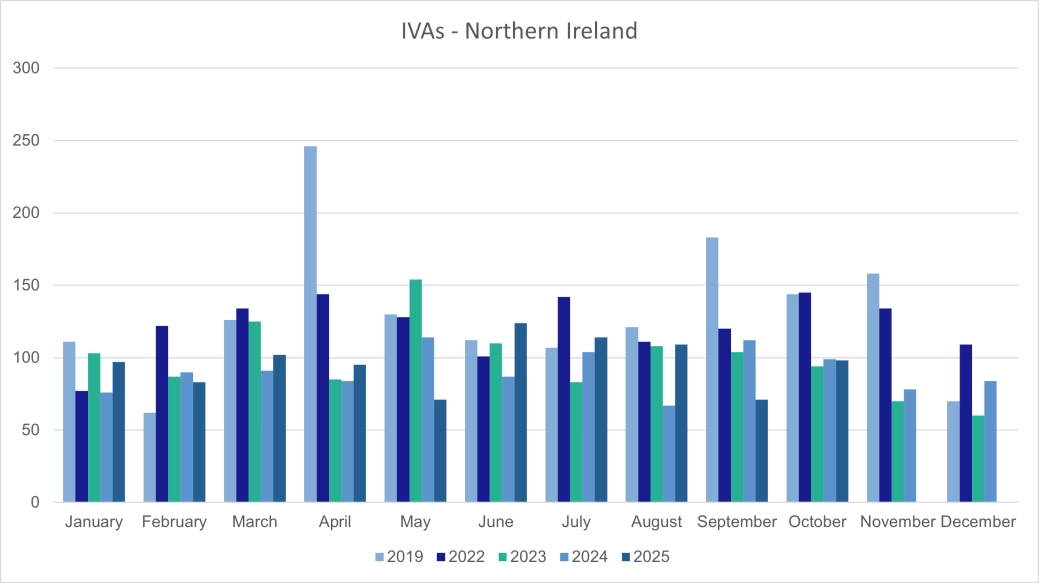
In October 2025, there were 132 individual insolvencies in Northern Ireland. This was 15% lower than in October 2024. There were 98 IVAs, 19 bankruptcies and 15 DROs.