
Automotive sector
Although the recent trade and business agreement between the US and UK government has reduced the initial tariff on cars from 25% down to 10%, this is only valid on the first 100,000 vehicles, with the original 25% tariff applied thereafter. As the current number of exports from the UK to the US set around the 100,000 mark, the likely result of the agreement is a slowed down growth of UK car exports to the US. Overall, the effect will vary on Original Equipment Manufacturers (OEMs) depending on their manufacturing setups and supply chain configurations.
Key considerations include:
- Luxury brands may be able to pass costs to consumers more effectively, while capital expenditure will likely rise as companies adapt to US market demands.
- Firms with substantial US investments will have a competitive edge, as most cars produced in the US are not exported.
- Exporting vehicles to Europe will require significant modifications to comply with safety regulations.
- Some companies may look to diversify operations into the UK and Europe to mitigate risks associated with tariffs.
- Overall, rising costs may lead to increased prices in the US market.
- European manufacturers could face tougher competition and reduced margins in light of US tariffs impact.
Recommendations for OEMs:
- Technology: Invest in technological efficiencies to maintain margins amid rising costs stemming from US tariffs impact.
- Supply Chains: Develop diverse supply chain alternatives to avoid over-reliance on a single source.
- Operations: Manage inventory levels to mitigate impacts from the global trade landscape.
- Financial Structure: Engage with lenders to maintain liquidity amid potential refinancing challenges.
- Strategic Growth: Assess the relevance of overseas strategies in a tariff-driven market.
Consumer sector
Resilience is essential for consumer companies navigating the US tariffs impact.
UK retail sales have faced challenges due to rising tariffs, which threaten growth and consumer sentiment. The OBR projects only 1% growth for Britain by 2025, and the potential for recession looms as trade wars complicate the economic landscape.
In this volatile environment, companies must prioritise resilience across:
- Supply Chains: Establish diverse alternatives to navigate disruptions caused by tariffs.
- Operations: Manage inventory effectively to align with liquidity needs.
- Financial Structure: Maintain engagement with lenders to ensure ongoing liquidity amid market shifts.
- Employees: Build workforce resilience to adapt to economic fluctuations.
- Strategic Growth: Rethink overseas strategies in light of protectionist trends and US tariffs impact.
Energy and infrastructure sector
The US tariffs impact has created market volatility, affecting the energy and infrastructure sector through:
- Infrastructure Costs: Tariffs may lead to increased construction costs and project delays.
- Recession Risks: Demand-sensitive assets could suffer, while inflation-linked revenues may rise.
- Energy Transition Projects: Uncertainty affects project viability, depending on market fluctuations.
- Trade Routes: Governments may increase infrastructure spending in response to the impact of tariffs.
- Valuation Impacts: Lower borrowing costs may benefit defensive segments of the sector.
- Financial Reporting: Companies must adapt to near-term tariff impacts in their financial disclosures.
While challenges persist, government interventions may offer some hope for the sector's resilience against US tariffs impact.
Financial services sector
The financial sector remains stable despite current uncertainties related to US tariffs impact.
While not directly affected by tariffs, the financial sector faces challenges from market volatility and changing rates. As economic conditions shift, profitability may be threatened, but opportunities for asset managers and traders exist amid market fluctuations.
Key considerations for financial services include:
Government Regulation: The UK's adaptability in regulations may attract businesses seeking stability amidst US tariffs impact.
Corporate Agility: Financial institutions must prepare for shifts in trading patterns and enhance risk management strategies.
Additionally, talent retention and strategic growth considerations remain critical in adapting to a post-tariff world.
Pharma and life sciences sector
With over 40% of UK pharma business tied to the US market, the potential for tariffs presents challenges. The nature of tariffs and their application remains unclear, complicating strategic decision-making.
Companies must assess their supply chains, ensure internal stakeholder support, and continue to invest in technology to enhance efficiencies.
Exploring new market opportunities may provide advantages during this turbulent period marked by US tariffs impact.
Public and social sector
The indirect effects of US tariffs impact on the public and social sector are significant.
Economic downturns may reduce disposable income, affecting public services and charity funding. The value of public sector investments could decline, complicating funding strategies.
Uncertainty surrounding project funding and supply chain costs will necessitate a reassessment of priorities and strategies within the sector.
Public and social sector organisations must adopt a commercial mindset to navigate this new landscape effectively in light of US tariffs impact.
FAQs for UK businesses following the US tariffs
What is a tariff?
Tariffs are a type of tax that governments impose on goods imported from another country.
What tariffs were announced by the US president on ‘Liberation day’?
Tariffs are taxes imposed by governments on imported goods from other countries, significantly impacting trade dynamics.
What tariffs did the US announce on 'Liberation Day'?
On April 2, President Trump announced tariffs affecting countries worldwide, including:
- Baseline Tariff: A 10% tariff on all imported goods to the US, effective from April 5.
- Reciprocal Tariffs: Additional tariffs on imports from various nations, effective from April 9. Detailed lists can be found here.
- Specific Tariffs: Tariffs targeting industries like vehicles, auto parts, and steel.
What US tariffs affect UK goods?
UK goods exported to the US are subject to a 10% baseline tariff effective from April 5. The recent trade agreement has resulted in:
- A reduced 10% tariff on the first 100,000 vehicles, with a 25% tariff applied thereafter.
- The removal of tariffs on UK steel and aluminium exports.

The economy & your investments
Watch our latest Economic and Investment update as our Chief Economist and Chief Investment Officer discuss the global economy, inflation, interest rates and the investment landscape.

International tariff developments in 2025
In response to recent global tariff adjustments and potential trade measures, Forvis Mazars has developed a dedicated foreign trade microsite. This platform provides updated tariff information by country and region, equipping clients with the latest insights to support informed decision-making.

What the US tariffs mean for climate risk
The impact of the US tariffs on climate risk is not to be discounted, they will have an influence on CO2 emissions, transition risks (including carbon taxation), and physical climate risks tied to shifts in production and infrastructure.

The impact of tariffs on the insurance sector
The changing landscape of global trade, heavily shaped by US tariff policies, introduces considerable economic uncertainty. While the direct impact of tariffs on insurance may seem minimal, the resulting fluctuations in rates and market conditions are vital for the insurance sector to monitor closely.

Implications on Expected Credit Losses
The United States has intensified its tariff policies, sparking renewed global trade conflicts. These actions have introduced significant market volatility and heightened economic uncertainty worldwide.

What the US tariffs mean for infrastructure
On 2 April, the US administration announced sweeping tariffs on imports from nearly 185 countries. The tariffs, enacted by an Executive Order signed by US President Donald J. Trump, will come into effect on 9 April 2025. Stock markets have responded to this development with sharp declines. The IMF has cautioned that the tariff measures “represent a significant risk to the global outlook at a time...

US tariffs: Navigating economic uncertainty
The global liberal trading and economic system is being reset by the US for a third time in the last 54 years, to reduce economic competition from China and increase the US manufacturing capacity.
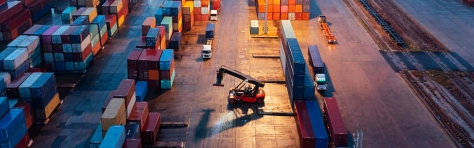
Tariffs through time: have they ever worked?
Trade wars are the weapon of choice for economic protectionists. Any industry which is considered key, for strategic or electoral reasons, needs to be protected. A state will impose an import tariff to discourage competitive goods from entering a country, usually until said industry is strong enough to withstand some healthy international competition.

US-China trade wars: a geoeconomic view
As geopolitical tensions rise and economic systems face strain, history offers valuable lessons for modern businesses. In this article, George Lagarias, our Chief Economist, looks at what business can learn from ancient power struggles and offers six tips for companies to stay resilient, adapt to change, and keep moving forward in a world shaped by shifting power dynamics and economic disruption.

The greatest economic gambit of our time
Investors and businesses need to look out for two things this week: signs of capitulation, either by the US government or its large trading partners and possible indications from the central banks that they would be willing to affirm their Put and absorb some of the damage.

Macro Memo podcast
Macro Memo is a podcast from Board Agenda, produced in association with Forvis Mazars, exploring the impact of macroeconomics and geo-politics on business. Mark Kennedy, Partner and Member of Forvis Mazars’ Group Executive Board and George Lagarias, our Chief Economist, discuss the big issues hosted by Board Agenda’s Gavin Hinks.
This website uses cookies.
Some of these cookies are necessary, while others help us analyse our traffic, serve advertising and deliver customised experiences for you.
For more information on the cookies we use, please refer to our Privacy Policy.
This website cannot function properly without these cookies.
Analytical cookies help us enhance our website by collecting information on its usage.
We use marketing cookies to increase the relevancy of our advertising campaigns.