
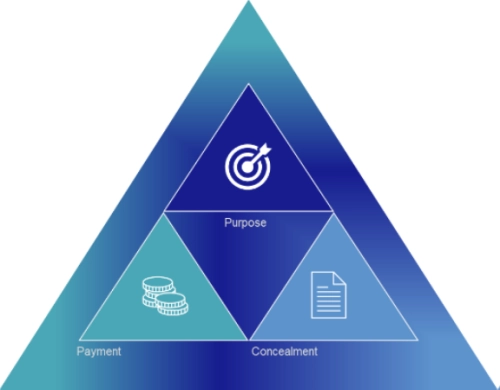
1. Strengthen third-party due diligence
With 73% of cases involving intermediaries and 40% using shell companies, your third-party risk assessment programme is your first line of defence. Implement enhanced due diligence for agents, distributors, and consultants, particularly those operating in high-risk jurisdictions. Screen for prior misconduct and require transparency in ownership structures.
2. Focus on red flags in payment patterns
Commission structures, consulting arrangements, and wire transfer patterns deserve heightened scrutiny. Establish clear benchmarks for reasonable commission rates and consulting fees. Implement automated controls to flag unusual payment patterns, especially those involving multiple intermediaries or jurisdictions misaligned with business operations.
3. Scrutinise contractual relationships
Nearly half of all cases involved sham agreements. Require substantiation of services rendered under consulting agreements. Implement periodic reviews of vendor performance against contractual obligations. Consider whether the nature and scope of services genuinely support the business relationship.
4. Monitor cash and manual payment processes
The persistence of cash in 40% of cases reflects control gaps in manual payment processes. Where cash transactions are unavoidable, implement rigorous approval hierarchies, documentation requirements, and reconciliation procedures. Consider technology solutions to reduce reliance on manual checks and local currency cash disbursements.
5. Establish continuous monitoring
Static, periodic reviews are insufficient against evolving bribery schemes. Deploy data analytics to continuously monitor transactions for patterns consistent with the payment and concealment methods identified in this analysis. Regularly refresh your risk assessments to reflect changing business relationships and market entry strategies.
Understanding the anatomy of a bribe transforms compliance from a theoretical exercise into targeted risk management. The patterns are clear. The question for every organisation is whether their controls are designed to detect them.
This analysis is based on publicly available FCPA enforcement actions and is provided for informational purposes. Organisations should consult with legal and compliance advisors to ensure their anti-bribery programmes address their specific risk profile.
Please see full report here Corruptieonderzoek: A Decade of Accountability

Recovering from fraud: strategies for resilience
When fraud strikes your organisation, the immediate aftermath can feel overwhelming. Financial losses mount, stakeholder confidence wavers, and urgent questions demand answers: What happened? Who was responsible? How do we recover?

Forensic investigation & compliance
Harnessing cutting-edge technology in disputes and investigations

Anti-bribery and corruption in Portugal
We were instructed to undertake an investigation into a matter that related to an anonymous whistleblowing letter received by the client in their Lisbon Office.
Key contact

Darya Oglezneva Director - Forensics and Investigations - London
This website uses cookies.
Some of these cookies are necessary, while others help us analyse our traffic, serve advertising and deliver customised experiences for you.
For more information on the cookies we use, please refer to our Privacy Policy.
This website cannot function properly without these cookies.
Analytical cookies help us enhance our website by collecting information on its usage.
We use marketing cookies to increase the relevancy of our advertising campaigns.